
close
Choose Your Site
Global
Social Media
Views: 0 Author: Site Editor Publish Time: 2025-11-28 Origin: Site


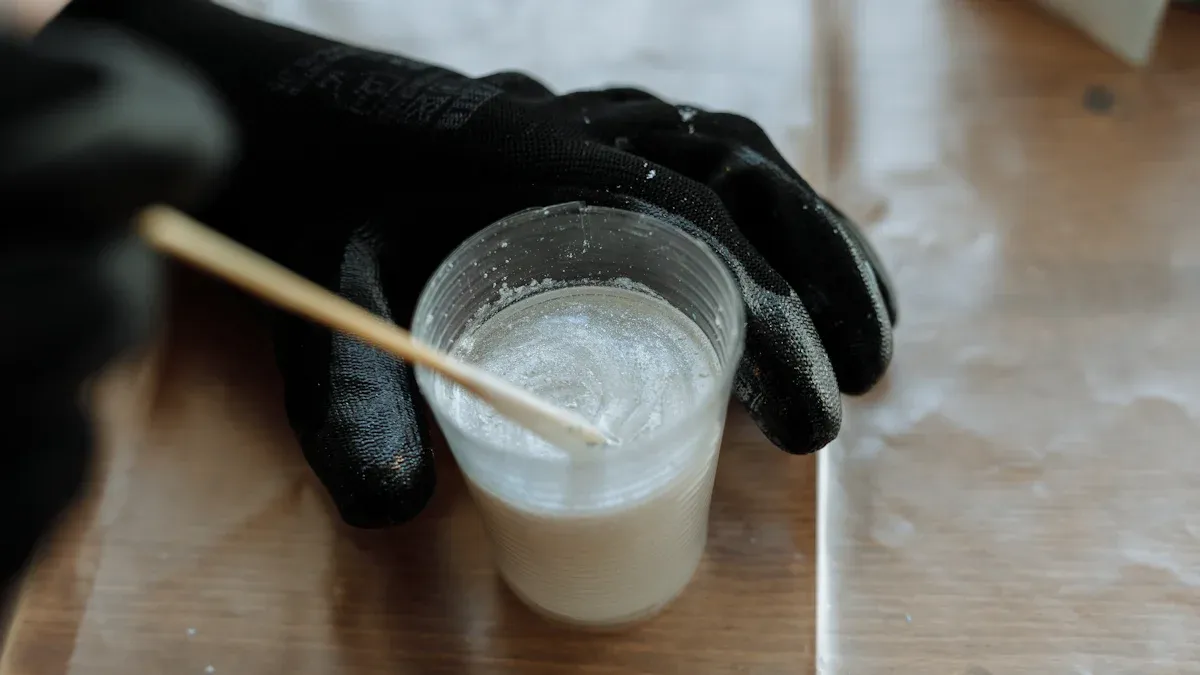
You use a master batch formula to mix additives, pigments, and carriers with plastics. This formula helps you get the same color, strength, and special features in products every time. The masterbatch market around the world will be about USD 12.6 billion in 2025. This is because people have more money to spend, more people live in cities, and there is a big need for packaging and cars. If you pick the right carrier, the process works better and makes masterbatch easier. Special formulas can make recycled plastics better, hide flaws, and give things like UV resistance. These new ideas change how products work and affect what happens in the industry.
Masterbatch is important for making plastic products look the same. It also helps cut down on waste and makes production faster.
Picking the right carrier resin is very important. It should be the same as the resin in the final product. This helps the product work well and keeps the color the same.
Good pigments and additives make plastics last longer. They also give plastics special features like blocking UV rays or stopping fires.
Checking quality often during masterbatching is important. This makes sure products are good and customers stay happy.
Being eco-friendly is very important in 2025. Choose masterbatch options that are better for the environment. This helps with recycling and lowers harm to nature.
You use masterbatch to give plastics color and special features. It is made by mixing pigments, additives, and a carrier resin into small pellets. These pellets are added to raw plastic. This gives the final product the color and properties you want. Masterbatch keeps the color the same in every product. It also helps the plastic work better. Using masterbatch can cut down on waste. It makes making things faster and easier. Many industries, like packaging and automotive, use masterbatch to meet high quality rules.
Tip: You can change a master batch formula to fit what you need. This lets you pick the right color, strength, and features for your product.
A master batch formula has a few main parts. Each part helps the final product in a special way. The table below shows the main components and what they do:
Component | Role in Masterbatch Formula | Effect on Final Product |
|---|---|---|
Resin | Main part that gives basic properties | Changes toughness, heat resistance, and performance |
Additives | Make resin stronger and last longer | Add features like flame retardancy |
Carrier | Mixes resin and additives into a pellet | Makes processing easier and keeps results the same |
There are other important things in masterbatch too:
Pigments and additives give the color and special features you want, like UV resistance or flame retardancy.
Dispersing agents help spread the pigment so the color is always even.
Processing aids make it easier to melt and shape the plastic.
Stabilizers keep the color and plastic safe during processing.
If you use the right formula, you get:
The same color every time
Easier and faster processing
Stronger and better products
Less waste during production
Better UV resistance or other features
Products that last a long time
Picking the right carrier resin is very important in masterbatch. The carrier holds the pigments and additives together. You should use a carrier that matches the resin in your final product. This helps you get the best color and performance.
Here is a table that shows different carrier types and what you should know:
Carrier Resin Type | Characteristics/Notes |
|---|---|
Universal carriers | PE, EVA, PP, PVC; can make color hard to predict and may make products weaker |
Specified carriers | Use the same resin as the end product for best results (like ABS for ABS products) |
Fiber masterbatch | Needs special carriers for fiber products |
Carrier-free masterbatch | Uses wax instead of regular resin |
Disadvantages of universal | Bad color, weaker products, higher costs |
Best practice | Always match the carrier to the end-use resin for best results |
When you pick a carrier, look for:
If it works with the end-use resin
If it mixes easily
If it is easy to use in production
If it has the right thickness for your needs
If it fits your product
A good formula always starts with the right carrier. This choice changes how well the color and additives work. If you use the right master batch formula, you get strong, colorful, and reliable products every time.
You begin with the carrier resin when making masterbatch. The carrier resin holds pigments, additives, and oils together. You must pick a carrier resin that matches your plastic. For example, use polyethylene carrier resin for polyethylene plastic. This helps you get even color and better results.
The most common carrier resins are:
Polyethylene
Polypropylene
Polystyrene
The carrier resin should melt and process like the final plastic. This makes mixing easier and keeps the masterbatch the same. For polyolefin filler masterbatch, use a carrier resin that fits the plastic matrix. Check the melting point and melt fluidity before you choose.
There are five main rules for picking the best carrier resin:
Principle | Description |
|---|---|
Compatibility | The carrier resin and colored resin must work well together. This keeps the masterbatch stable. |
Fluidity | The carrier resin should flow better than the colored resin. This helps you mix everything smoothly. |
High viscosity | A carrier with high melt viscosity helps spread pigment particles. You get better color and less clumping. |
Processability | The carrier must fit your production needs. Powdered resin often spreads pigment better. |
Applicability | The carrier should meet your customer’s needs and keep the product strong. |
Tip: Always match the carrier resin to your end-use plastic. This helps your masterbatch formula work well and keeps products strong.
Pigments and additives give masterbatch color and special features. Pigments make plastics bright or soft. Additives help plastics last longer and resist UV light or fire. Oils help mix pigments and additives into the masterbatch.
Here are some ways pigments and additives help:
You save money because you use less material and waste less.
You avoid dust loss, which can waste up to 10% of pigments.
You reject fewer batches because you get even color every time.
Benefit | Description |
|---|---|
Improved Color Consistency | Masterbatch gives you even color, so your products look better. |
Enhanced Processing Efficiency | Pellet masterbatch is easy to handle and reduces waste. |
Incorporation of Additives | Additives make plastics stronger, safer, and longer-lasting. |
Many suppliers now offer eco-friendly masterbatch. These use biodegradable materials and base oils to make plastics greener. You can pick masterbatch with special additives for UV protection, slip, antiblock, or antistatic features. These help your products work better in tough places like cars or hospitals.
New pigment and additive chemistry lets you make masterbatch with new features. You can get UV resistance, antimicrobial protection, and longer life for your products. The need for functional additives keeps growing, so you see more masterbatch choices every year.
Dispersants and processing aids help mix pigments and additives into masterbatch. These ingredients keep everything spread out and stop clumps. Oils help pigments move and mix inside the plastic.
Some common dispersants and processing aids are:
Polymeric waxes
Slip agents
Compatibilizers
Dispersant/Processing Aid | Function |
|---|---|
Polymeric waxes | Help you mix additives into the plastic matrix |
Slip agents | Make dispersion better and stop clumping |
Compatibilizers | Spread pigments and additives evenly |
You can use SILIKE Silicone powder to help disperse pigments in masterbatch. This powder stops pigments from clumping and keeps colors bright and even. It also prevents pigment build-up, so your masterbatch stays stable and uniform.
Note: Good dispersants and processing aids help you get the same color and quality every time. Oils and base oils make mixing easier and keep your masterbatch formula working well.
You need all these parts—carrier resin, pigments, additives, dispersants, and oils—to make masterbatch that works for you. When you pick the right ingredients and follow the five rules for carrier selection, you get a masterbatch formula that gives you strong, colorful, and reliable products.
There are different types of masterbatch. Each type has its own formula and job. Some types are color masterbatch, additive masterbatch, filler masterbatch, and specialty masterbatch. Each one helps with a different problem in making plastics.
Color masterbatch makes plastics bright and the same color every time. You use it to match colors or make new colors for products. The formula depends on the polymer you pick. PET needs to look clear and bright. PP needs to handle heat well. The table below shows the main parts:
Component | Description |
|---|---|
Colorants | Organic dyes, organic pigments, and inorganic pigments for color. |
Carrier | Holds and spreads colorants evenly; must match your polymer. |
Dispersant | Stops pigments from clumping and keeps color even. |
Additives | Give extra features like flame retardancy or anti-static properties. |
You can use color masterbatch in PET bottles, PP packaging, PA6 car parts, and PE pipes. This masterbatch helps you get the same color every time.
Additive masterbatch makes plastic products better. You can add UV resistance, flame retardancy, or protection from germs. This helps products last longer and work well in hard places. Additive masterbatch lets you change plastics for special uses. You can make outdoor chairs resist sun or add oils for more bend. Many industries use additive masterbatch to make products safer and stronger.
Filler masterbatch uses fillers like calcium carbonate or talc to change plastics. In HDPE filler masterbatch, you mix a carrier resin with lots of fillers and oils. This formula saves money because you use less new HDPE. It also makes products stronger and smoother. The table below shows what HDPE filler masterbatch does:
Component/Advantage | Description |
|---|---|
Carrier Resin | Spreads fillers and oils evenly during processing. |
Fillers | Calcium carbonate, talc, barium sulfate, silicone. |
Reduced Production Costs | Uses less HDPE, saving money. |
Enhanced Physical Properties | Increases strength and rigidity. |
Maximized Processing Properties | Improves flow and lowers defects. |
Better Surface Finish | Makes products look and feel smoother. |
Minimized Thermal Expansion | Reduces changes from heat. |
Improved Thermal Conductivity | Helps control temperature. |
Greater UV, Weather, and Chemical Resistance | Makes products last longer outdoors. |
Specialty masterbatch gives plastics special features for certain jobs. You can use black masterbatch for UV resistance in cars. White masterbatch gives a clean look in home products. Additive masterbatch works in packaging, building, and electronics. You can add oils to help make plastics or give them shine. Specialty masterbatch helps you meet tough rules and make products with new features.
Tip: You can choose the right masterbatch and formula for your needs. This helps you get strong color, better products, or save money.
The first step is picking the right ingredients. You need to know what each material does. You match the masterbatch to the plastic you want to use. You check if the ingredients are good quality. You also think about how much they cost and how well they work. You look at how fast you can get them and if the supplier helps you. Many companies now care about the environment when they choose ingredients.
You pick things like carrier polymers, pigments, and special agents.
You use ingredients that do not make dust, do not hold water, and can handle heat.
You make sure oils and additives work with your formula and product.
Tip: Choosing good ingredients helps you stop problems before they start.
You have to mix everything well to get a good masterbatch. You weigh each part, like pigments, oils, and carrier resin, very carefully. You use a fast mixer to blend all the parts. Then you put the mix into a twin screw extruder. This machine melts and mixes the ingredients with heat and pressure.
Step | Description |
|---|---|
Weighing and Mixing | You weigh pigments, additives, oils, and carrier resin, then mix them in a high-speed mixer. |
Extrusion | You process the blended materials in a twin screw extruder for even mixing and dispersion. |
Cooling and Granulation | You cool the extruded material and cut it into pellets for easy handling and transport. |
You use a cooler to bring down the temperature of the masterbatch. After cooling, you cut the masterbatch into small pellets. This makes it easy to use later.
You need to check quality at every step. You label and check all raw materials before you use them. You weigh and check all ingredients before mixing. While you make the masterbatch, you watch the color and how the pellets look. You change things if you see a problem.
You test if the color is always the same and if the mix is good.
You use special tools like ultrasonic scanning to find problems.
You use computers to guess and fix quality issues.
After you cut and dry the masterbatch, you look at it in the lab and by eye. You check for problems like too much heat, bad mixing, or waste. You fix these by watching the temperature, using good machines, and planning well.
Note: Careful quality checks help you make masterbatch that meets high standards and makes customers happy.
You need a steady master batch formula for good color. This helps every product look and work the same. Masterbatching lets you mix pigments and additives well with plastic. You do not get streaks or weak spots. Your products last longer and stay strong. Masterbatching saves raw material and cuts waste. You follow food safety rules because your formula stays stable. In the US and Europe, you must use safe plastics for food. You also need to track where plastics come from. A good master batch formula protects your brand. It keeps customers happy.
Tip: Pick eco-friendly masterbatching to recycle better and lower toxicity. This helps the environment and meets new green rules.
Masterbatching is used in many industries. Packaging uses masterbatch for bright colors and strong bottles. Automotive companies use it for light parts in electric cars. Construction uses masterbatch for pipes and panels that last outside. Makers of toys and electronics use masterbatch for safe colors and extra features.
Packaging: You want plastics that can be recycled and keep color.
Automotive: You need light materials for electric cars.
Construction: You use masterbatch for strong, weather-proof items.
Consumer Goods: You want safe, colorful, and tough products.
Sustainability is important for masterbatching in 2025. Companies use more recycled plastics and eco-friendly additives. Products last longer and are easier to recycle.
You can learn from real masterbatching projects. One supplier used 0.25 wt% silicone masterbatch in LLDPE/TPR. This cut flow marks by 85% and cycle time by 12%. The color stayed bright and strong. Patents show liquid rubber in polypropylene lowers flow marks. It does not hurt strength. Studies show changing how plastics flow stops surface bands. It keeps color even.
Case Type | Description |
|---|---|
Supplier Case Study | Silicone masterbatching cut flow marks and cycle time. Color and strength stayed the same. |
Patent Evidence | Liquid rubber in polypropylene made color and surface better. Strength did not drop. |
Academic Study | Changing flow in masterbatching stopped surface bands and kept color even. |
Masterbatching helps you get better color, quality, and sustainability in every industry.
If you learn how to use masterbatching well, you help make better products in the future. The table below shows how knowing the masterbatch formula helps you get ready for new problems:
Benefit | Description |
|---|---|
Aesthetic Value | You make products look better and sell more. |
Functional Durability | You help products last longer and stay strong. |
Cost Efficiency | You save money by using masterbatching wisely. |
When you know how to mix and use masterbatch, you get good results. Masterbatching helps you keep color the same, make products strong, and waste less. More people want special and earth-friendly masterbatch now. Try to learn about new masterbatching ideas. Listen to experts and go to events. This helps you get better at masterbatching and make your products special.
Masterbatch is a strong mix of additives and pigments. You use masterbatching when you blend this mix into raw plastic. This helps your final product have even color and special features.
First, you think about what your product needs. Then you choose the best carrier resin and additives. You check if the ingredients mix well together. You test the masterbatching process to make sure your products are strong and colorful.
You can use masterbatching to add color and features to recycled plastics. This helps hide flaws and makes the plastic stronger. Recycled products can look and work like new ones.
Masterbatching mixes pigments and additives evenly in plastic. This gives you the same color and quality every time. You do not get streaks or weak spots in your products.
Sometimes people pick the wrong carrier resin. They might not mix the ingredients well. Some skip quality checks. You can avoid these mistakes by following the masterbatching steps and testing your products.
