
close
Choose Your Site
Global
Social Media
Views: 0 Author: Site Editor Publish Time: 2025-08-29 Origin: Site


Food grade masterbatch is a special plastic additive. It is made for use with food and must follow strict safety rules. Food grade masterbatch gets checked and approved by groups like the Ministry of Food and Drug. This makes sure it does not make food or drinks unsafe. The masterbatch goes through many tests and must get certified. It must also follow rules like ISO 22000 and ISO 22002 Part 4. These rules are important for food packaging. You need food grade masterbatch to keep plastics safe and clean. It is used in lunch boxes, containers, and packaging. Food grade masterbatch helps you reach high food safety standards. It also helps you follow the rules.
Food grade masterbatch keeps food safe from germs.
Food grade masterbatch helps your products follow world rules.
Food grade masterbatch helps track food for safety.
Food grade masterbatch keeps plastic products very clean.
Food grade masterbatch helps your customers feel safe.
Food grade masterbatch keeps food safe by meeting strict rules and passing safety checks.
Using food grade masterbatch helps your products meet world safety rules. This makes customers feel safe.
Pick masterbatch with safety certificates to make sure it is safe for food and has no bad chemicals.
There are different kinds of masterbatch, like color and additive. These help food packaging look better and work better.
Trust well-known suppliers like Foshan Hongshengde Masterbatch New Materials Co., Ltd. for good, certified food grade masterbatch.

Food grade masterbatch must follow tough safety rules. These rules keep you and your customers safe from bad chemicals. When picking masterbatch for food packaging, look for ones with food contact approvals. These approvals mean the masterbatch can touch food safely. The table below shows the main safety standards:
Safety Standard | Regulatory Body |
|---|---|
FDA’s food contact substance regulations | U.S. Food and Drug Administration |
Regulation (EC) No 1935/2004 | European Food Safety Authority |
These rules say the masterbatch should not let out harmful chemicals. You can trust masterbatch that passes these tests to protect your food. Foshan Hongshengde Masterbatch New Materials Co., Ltd. follows these rules to help you meet world standards.
Tip: Always check for safety certificates before using masterbatch in food packaging.
You must follow rules when using masterbatch with food. These rules come from groups in your country and around the world. They make sure your products are safe and good quality. The table below shows the main groups and what they do:
Regulatory Body | Description |
|---|---|
FDA | Checks food-contact uses and keeps bad things out of packaging. |
EFSA | Looks at recycled plastics and gives advice for approval. |
South Korea's Ministry of Food and Drug Safety | Checks food contact materials and makes sure they follow the rules. |
Regulatory compliance means your masterbatch must pass migration tests. These tests check if anything moves from the plastic into the food. You also need papers that show your masterbatch follows the rules. Foshan Hongshengde Masterbatch New Materials Co., Ltd. gives you all the right papers, so you can trust your products.
Your food grade masterbatch should be very pure. This means it only has safe things inside and nothing extra. Purity is checked by strong controls during making. The table below shows how purity and traceability work:
Component | Function |
|---|---|
Digital Capture | Saves every scan, weight, and sign-off for a safe record. |
Measurement Control | Watches and controls all parts during making. |
Real-time Recording | Saves lot numbers and worker actions for world rules. |
Barcode Verification | Checks every material to stop mix-ups. |
Compliance Standards | Follows FSMA, BRCGS, ISO 22000, and 21 CFR Part 11 for tracking. |
Traceability helps you track every batch from start to finish. This lets you find and fix problems fast. Certifications also show purity and traceability. Here are some important certifications:
Certification Name | Description |
|---|---|
ISO 22000 | Checks the whole supply chain for food safety and tracking. |
FSSC 22000 | Focuses on risk control and safety steps for food. |
BRC Global Standards | Needs a written quality system for making and sending products. |
Non-GMO Project Verification | Proves products have no GMOs and tracks animal feed. |
Halal Certification | Checks ingredients for Islamic food rules. |
Kosher Certification | Checks for Jewish food rules and keeps meat and dairy apart. |
Organic Certification | Makes sure there are no fake additives or GMOs and follows USDA farm rules. |
You can trust masterbatch from Foshan Hongshengde Masterbatch New Materials Co., Ltd. for purity and traceability. Their products meet world standards and help keep your food packaging safe.
When you pick food packaging, you will find two main types of food grade masterbatch. These are color masterbatch and additive masterbatch. Each type has its own job. They help make food containers safe and nice to look at.
Color masterbatch is used to give plastics bright colors. It helps food packaging look good and easy to spot. Color masterbatch has a lot of pigments inside. You only need a little to get strong color. You can use it in lunch boxes, trays, and bottles. It keeps the color the same every time. This is important for your brand.
Color masterbatch also helps your packaging stand out in stores. You can pick from many colors to match your product. Using color masterbatch makes your packaging look neat and professional. Foshan Hongshengde Masterbatch New Materials Co., Ltd. makes color masterbatch that follows strict food safety rules.
Here are some common types of masterbatch used in food packaging:
Color masterbatch makes packaging look better
Calcium carbonate masterbatch makes materials stronger
Sliding additives masterbatch helps reduce friction
Tip: Color masterbatch helps your packaging attract customers and build trust.
Additive masterbatch gives food packaging extra features. It can make packaging safer, stronger, or easier to use. Some additive masterbatch protects food from sunlight. Others stop fog from forming inside the package. Some help keep food fresh. Others make plastic easier to handle.
The table below shows some common additives and what they do:
Additive Type | Benefits |
|---|---|
Flame Retardant Masterbatch | Helps stop fires and adds safety |
UV Stabilizer Masterbatch | Protects from sunlight and helps products last longer |
Anti-Fog Masterbatch | Stops water drops, keeps food easy to see and fresh |
Antibacterial Masterbatch | Fights germs and keeps packaging clean |
Anti-Static Masterbatch | Reduces static, good for clean places |
Optical Brightener Masterbatch | Makes packaging look brighter and more eye-catching |
Odor Absorber Masterbatch | Removes bad smells and keeps food smelling fresh |
Anti-Slip Masterbatch | Makes packaging easier to hold and safer |
Processing Aid Masterbatch | Helps make packaging faster and easier |
Antioxidant Masterbatch | Protects from heat and air damage |
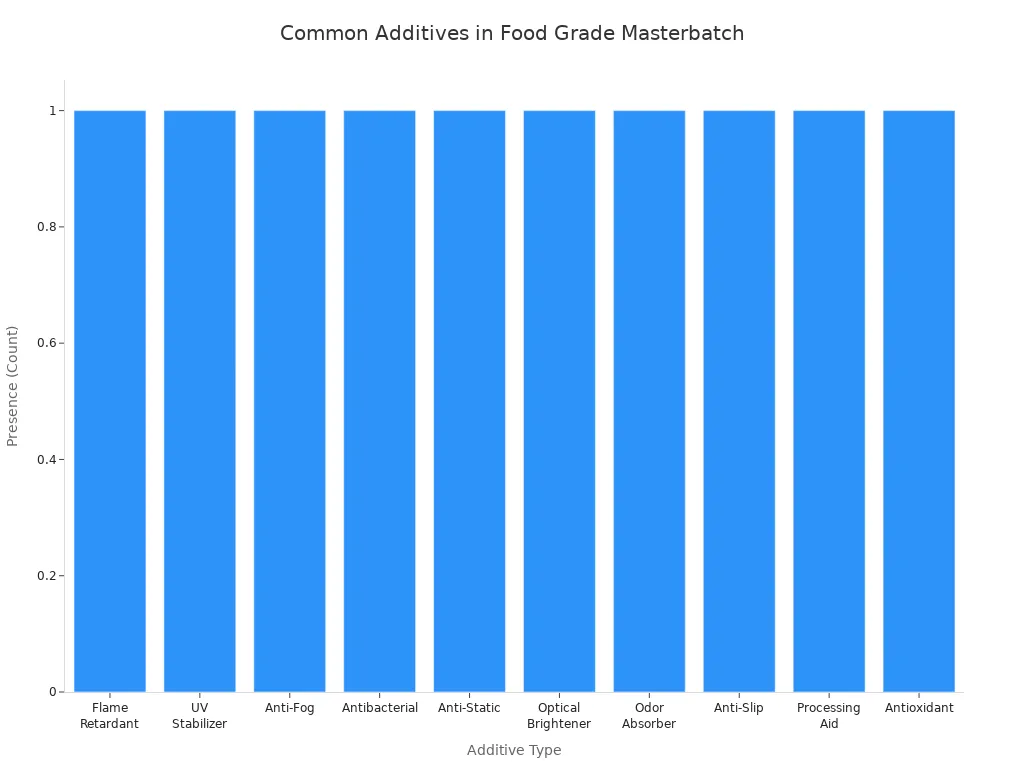
Additive masterbatch gives you many ways to make food packaging better. When you choose the right additive masterbatch, your products can stay safe and fresh for longer.
Food grade masterbatch is made in a special way. It is not like standard masterbatch. This helps keep food packaging safe. Only safe ingredients are picked for food contact. You do not have to worry about bad chemicals. Every step in making it is checked very carefully. Experts use strong tests to make sure it is safe.
Here is a table that shows how experts test food grade masterbatch for safety:
Standard | Description |
|---|---|
FDA 21 CFR 178.3297 | Checks for heavy metals like lead, must be less than 0.5ppm |
EU No 10/2011 | Tests food contact at 40℃ for 10 days, migration must be under 10mg/dm² |
GB 4806.7-2023 | Looks at how it feels and checks for heavy metals, must be under 1mg/kg |
Detection Method | Uses GC-MS to find plasticizer leftovers like phthalates |
Food grade masterbatch must pass tests for heavy metals and chemicals. These tests use new machines like GC-MS. This means your packaging will follow strict safety rules.
Note: Always check if your masterbatch passes these tests before using it for food packaging.
You need special papers when you use food grade masterbatch. These papers show your packaging is safe for food. You must have lab tests and documents to prove this. You also need to follow rules from the USA, EU, and other places.
Here is a table that explains the main certification requirements:
Requirement | Description |
|---|---|
Declaration of Compliance (DoC) | Lists what is inside, how it touches food, and how it is tested. |
Testing for Chemical Migration | Lab tests must show there are no bad things like lead or mercury. |
Self-declaration | Companies must show they follow the rules, even without FDA or EU approval. |
Food Contact Notification (FCN) | In the U.S., companies can tell the FDA about new materials. |
EFSA Petition | In the EU, companies can ask for a check on new materials. |
You should keep these papers ready for checks. Foshan Hongshengde Masterbatch New Materials Co., Ltd. gives you masterbatch that meets these rules. You can trust your packaging will pass safety checks in big markets.
Tip: Always ask for certification papers before you buy masterbatch for food packaging.
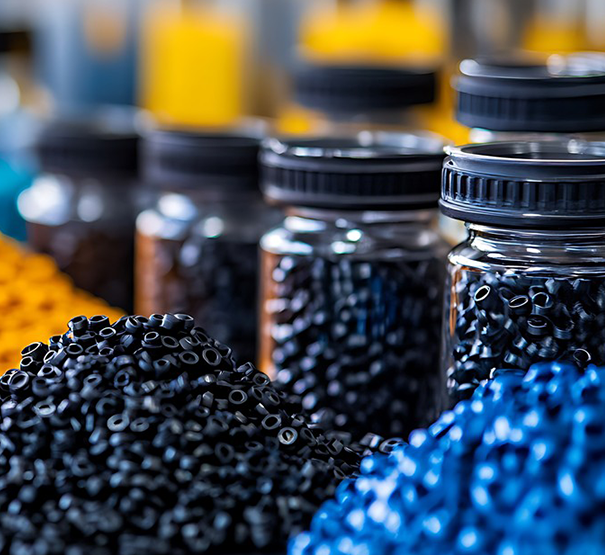
Food grade masterbatch is used in many food packaging products. You see it in lunch boxes and food containers. It is also in disposable tableware. These items need safe packaging to protect food. Masterbatch helps make colors bright and materials strong. Color masterbatch makes packaging look nice. Additive masterbatch adds features like strength or freshness.
Application Type | Purpose/Benefit | Compliance with Standards |
|---|---|---|
Food Packaging Materials | Makes packaging colorful and keeps food fresh. | Yes |
Disposable Tableware | Keeps food safe and follows hygiene rules. | Yes |
Food Storage Containers | Keeps color the same and food good. | Yes |
Foshan Hongshengde Masterbatch New Materials Co., Ltd. has many masterbatch choices for packaging. Their products help you follow safety rules and look professional.
You want packaging that keeps food safe and fresh. Food grade masterbatch helps with this. It stops bad smells and tastes. Food stays good longer. You get the same color and quality every time. Masterbatch works with many plastics. It can handle high heat.
Feature | Benefit |
|---|---|
Prevents off-tastes and odors | Food and drinks taste and smell good. |
Quality control measures | Makes sure every batch is safe and the same. |
Dissipative property | Stops static powder in sealing areas. |
Compatibility with polymers | Works with many plastics and does not change color. |
High processing temperature | Works well even when it gets very hot. |
Food lasts longer with masterbatch. Copper masterbatch can keep meat fresh for thirty more days. Pork can last almost twice as long. This means less waste and better food for customers.
You must follow many rules in food packaging. You need to meet safety and hygiene standards. You also need to care about the environment. Some problems are changing rules and higher costs. You also need new ideas for packaging. Foshan Hongshengde Masterbatch New Materials Co., Ltd. helps with these problems. They have certifications like RoHS, ISO9001, REACH, and SGS. These show they care about safety and quality.
Challenge Type | Description |
|---|---|
Complex Regulatory Environment | Companies must follow tough food safety rules and get many certificates. This can be hard for small businesses. |
Rising Costs of Raw Materials | Prices for things like resins and pigments can go up and down. This makes making packaging cost more and changes profits. |
High Costs of Sustainable Packaging | Eco-friendly masterbatch costs more than regular ones. This makes it harder for companies to use green materials. |
Need for Constant Innovation | People want new packaging all the time. Companies must keep making new products and add smart features to stay ahead. |
You can trust Foshan Hongshengde Masterbatch New Materials Co., Ltd. for good masterbatch. Their skills and certificates help you do well in packaging and give customers safe products.
Food grade masterbatch helps make plastic packaging safe for food. It keeps packaging clean and strong. You keep your customers safe by picking materials that follow strict rules. Using masterbatch can help the environment. It supports recycling and cuts down on waste.
When picking masterbatch, look for food-grade approval. Make sure materials match. Think about options that are good for the planet.
Trend/Innovation | Description |
|---|---|
Sustainability | Brings new masterbatch ideas for packaging |
Antimicrobial Protection | Makes containers safer for food |
You can count on Foshan Hongshengde Masterbatch New Materials Co., Ltd. They offer special solutions to keep your food packaging safe and modern.
Food grade masterbatch is safe because it gets tested a lot. It uses only approved ingredients. It meets world rules for touching food. This keeps food safe from bad chemicals.
Tip: Always look for safety certificates before picking masterbatch for food packaging.
You can use food grade masterbatch with many plastics like PP, PE, and PS. It works well in lunch boxes, trays, and containers. Always check if it fits your plastic type.
Plastic Type | Common Use |
|---|---|
PP | Lunch boxes |
PE | Food packaging film |
PS | Disposable cups |
Look for certifications like FDA, EU, or ISO 22000. These show the masterbatch passed safety tests. Foshan Hongshengde Masterbatch New Materials Co., Ltd. gives you all the right papers.
Additive masterbatch gives extra features like UV protection, anti-fog, and antibacterial help. It keeps food fresh, safe, and easy to store. You can pick what you need for your packaging.
UV protection
Anti-fog
Antibacterial
You get high-quality products, strong certifications, and expert help. The company follows strict safety rules and has many masterbatch choices for food packaging. You can trust their experience and care for quality.
Note: Good masterbatch helps you follow food safety rules and makes customers trust you.
