
close
Choose Your Site
Global
Social Media
Views: 0 Author: Site Editor Publish Time: 2025-11-07 Origin: Site


In the world of plastics, the choice of masterbatch can make or break your product's performance. Have you ever wondered why no filler masterbatch is gaining popularity in PP and PE applications? This article explores the significance of choosing the right masterbatch for polypropylene and polyethylene products. You'll learn about the benefits of no filler masterbatch and why it's essential for maintaining mechanical integrity and aesthetic quality.
No filler masterbatch is a concentrated blend of pigments and additives dispersed in a pure polymer carrier, without any added fillers like calcium carbonate or talc. Unlike filler masterbatch, which contains mineral fillers to reduce cost and modify properties, no filler masterbatch relies solely on the base polymer—typically polypropylene (PP) or polyethylene (PE)—to carry the additives. This ensures the masterbatch remains free from inert materials that could alter the polymer's inherent characteristics.
The composition typically includes:
● Carrier Resin: Pure PP or PE, matching the base polymer of the final product.
● Pigments: Organic or inorganic colorants finely dispersed for uniform coloring.
● Additives: UV stabilizers, antioxidants, processing aids, or other functional agents tailored to enhance performance.
Because no fillers dilute the polymer matrix, no filler masterbatch maintains the original mechanical and physical properties of the base resin, ensuring consistent quality and performance.
Choosing no filler masterbatch offers several advantages:
● Preserves Mechanical Integrity: Without fillers, the polymer's tensile strength, impact resistance, and flexibility remain uncompromised, essential for demanding applications.
● Improved Processing Stability: The absence of fillers reduces risks of agglomeration or uneven dispersion, leading to smoother extrusion or molding processes.
● Enhanced Aesthetic Quality: No fillers mean no interference with transparency or surface finish, crucial for clear or high-gloss products.
● Compatibility Assurance: Using a carrier resin identical to the base polymer eliminates compatibility issues that fillers might cause, preventing phase separation or weak bonding.
● Consistent Color and Additive Performance: Pigments and additives disperse uniformly without being affected by filler particles, resulting in predictable coloration and functionality.
In sum, no filler masterbatch is ideal when product performance, appearance, and processing consistency are priorities, especially for high-quality PP and PE applications.
Note: Selecting a no filler masterbatch with a carrier resin matching your base polymer ensures optimal dispersion and product performance in PP and PE manufacturing.
No filler masterbatch enhances the mechanical properties of polypropylene (PP) products by preserving the polymer's natural strength and toughness. Without fillers like calcium carbonate or talc, the masterbatch does not introduce weak points or stress concentrators in the polymer matrix. This means:
● Higher Tensile Strength: The material can withstand greater pulling forces without breaking.
● Improved Impact Resistance: Products resist cracking or shattering under sudden forces.
● Better Fatigue Resistance: Items endure repeated bending or flexing without failure.
● Maintained Rigidity and Stiffness: Essential for applications requiring shape retention.
For example, injection-molded automotive parts benefit greatly from no filler masterbatch, as it ensures durability and safety. Similarly, packaging that needs to resist tearing or deformation during transport gains from these mechanical enhancements.
While no filler masterbatch may seem more expensive upfront compared to filler-loaded alternatives, it offers cost-effectiveness in the long run through:
● Reduced Material Waste: The absence of fillers reduces the risk of defects, lowering scrap rates.
● Consistent Processing: Easier extrusion and molding lead to faster cycle times and less downtime.
● Lower Additive Consumption: Since the carrier resin matches the base PP, additives disperse more efficiently.
● Improved Product Quality: Higher quality reduces returns and customer complaints.
Manufacturers often find that investing in no filler masterbatch optimizes production efficiency and product performance, which offsets initial material costs. This is especially true in high-value or safety-critical PP applications where reliability matters most.
No filler masterbatch enhances polyethylene (PE) products by preserving the polymer's natural flexibility and ductility. Since PE is inherently softer and more elastic than polypropylene, avoiding fillers ensures these qualities remain intact. Fillers often stiffen the polymer, reducing its ability to stretch or bend without cracking.
Using no filler masterbatch means:
● Maintained Softness: PE retains its smooth, pliable feel, ideal for films and bags.
● Better Elongation: Products can stretch more before breaking, crucial for packaging films and flexible containers.
● Enhanced Tear Resistance: Flexibility helps absorb impacts, reducing tears or punctures.
● Consistent Mechanical Behavior: No fillers cause fewer weak points or stress concentrators, improving product durability.
For example, LDPE films for grocery bags benefit greatly from no filler masterbatch, as it keeps the material soft and stretchable. Similarly, flexible tubing made from PE remains ductile and resilient, essential for fluid transport applications.
Transparency is a key feature in many PE applications, especially packaging films and containers. Fillers like calcium carbonate scatter light, causing haze and reducing clarity. No filler masterbatch helps maintain or improve transparency by eliminating these opaque particles.
Benefits include:
● Clearer Appearance: Products look cleaner and more attractive, enhancing consumer appeal.
● Improved Light Transmission: Essential for packaging that showcases contents, such as food or cosmetics.
● Better Printability: Transparent films allow sharper, more vibrant print designs.
● Uniform Color Dispersion: Pigments disperse evenly without interference from fillers, ensuring consistent coloration.
For instance, stretch films used for wrapping pallets require high clarity to monitor contents easily. No filler masterbatch supports this by preserving the natural transparency of PE. Similarly, clear PE containers maintain their see-through quality, critical for retail display.
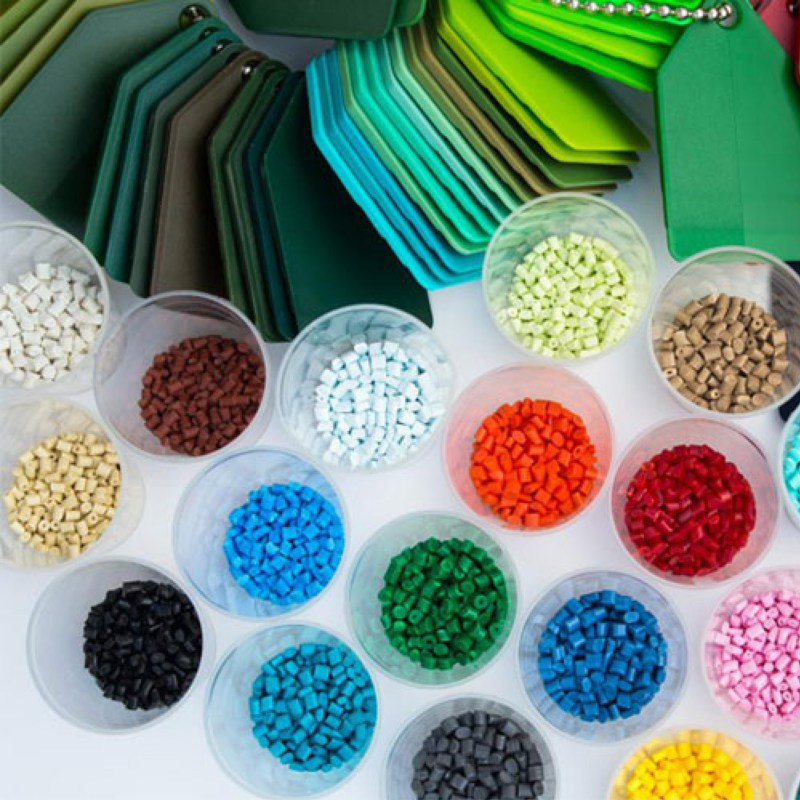
Filler and no filler masterbatches differ mainly in composition and impact on the final product's properties. Filler masterbatch contains mineral fillers like calcium carbonate or talc, while no filler masterbatch uses pure polymer as the carrier resin without added fillers.
● Mechanical Properties:No filler masterbatch preserves the original strength, flexibility, and toughness of PP and PE. Fillers can reduce tensile strength and impact resistance by introducing stress points or making the polymer matrix more brittle.
● Processing Behavior:No filler masterbatch offers smoother processing due to uniform dispersion of additives without filler particles causing clogging or uneven flow. Fillers can increase wear on machinery and cause inconsistent melt flow.
● Aesthetic Quality:No filler masterbatch maintains clarity and surface finish, crucial for transparent or glossy products. Fillers often cause haze, reduced transparency, or a rougher surface texture.
● Compatibility:Since no filler masterbatch uses the same polymer carrier as the base resin, it ensures excellent compatibility, avoiding phase separation or weak bonding. Fillers may cause incompatibility issues if not well matched.
● Material Cost:Filler masterbatch is typically less expensive upfront because fillers reduce the amount of costly polymer resin needed. This makes it attractive for cost-sensitive, high-volume products.
● Production Efficiency:No filler masterbatch can lower overall production costs by reducing scrap rates, improving cycle times, and minimizing downtime caused by processing issues linked to fillers.
● Product Quality and Waste:Higher quality from no filler masterbatch means fewer rejects and less rework, which saves money and resources over time. Fillers may increase waste due to defects or inconsistent product performance.
● Long-Term Value:For applications demanding high performance, durability, or appearance, no filler masterbatch provides better value despite higher initial cost. For simpler or less demanding products, filler masterbatch offers a cost-effective solution.
Aspect | No Filler Masterbatch | Filler Masterbatch |
Mechanical Strength | Maintains original polymer strength | May reduce strength |
Processing Stability | High, smooth flow | Potential for clogging |
Appearance | Clear, uniform surface | Possible haze, roughness |
Compatibility | Excellent (same polymer carrier) | May cause phase separation |
Upfront Cost | Higher | Lower |
Production Efficiency | Higher (less scrap, downtime) | Lower due to processing issues |
Example: In automotive parts, no filler masterbatch ensures safety and durability, justifying higher cost. In packaging films, filler masterbatch may be preferred for cost savings where extreme strength is less critical.
No filler masterbatch finds valuable use across many industries due to its ability to maintain polymer purity and enhance product quality. Key sectors include:
● Packaging: Flexible films, bags, and containers benefit from consistent color, transparency, and mechanical strength. No fillers preserve flexibility and clarity, essential for consumer appeal and product protection.
● Automotive: High-performance parts demand durability and impact resistance. No filler masterbatch ensures mechanical integrity without adding weak points caused by fillers.
● Medical and Healthcare: Products like medical devices and packaging require strict purity and biocompatibility. No filler masterbatch avoids contamination risks from mineral fillers.
● Consumer Goods: Toys, household items, and textiles gain from improved aesthetics and mechanical properties, enhancing durability and appearance.
● Agriculture: Films and containers used outdoors benefit from UV stabilizers and additives dispersed uniformly in no filler masterbatch, improving lifespan.
● Electronics: Components needing precise coloration and electrical insulation perform better without fillers that could interfere with properties.
These industries rely on no filler masterbatch to meet stringent quality standards, ensuring consistent performance and appearance.
In polypropylene (PP) and polyethylene (PE) products, no filler masterbatch plays a critical role:
● PP Injection Molding: Automotive bumpers, housings, and rigid containers use no filler masterbatch to maintain strength and surface finish. It prevents brittleness and ensures uniform color.
● PP Woven Sacks and Fibers: No filler masterbatch enhances toughness and color consistency, crucial for durability and branding.
● PE Films and Bags: Low-density polyethylene (LDPE) and linear low-density polyethylene (LLDPE) films remain flexible and transparent. No filler masterbatch prevents haze and preserves elongation properties.
● PE Tubing and Pipes: Maintains ductility and impact resistance, essential for fluid transport and outdoor durability.
● PE Containers: Clear containers for food or cosmetics benefit from the absence of fillers, ensuring product visibility and aesthetic appeal.
By matching the masterbatch carrier resin to the base polymer, manufacturers achieve optimal dispersion and consistent quality. No filler masterbatch enhances processing stability, reduces defects, and supports high-performance end products.
No filler masterbatch supports sustainability by reducing the use of mineral fillers like calcium carbonate or talc, which often require mining and processing. By relying solely on pure polymer carriers, it minimizes the extraction of natural resources and lowers environmental disturbance. Additionally, no filler masterbatch often leads to higher product quality and fewer defects, which means less waste generated during manufacturing.
Since no fillers dilute the polymer matrix, products maintain their original properties longer, often extending their lifespan. This durability reduces the need for frequent replacements, indirectly conserving resources and energy over time. Moreover, no filler masterbatch formulations can be optimized to include eco-friendly additives such as UV stabilizers and antioxidants that help protect the product from degradation caused by sunlight or oxidation, further enhancing sustainability.
Products made using no filler masterbatch are easier to recycle because they contain a consistent polymer type without inert mineral fillers. Fillers can complicate recycling processes by contaminating the polymer stream or requiring additional separation steps. In contrast, no filler masterbatch ensures a homogeneous material, which improves recyclate quality and promotes circular economy practices.
Reduced filler content also means less solid waste during production, as fewer rejected parts or off-spec materials occur due to processing issues caused by fillers. This contributes to lower landfill disposal and decreases environmental pollution. Furthermore, the enhanced mechanical and aesthetic properties from no filler masterbatch reduce product returns and failures, cutting down on waste generated post-consumer.
In summary, no filler masterbatch aligns well with modern environmental goals by supporting resource efficiency, improving recyclability, and minimizing waste throughout the product lifecycle.
No filler masterbatch offers significant benefits for PP and PE applications by preserving mechanical integrity, enhancing processing stability, and ensuring aesthetic quality. It improves product performance and sustainability by maintaining polymer purity and recyclability. For high-quality applications, choosing no filler masterbatch is ideal. Foshan Hongshengde Masterbatch New Materials Co., Ltd. provides specialized no filler masterbatch solutions, delivering superior value through consistent quality and performance. Their products are designed to meet stringent industry standards, making them a reliable choice for manufacturers seeking excellence.
A: No filler masterbatch is a concentrated blend of pigments and additives in a pure polymer carrier, without added fillers like calcium carbonate.
A: No filler masterbatch preserves mechanical integrity, enhances processing stability, and improves aesthetic quality, making it ideal for high-quality PP and PE applications.
A: It maintains or improves transparency by eliminating opaque filler particles, ensuring clearer appearance and better printability.
A: While initially more expensive, it reduces long-term costs by minimizing waste, improving processing, and enhancing product quality.
