
close
Choose Your Site
Global
Social Media
Views: 0 Author: Site Editor Publish Time: 2026-09-03 Origin: Site


Achieving consistent opacity and whiteness in plastics manufacturing goes beyond simply adding pigment. It requires a deep understanding of material grades, thermal processes, and polymer science. Manufacturers face intense pressure to deliver flawless products consistently across high-volume runs. Selecting the wrong grade often leads to severe processing defects. Production issues like film lacing, surface tearing, and high dosing ratios heavily impact your bottom line margins. Product rejection rates skyrocket when material grades clash under high heat.
A high-performing additive must deliver optimal dispersion, thermal stability, and maximum tinting strength. You need to achieve this at the lowest viable let-down ratio for your specific polymer matrix. This comprehensive guide gives technical procurement and production managers a proven evaluation framework. We will help you analyze technical data sheets effectively. You will learn how to align these critical material specifications directly with your exact manufacturing realities.
Rutile Titanium Dioxide (TiO2) grades heavily outperform Anatase grades in refractive index, weatherability, and tinting strength.
Carrier resin compatibility is non-negotiable; the Melt Flow Index (MFI) of the masterbatch must align with the base polymer to ensure homogeneous dispersion.
Achieving high coloring properties relies on advanced dispersion technology rather than simply overloading the masterbatch with raw pigment or cheap calcium carbonate fillers.
Selecting a reliable supplier requires evaluating their batch-to-batch consistency and specific testing protocols (e.g., filter pressure value tests).
Titanium Dioxide serves as the primary whitening agent in modern plastics. However, not all TiO2 particles perform equally under manufacturing stress. You must understand the crystalline structures to optimize your formulations.
Rutile Titanium Dioxide provides a much higher refractive index. It measures at 2.73. This attribute delivers superior opacity and excellent UV resistance. Industry leaders rely on Rutile for durable, high-opacity applications. It forms the benchmark for outdoor agricultural films and rigid packaging.
Anatase TiO2 features a lower refractive index of 2.55. Products utilizing Anatase are highly prone to chalking under UV exposure. Manufacturers generally limit Anatase to short-lifespan, indoor applications. Companies choose it only when upfront material cost drives the entire project.
Titanium Dioxide Crystalline Structure Comparison
Property | Rutile Grade | Anatase Grade |
|---|---|---|
Refractive Index | 2.73 | 2.55 |
Weatherability / UV Resistance | Excellent (Minimal chalking) | Poor (High chalking risk) |
Tinting Strength | Superior | Moderate |
Ideal Application | Durable goods, outdoor films | Short-term indoor packaging |
Raw TiO2 particles tend to clump together naturally. Chemical engineers apply inorganic and organic surface treatments to prevent this agglomeration. Alumina and silica form durable inorganic coatings around the particles. These layers improve compatibility directly within the polymer matrix. Organic coatings further reduce surface tension. This makes the pigment much easier to disperse during high-speed extrusion.
Many procurement teams chase high TiO2 concentration percentages. They assume a 70% concentration automatically yields better results. This is a dangerous misconception. High concentration only improves performance if the compounding technology ensures absolute dispersion. Without advanced twin-screw compounding, densely packed particles form clumps. These clumps cause surface defects and waste expensive pigment.
The carrier resin acts as the delivery vehicle for your pigment. If this vehicle fails to integrate smoothly, the final product suffers immediately. Proper integration defines the success of your entire manufacturing run.
The masterbatch carrier must be identical or highly compatible to your final product base resin. Using an LLDPE carrier for polyethylene films ensures seamless blending. Injection molding polypropylene products requires a PP-based carrier. When you select a premium white masterbatch, confirming this matrix match is your first operational priority. Mismatched matrices cause delamination and structural weak points.
MFI measures how easily a polymer flows when melted. The masterbatch MFI must measure slightly higher than your base polymer. This differential facilitates proper melting and internal mixing. The pigment flows outward into the stiffer base material naturally.
Consequences of MFI mismatch are severe. If the masterbatch flows too slowly, you will see distinct flow marks. Streaking appears across thin films. The final product also loses critical mechanical strength due to unmixed polymer zones.
Some manufacturers offer universal carriers based on EVA (Ethylene Vinyl Acetate). These sound convenient for mixed-production facilities. However, universal solutions involve significant performance trade-offs. They often lack the thermal stability needed for engineering plastics like PET or ABS. High-end manufacturing always demands polymer-specific carriers for flawless mechanical integrity.
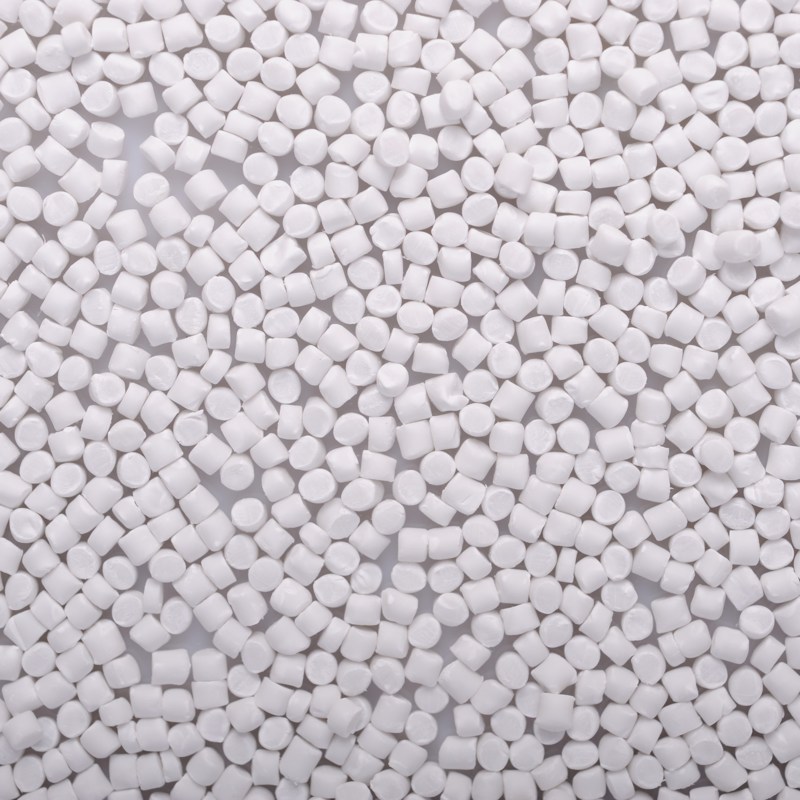
You cannot judge material quality by looking at raw pellets. True evaluation requires a methodical breakdown of technical documentation. Procurement teams must rigorously audit white masterbatch specifications to guarantee complete production suitability.
The Technical Data Sheet serves as your primary defense against poor quality. You must mandate strict technical parameters during the procurement evaluation phase. Never accept vague ranges. Demand precise testing methodologies alongside the reported figures.
Filter Pressure Value (FPV): This metric stands as the most reliable indicator of dispersion quality. A low FPV means the material contains fewer agglomerates. Your extrusion screen packs will last significantly longer. High FPV indicates poor mixing and imminent production blockages.
Moisture Content: You must control moisture heavily, keeping it strictly below 0.1%. Extrusion lamination and high-speed film blowing are highly sensitive to water. Excess moisture causes lacing. Trapped steam creates visible voids across the film surface.
Heat Resistance: The pigment must maintain chemical stability at your specific processing temperatures. Certain engineering plastics require continuous processing above 280°C. Standard grades will scorch, turning the brilliant white into an unusable yellow shade.
Always cross-reference the TDS heat resistance value against your highest barrel zone temperature. Factor in potential shear heat generated by the screw design. Shear heat often pushes the actual melt temperature 10°C to 15°C higher than your machine settings.
Creating brilliant opacity requires scientific precision. It goes far beyond simply dumping more powder into a mixer. Optimal light scattering dictates how bright the final product appears to the human eye.
Light scattering reaches its peak when particle sizes are tightly controlled. A narrow, optimized TiO2 particle size between 0.2 and 0.3 microns maximizes this effect. This specific micron range interacts perfectly with visible light wavelengths. The result is maximum tinting strength from less physical material.
To successfully source a white masterbatch with high coloring propertity, you must aggressively audit the filler content. Premium formulations rely heavily on pure Rutile TiO2 and optimized polymer carriers. Subpar formulations hide behind heavy filler loads to artificially inflate the apparent concentration.
You must recognize when a partner has diluted the TiO2 content. Cheap calcium carbonate fillers are common culprits. While CaCO3 reduces upfront cost, it drastically reduces the core coloring property. It adds unwanted density and weight to your final product. Furthermore, heavy calcium carbonate loads completely destroy the glossy surface finish. Your premium packaging will look dull, chalky, and structurally inferior.
Ignoring compatibility rules leads to immediate and costly consequences on the factory floor. Production lines must halt to address defects, destroying throughput metrics and wasting expensive resin.
Die build-up, commonly known as bearding, is a frequent problem. Poor thermal stability or volatile chemical additives cause material to accumulate at the die lip. Operators must stop the line to scrape the die constantly. This ruins production efficiency.
Lacing and pinholes represent another direct result of poor material choices. High moisture content boils inside the die. Poor dispersion leaves un-melted pigment clusters. These clusters tear thin films as they stretch, creating distinct pinholes.
Large pigment agglomerates act as severe stress concentrators within the polymer matrix. They disrupt the continuous molecular chain of the plastic. When physical stress hits the product, cracks initiate exactly at these agglomerate points. You will see significantly reduced tensile strength and terrible drop-impact resistance in your finished containers.
Buying a cheaper, low-grade material usually forces a higher let-down ratio (LDR). You might need 8% of a cheap additive to achieve the target opacity. A premium grade might achieve identical opacity at just 3%. You will ultimately consume more raw material, radically increasing the total cost per manufactured unit.
Partnering with the right manufacturer defines your long-term success. You must look far past the initial sales pitch and examine their operational maturity.
Move beyond basic price quotes immediately. Evaluate the production capabilities of any prospective white masterbatch supplier. Do they operate advanced twin-screw extruders? Do they maintain an in-house testing laboratory? A supplier lacking internal testing equipment cannot guarantee batch consistency.
Require documented proof of batch-to-batch consistency before issuing purchase orders. Ask for spectrophotometer color matching data across multiple runs. Demand recent FPV test results.
You must also verify regulatory compliance relevant to your specific sector. Food contact packaging requires strict FDA approval documents. Electronics manufacturing demands explicit REACH and RoHS compliance certificates. Never assume compliance based on verbal promises.
Request standard 25kg sample bags for pilot production runs. Do not rely solely on laboratory plaques. Run the material on your actual production equipment. Establish clear baseline metrics during this pilot. Document the precise opacity achieved. Record the required let-down ratio. Monitor the screen pack pressure over a two-hour run. Only sign long-term procurement contracts after the sample passes these physical trials.
True whitening performance relies on a strict combination of variables. It requires high-quality Rutile TiO2, precise carrier resin matching, and rigorous dispersion technology. Overlooking any single factor compromises your entire production run. Evaluating technical data sheets and understanding particle size distribution separates successful operators from struggling ones.
Base your procurement decisions on comprehensive lifecycle metrics. Analyze the required dosing ratio, the projected defect rate, and the base material cost. Refuse to judge value based entirely on the per-kilogram price of the additive alone. Adopt stringent supplier vetting processes to secure consistent, high-quality production outputs.
A: The ideal let-down ratio heavily depends on the final application. It typically ranges from 2% to 10%. Thick injection-molded parts usually require a lower LDR around 2%. Extremely thin packaging films demanding total light blockage might require up to 10%. Your target opacity always dictates the final ratio.
A: You should avoid this practice. Using mismatched carriers introduces severe compatibility risks. It causes delamination and drastically reduces mechanical strength. You must always recommend polymer-specific carriers to maintain structural integrity and prevent visual defects.
A: You should request a Filter Pressure Value (FPV) test report from the manufacturer. Internally, you can conduct a blown film visual inspection. Run a thin film sample and hold it against a strong backlight. Un-melted particles will appear as dark specks or clear pinholes.
A: No, they are not inherently better. Concentrations above 70% require highly advanced compounding technology to prevent severe clumping. A higher concentration only provides better value if the internal dispersion remains flawless. Poorly dispersed high-concentration grades will cause immediate extrusion blockages.
