
close
Choose Your Site
Global
Social Media
Views: 0 Author: Site Editor Publish Time: 2026-08-26 Origin: Site


Sourcing plastics coloring often feels deceptively simple. You might hand over a Pantone code or a physical target to a vendor, expecting an exact match. However, this minimalist approach rarely delivers the intended results.
Relying on basic color targets usually leads to extended sampling cycles and production delays. Worse, it can cause catastrophic failures during mass production, such as part delamination or structural weakness. The critical gap between a lab match and production-scale success is bridged by a tightly defined Request for Quotation (RFQ).
This article provides procurement and engineering teams with a comprehensive, technical RFQ framework. You will learn how to structure exact parameters to filter out unqualified vendors. Ultimately, you will secure accurate, production-ready bids ensuring consistent manufacturing runs.
Procurement teams often issue brief RFQs to save time. They request a simple price per kilogram based on a target shade. This approach usually backfires. Vague requests create immense sourcing bottlenecks. Suppliers submit artificially low initial bids. They assume standard, low-cost carrier resins and basic pigments. You eventually reveal actual technical constraints during the sampling phase. This forces multiple rounds of requoting. The process wastes weeks of valuable engineering time.
Incomplete requests also introduce hidden production risks. Formulations directly affect the mechanical integrity of your final part. Setting an incorrect Let-Down Ratio (LDR) alters the base polymer’s impact strength. Improperly matched carrier resins weaken tensile properties. A poor match causes layer separation. The plastic part might look correct but fail under mechanical stress. You must prevent these failures by demanding precise color masterbatch specifications upfront.
Think of your RFQ as an evaluation lens. A detailed document functions as a primary filter. It tests a supplier’s technical competence. It also exposes their quality assurance transparency. Unqualified vendors often ignore strict parameters. They provide generic quotes instead. Highly capable manufacturers engage deeply. They ask clarifying questions regarding your molding parameters. They request base resin data sheets. You should prioritize vendors showing this level of engineering rigor.
Achieving a seamless blend begins at the molecular level. Your RFQ must eliminate any guesswork regarding base materials. The masterbatch must integrate perfectly into your production line.
Follow these essential physical parameters when drafting your request:
You avoid surface peeling when carrier resins align perfectly. Parts retain their structural integrity. Accurate MFI matching prevents gate blush and short shots. Proper let-down ratios keep your material handling consistent. You ultimately stabilize your entire injection molding cycle.
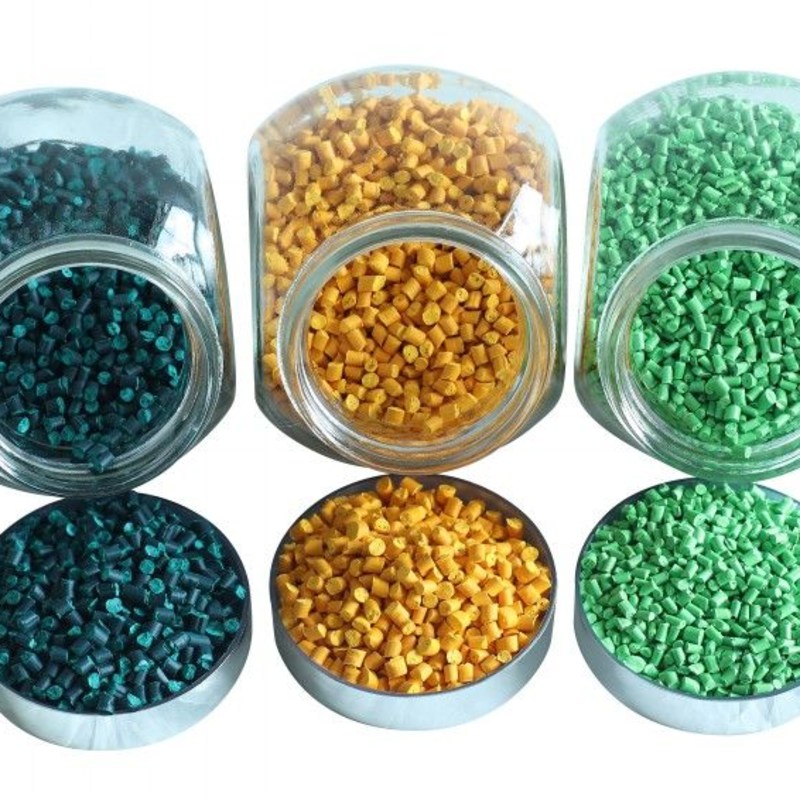
Heat and shear forces heavily impact pigments during processing. Your RFQ must address the aggressive environment inside the machine barrel. high quality color masterbatch for injection must withstand specific thermal thresholds without breaking down.
Specify the maximum processing temperature. Plastics like polycarbonate demand processing temperatures exceeding 300°C. Detail the expected residence time in the barrel. Heat degrades unstable pigments rapidly. This degradation causes noticeable color shifts. It generates black specks on the part surface. Severe thermal breakdown also causes mechanical failure. Make sure you state these temperature limits clearly in the document.
Set stringent standards for dispersion quality. Pigments must distribute evenly throughout the carrier resin. Poor dispersion causes agglomeration. Unmixed color clumps ruin part aesthetics. Agglomeration proves especially disastrous for thin-wall injection molding. It also destroys high-gloss finishes. Specify dispersion testing methods. Visual film tests or microscopic evaluations provide measurable data. You eliminate tiger stripes and color swirling by enforcing these standards.
Define acceptable pellet dimensions and geometry. Pellet size affects feeding behavior. Irregular sizes cause segregation inside the material hopper. Small pellets melt faster than large ones. This inconsistency leads to uneven color distribution. Require uniform cylindrical or spherical geometry. Establish a maximum allowable moisture content. Wet pellets cause splay marks and structural voids. Your machine hoppers demand consistent, dry, and uniformly shaped materials.
A molded component must perform reliably in its final environment. Your RFQ should capture every external stressor the part will face. It must also list every required legal certification.
Detail the expected environmental durability. Specify required scales for light fastness if the product faces indoor or outdoor lighting. The Blue Wool scale (ranging from 1 to 8) provides a measurable benchmark. Define necessary weathering elements. Outdoor applications mandate specific UV absorbers or stabilizers. Without UV protection, vivid colors fade into chalky whites within months. Your request must define the intended lifespan under direct sunlight exposure.
List all chemical and migration resistance requirements. Detail if the final part will encounter aggressive substances. Common examples include solvents, industrial oils, or harsh cleaning agents. Certain pigments bleed when exposed to chemicals. They migrate onto adjacent surfaces. You prevent this by demanding chemical resistance data upfront.
Do not wait until the sampling phase to discuss regulations. List mandatory compliance frameworks immediately. Early alignment prevents costly late-stage regulatory disqualifications.
Table: Regulatory Compliance and End-Use Framework
| Application Sector | Common Certifications Required | Key Performance Focus |
|---|---|---|
| Food Packaging & Containers | FDA (21 CFR), EFSA, BPA-Free | Zero migration, non-toxic formulation |
| Consumer Electronics | RoHS, REACH, UL 94 | Flame retardancy, heavy-metal free |
| Medical Devices | ISO 10993, USP Class VI | Biocompatibility, sterilization resistance |
| Automotive Interiors | OEM Specific, REACH | Low VOC emissions, high UV stability |
Demand verifiable documentation early in the relationship. Require a Certificate of Compliance upon sample delivery. This proves the formulation meets safety requirements. It guarantees you can legally sell your product in global markets.
You cannot manage what you do not measure. A professional RFQ defines explicit mathematical tolerances. Relying purely on visual inspection causes endless disputes. You need a data-driven approach to guarantee batch-to-batch consistency.
Define the maximum acceptable color matching tolerances. Use the Delta E (ΔE) metric. Specify a hard limit, such as ΔE ≤ 1.0. This ensures the variation remains invisible to the human eye. Establish the exact measurement parameters. Specify the standard illumination source, such as D65 (daylight). Detail the spectrophotometer settings. Mandate standard observer angles, typically set to 10 degrees. Aligning these variables prevents miscommunication. You and your vendor will measure samples under identical optical conditions.
Require your color masterbatch supplier to guarantee batch-to-batch consistency. Ask them to explain their internal quality assurance controls. They should detail their tracking methodologies. Robust manufacturers retain physical standard chips. They track historical spectrophotometer data across production runs. They employ strict incoming raw material inspections. You gain confidence by understanding their internal processes.
Stipulate stringent delivery documentation requirements. Every commercial delivery must include a Certificate of Analysis (CoA). The CoA provides proof of performance. It must detail the exact Let-Down Ratio tested. It should display moisture content levels. It must include a dispersion rating. Crucially, it must state the final ΔE against the master standard. You should reject any shipment arriving without this documentation. A comprehensive color masterbatch formulation demands rigorous proof at delivery.
A highly detailed RFQ protects your profit margins. It ensures accurate cost calculations from the very first quote. You eliminate the frustrating trial-and-error sampling phase. Defining physical parameters, thermal limits, and quality tolerances sets a clear standard. It forces suppliers to address complex engineering realities immediately.
Apply simple shortlisting logic during vendor selection. Discard bids from suppliers who accept complex RFQs without asking clarifying technical questions. Silence often indicates a lack of engineering rigor. Capable partners will always verify base resin specifications and molding temperatures. They view your RFQ as a collaborative starting point.
Take action today by consolidating these specifications. Build a standardized RFQ document for your procurement team. Include specific Delta E tolerances, carrier resin requirements, and regulatory benchmarks. Initiate the sampling phase only with top-tier candidates who meet every documented requirement.
A: While 2-3% is standard across the industry, no single ratio fits all. The optimal LDR depends heavily on your specific part thickness, desired opacity, and base polymer type. Thin-wall parts often require higher LDRs to achieve full color coverage. Always specify your part dimensions and opacity goals in the RFQ to determine the best ratio.
A: Heat breaks down chemical structures. If your processing temperature exceeds a pigment's thermal stability limit, the pigment degrades. Heat-induced degradation causes severe color shifts, dullness, and black carbon specks. Knowing your barrel temperatures ensures suppliers select heat-stable pigments, preserving final part aesthetics and preventing mechanical failure.
A: Realistic timelines for custom color matches usually range from 3 to 7 business days. This timeframe depends on the resin's complexity and the specific regulatory requirements involved. Engineering-grade resins or complex compliance profiles (like FDA or ISO 10993) require more rigorous formulation and testing, extending the timeline slightly.
A: Avoid the myth of "universal" carrier resins. Using a single masterbatch across incompatible polymers causes severe issues. It leads to structural delamination, poor dispersion, and reduced mechanical strength. You must match the masterbatch carrier resin exactly to your specific base polymer to ensure proper blending and structural integrity.
