
close
Choose Your Site
Global
Social Media
Views: 0 Author: Site Editor Publish Time: 2026-09-10 Origin: Site


Getting the exact shade for your plastic products demands far more than a quick visual approval. Incorrect formulations frequently cause rejected lots, extensive machine downtime, and severely compromised structural integrity. The plastics industry has rapidly shifted from basic material procurement toward deep technical partnerships. Transitioning away from standard catalog colors into highly specific custom formulations introduces complex variables. You must closely manage pigment dispersion quality, thermal stability, and supply chain reliability. Ignoring these factors invites catastrophic production failures.
We designed this guide to provide a rigorous, evidence-based checklist. You will learn how to evaluate potential suppliers effectively and validate critical technical specifications. Precise methodology matters when scaling up plastic production. By following these steps, you can actively mitigate operational risks long before you ever sign a purchase order. Equip yourself with the right technical questions to ensure your next manufacturing run remains highly profitable and consistent.
Validating polymer carrier compatibility forms the foundation of any successful plastics project. Universal carriers often sound convenient for general applications. However, they pose severe risks in precision manufacturing environments like injection molding or thin-film extrusion. Using an incompatible carrier resin leads to part delamination. It weakens weld lines and causes erratic pigment dispersion. You should always demand a carrier resin identical to your base polymer.
Matching the Melt Flow Index (MFI) requires equal attention. You must align the masterbatch MFI closely to your base polymer. If the masterbatch flows too freely, it acts as an unintended lubricant inside the barrel. This induces screw slippage and disrupts dosing accuracy. Conversely, a poor-flowing masterbatch creates undispersed pigment specks. It clogs filter screens and bottlenecks your entire processing line.
Finally, confirm specific processing temperature thresholds. Pigments and additives must survive your exact molding or extrusion temperatures. Heat degradation ruins the intended color completely. It also releases volatile gases into the melt. These trapped gases create visible surface defects like splay or silver streaks.
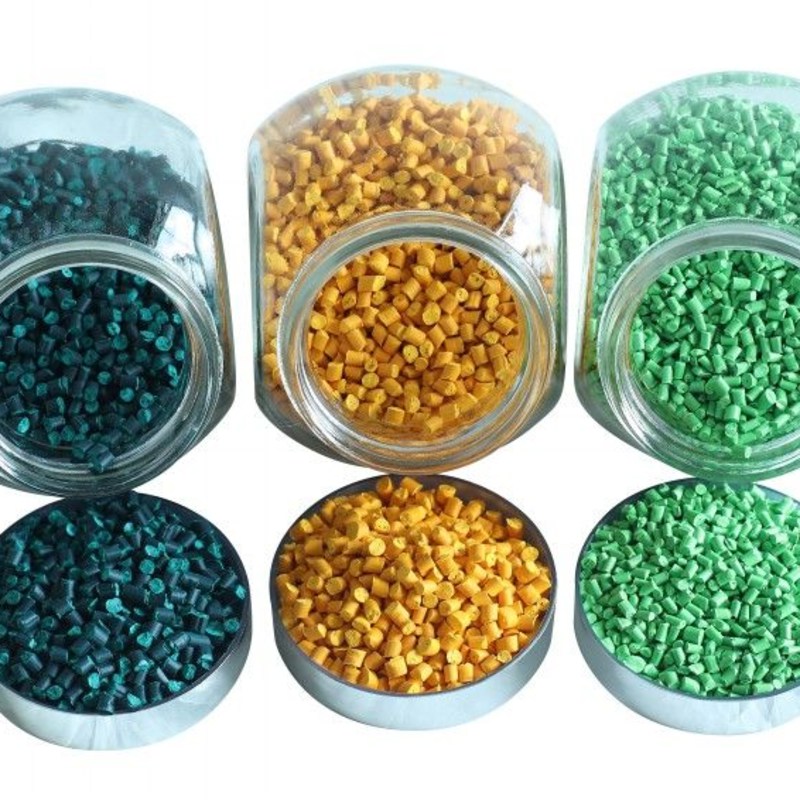
Modern manufacturing requires highly objective measurement standards. Visual checks against physical Pantone swatches fail to provide necessary repeatability. You must require suppliers to formulate your color matching masterbatch using advanced spectrophotometers. Define all acceptable tolerances strictly within the CIELAB color space. For high-end cosmetic or automotive applications, mandate a target Delta E (ΔE) of ≤ 1.0.
You also need a clear strategy for managing metamerism. Colors frequently look different under varying light sources. Specify your product's end-use lighting conditions during the initial matching phase. Identify whether your parts will sit under D65 daylight, store fluorescent lights, or household LEDs. This ensures the final product looks correct in its actual retail environment.
Surface finish variables play a massive role in perceived color. Account for how the final texture, gloss level, or opacity alters the appearance. A highly polished, glossy finish always looks darker than a matte finish molded from the exact same plastic batch.
CIELAB Color Tolerance Guidelines
| Delta E (ΔE) Target | Visual Perception | Ideal Application Scenarios |
|---|---|---|
| ≤ 1.0 | Imperceptible difference to the human eye. | Automotive interiors, premium cosmetics packaging, medical devices. |
| 1.1 to 2.0 | Slight difference visible upon close inspection. | Consumer electronics, high-end appliance housings. |
| 2.1 to 3.0 | Noticeable difference but acceptable for general use. | Industrial pipes, structural components, disposable packaging. |
Maintaining excellent batch color consistency relies heavily on the supplier’s compounding equipment. Twin-screw extrusion technology provides superior shear rates. This mechanical shear breaks down pigment agglomerates effectively. Ask prospective suppliers about their specific extruder configurations. Robust compounding technology directly correlates to the homogeneity of the final pigment dispersion.
Quality Control (QC) documentation serves as your primary defense against defective lots. Mandate a formal Certificate of Analysis (CoA) with every single shipment. The CoA proves the batch passed specific laboratory tests before leaving the supplier's loading dock. It should include precise spectrophotometer readings, moisture content analysis, and pellet count metrics.
Assess the supplier's historical reliability thoroughly. Request standard deviation data from previous commercial runs. This data reveals their actual ability to maintain tight color control. Consistent manufacturers demonstrate low deviation across multiple campaigns spanning several months.
Navigating the gap between prototyping and mass production requires careful planning. Pilot runs require low-volume sampling. However, bulk production dictates much higher commercial minimums. You must evaluate a supplier's custom masterbatch MOQ early in the negotiation process. A rigid supplier might refuse small sample batches, delaying your crucial testing phases.
Inventory realities heavily impact your daily operations. A massive minimum order requirement consumes valuable warehouse space. It also ties up vital cash flow unnecessarily. Negotiate flexible blanket orders where possible. Set up safety stock agreements so the supplier holds emergency inventory for rapid dispatch.
Production environments remain dynamic. Base resins change, and functional additive requirements shift based on new regulations. Evaluate your supplier's overall agility. Calculate their average turnaround time for reformulating a recipe mid-production. Agile suppliers quickly adjust pigment loads without derailing your manufacturing schedule.
A rigorous facility audit separates premium partners from basic commodity brokers. Focus heavily on their in-house laboratory capabilities. Look specifically for laboratory-scale injection molding machines. They need these small machines to shoot test plaques rapidly. Check for accelerated weathering chambers. Verify they own precision melt flow indexers. Without these tools, they cannot validate the quality of your custom color masterbatch properly.
You must also validate application-specific additives during the audit. Many manufacturers request combi-batches. These combine pigments with functional additives like UV stabilizers, anti-static agents, or flame retardants. Ensure the lab can independently test these functional properties. Poorly compounded flame retardants compromise critical safety certifications.
Finally, scrutinize their regulatory and environmental compliance. Ensure the proposed formulation meets all necessary industry standards. Common mandates include FDA approval for food contact, REACH/RoHS compliance, and specific medical ISO standards. Always request exact certification documentation prior to initiating mass production.
Supplier Facility Audit Checklist
| Audit Category | Key Elements to Verify |
|---|---|
| Laboratory Equipment | Spectrophotometers, lab-scale extruders, moisture analyzers, MFI testing units. |
| Process Automation | Gravimetric dosing systems, automated pelletizing lines, dust extraction. |
| Compliance Records | ISO 9001 certificates, FDA compliance letters, REACH declarations. |
Securing the right masterbatch supplier requires a logical, step-by-step evaluation funnel. You must always start by confirming core technical capabilities. Validate carrier compatibility and MFI matching first. Next, move into empirical validation through lab plaques and targeted pilot runs. Only after confirming technical success should you finalize commercial terms like minimum order quantities and lead times.
Remember proactive risk mitigation saves significant capital. Cheaper upfront per-kilo pricing frequently hides massive operational costs. Poor dispersion causes excessive material scrap and unacceptable machine downtime. Prioritizing technical precision over the lowest initial bid keeps your production lines running smoothly.
Take immediate action on your next project. Prompt your procurement team to request a deep technical consultation. Submit a physical sample of your base polymer to prospective suppliers. Ask them to provide a detailed capability matrix proving their compliance and testing standards.
A: While 2% to 5% is standard, the exact LDR depends heavily on pigment opacity, part thickness, and base resin properties. You must follow the supplier's precise dosing recommendations. Deviating from the LDR causes severe under-coloring or unexpected physical property loss in the molded part.
A: The standard timeline usually spans 3 to 10 days for creating initial lab plaques. However, unique regulatory requirements or special effect pigments often extend this timeframe. Quick iterations depend on you providing exact target samples and accurate base resin data upfront.
A: Yes. These are called combi-batches. They combine color pigments with functional additives like UV stabilizers or anti-block agents. Combi-batches simplify dosing on the factory floor. However, they increase formulation complexity and require more rigorous testing to ensure both functions perform correctly.
A: Operational variables often trigger color drift. Fluctuating barrel temperatures, inconsistent gravimetric dosing equipment, or varying ratios of regrind are common culprits. You must differentiate these machine-side processing issues from actual masterbatch formulation defects before filing a supplier claim.
