
close
Choose Your Site
Global
Social Media
Views: 0 Author: Site Editor Publish Time: 2026-01-26 Origin: Site


Have you ever wondered how plastic products maintain their consistent white appearance? The secret lies in White Masterbatch. This crucial additive plays a key role in making plastic products look vibrant and durable. In this article, we’ll explore what White Masterbatch is, how it works, and why it's essential in industries like packaging, automotive, and consumer goods. You’ll also learn how to choose the right formulation for your production needs.
White Masterbatch is a highly concentrated mixture of pigments and a polymer carrier resin, primarily used in plastic manufacturing to achieve a consistent, bright white color. The main purpose of White Masterbatch is to enhance the aesthetic and functional properties of plastic products. This additive plays a crucial role in making plastics opaque and bright, which is particularly important for packaging, automotive, and construction applications. It also ensures that the plastic maintains its color consistency and durability over time.
In the plastic production process, White Masterbatch is introduced to the base resin, which allows manufacturers to create high-quality products with excellent color uniformity and opacity. The addition of this masterbatch improves the final product's performance, extending its lifespan and resistance to environmental stressors like UV radiation and heat.
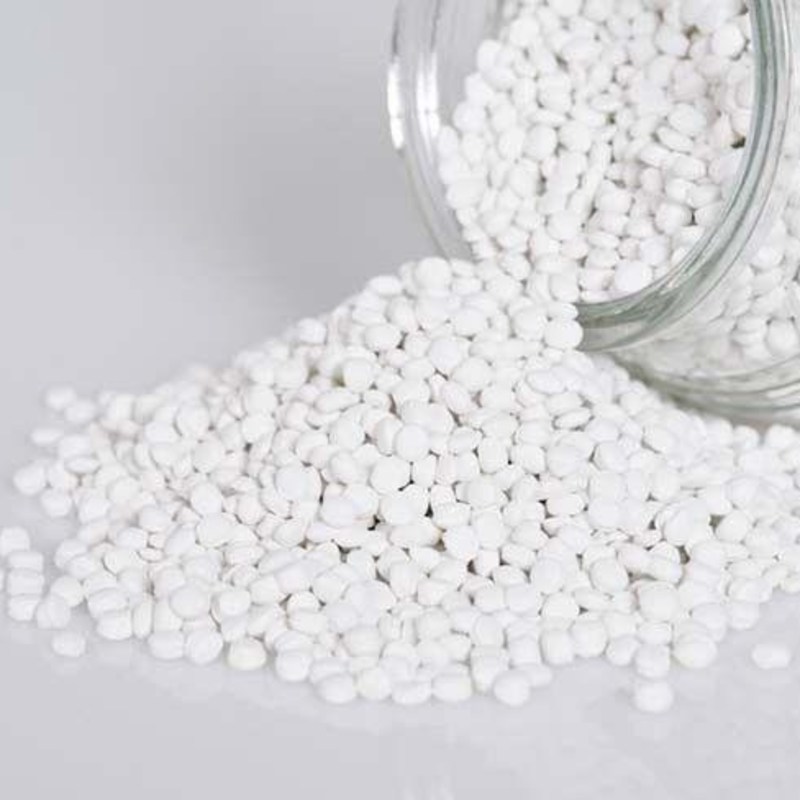
● Improved opacity: Prevents transparency and gives products a clean white finish.
● Bright whiteness: Provides a vibrant white color without the need for additional processing steps.
● Durability: Enhances resistance to UV damage and degradation, particularly in outdoor applications.
Titanium Dioxide (TiO₂) is the primary pigment used in White Masterbatch due to its excellent light-scattering properties. TiO₂ is a naturally occurring mineral that is highly effective at reflecting light, making it the perfect material for achieving high opacity and a bright white color. It also provides UV protection, preventing the plastic from yellowing or degrading when exposed to sunlight.
TiO₂ is often used in its rutile form, as it offers superior opacity and brightness. The size of the TiO₂ particles also plays a role in the final product's appearance. Smaller particles tend to provide a bluish tint, while larger particles give a warmer, yellowish hue.
The carrier resin in White Masterbatch serves as the medium through which the TiO₂ pigment is evenly distributed within the plastic material. Carrier resins are typically made of materials like Polyethylene (PE) or Polypropylene (PP), which help bind the pigment and facilitate the dispersion process. The type of resin used can affect the processing properties and final characteristics of the plastic product.
Resin Type | Common Use | Key Benefits |
Polyethylene (PE) | Food packaging, plastic bags | Low cost, excellent dispersion |
Polypropylene (PP) | Automotive parts, housewares | High temperature resistance, good stiffness |
Polystyrene (PS) | Consumer goods, toys | Low cost, easy processing |
Additives in White Masterbatch help improve the performance of the final plastic product. For example, UV stabilizers can be added to protect the plastic from sun damage, preventing color fading and material degradation. Anti-yellowing agents can also be included to maintain the pristine white appearance of the product over time. Additionally, plasticizers may be added to improve flexibility, while dispersants enhance the even distribution of TiO₂ throughout the resin.
The selection of materials plays a crucial role in the quality of White Masterbatch. High-quality Titanium Dioxide (TiO₂) is the most important raw material, and its purity and particle size are carefully controlled to ensure the desired opacity and brightness. In addition to TiO₂, high-quality carrier resins such as PE or PP are chosen based on the specific application requirements, whether it’s for packaging, automotive parts, or other industries.
Additives like UV stabilizers and anti-yellowing agents are selected depending on the product's intended use, especially if it will be exposed to sunlight or high temperatures. These materials are carefully mixed to maintain consistency and high performance.
Once the raw materials are selected, the next step is to ensure the even dispersion of the pigment within the resin. Advanced equipment, such as a twin-screw extruder, is used to apply high shear forces, breaking down the pigment agglomerates into fine particles. This process ensures that the TiO₂ is uniformly distributed throughout the resin, which is critical for achieving consistent whiteness and opacity.
An even dispersion of the pigment is essential for product quality. Uneven dispersion can lead to color variations and inconsistencies in opacity, which can be detrimental to the appearance and performance of the final plastic product.
The extrusion process is where the carrier resin and pigment dispersion are combined and heated to a molten state. The mixture is then forced through an extruder, where the resin and pigment are thoroughly mixed under controlled conditions. The molten material is cooled and shaped into pellets during the pelletization stage. These pellets can then be easily handled, stored, and transported before being used in the production of plastic products.
Extrusion and pelletization are key steps in ensuring that the White Masterbatch is easy to use and integrates smoothly into the plastic manufacturing process. The quality of the pellets is crucial for consistent performance, and they are tested for parameters like size distribution and melt flow properties to ensure they meet industry standards.
Process Step | Description | Key Purpose |
Extrusion | Mixing resin and pigment, then heating and blending | Ensures uniform color and opacity |
Pelletization | Cooling and cutting the extruded material into pellets | Easy handling and consistent quality |
One of the primary benefits of using White Masterbatch is its ability to significantly improve the visual appeal of plastic products. By introducing Titanium Dioxide (TiO₂) into the manufacturing process, White Masterbatch provides a bright and consistent white color to the plastic, ensuring that the end product stands out visually. This is particularly important for products like packaging materials, where visual appeal is key.
White Masterbatch also plays a critical role in enhancing opacity. It ensures that plastic products are not transparent, giving them a solid, opaque finish. This feature is essential for packaging materials and other applications where visibility of the contents or transparency is undesirable. Without sufficient opacity, the product could appear weak or poorly made, impacting consumer perception and the overall aesthetic quality.
● Key Features:Bright White Appearance: Provides a vibrant, consistent color.
Prevents Transparency: Ensures solid opacity, ideal for high-quality packaging.
High-Performance: Maintains the visual appeal across various conditions.
Application Area | Benefit of Opacity and Brightness |
Packaging | Ensures the product stands out on shelves |
Consumer Goods | Enhances overall aesthetic appeal |
Automotive Parts | Provides clean, consistent white color |
In addition to its aesthetic benefits, White Masterbatch is also crucial for improving the durability of plastic products. It provides UV protection, which helps extend the lifespan of products exposed to sunlight or outdoor conditions. By incorporating Titanium Dioxide, White Masterbatch acts as a UV stabilizer, protecting the plastic from the damaging effects of ultraviolet rays. This is particularly beneficial for products like outdoor furniture, agricultural films, and automotive parts that are regularly exposed to sunlight.
Moreover, White Masterbatch helps prevent the yellowing and aging of plastic over time. Without proper UV protection, plastics can degrade, discolor, and lose their strength. This is where the UV-protective properties of White Masterbatch come into play, providing long-lasting color retention and enhancing the product’s resistance to weathering.
● Key Benefits:UV Protection: Guards against sun damage, maintaining product integrity.
Prevents Yellowing: Keeps the plastic’s color fresh and white.
Extended Durability: Enhances the longevity of the product, even in harsh environments.
Material Type | UV Protection Benefit |
Outdoor Furniture | Protects against sun damage and aging |
Agricultural Films | Ensures consistent performance in the sun |
Automotive Plastics | Retains color and material strength in harsh conditions |
While White Masterbatch offers various benefits, it is also an economical solution for manufacturers. By using White Masterbatch instead of raw Titanium Dioxide, companies can achieve similar visual results at a lower cost. The raw TiO₂ can be expensive, especially when large quantities are needed, but White Masterbatch provides an effective way to reduce material costs while maintaining the desired white finish.
Furthermore, White Masterbatch simplifies the manufacturing process. It is pre-dispersed and ready to use, which saves time and reduces the need for additional processing steps. This not only makes production more efficient but also cuts down on labor and operational costs, further improving the overall cost-effectiveness of the manufacturing process.
● Cost-Reduction Features:Affordable Alternatives to Raw TiO₂: Cuts down on raw material costs.
Simplified Processing: Pre-dispersed, reducing processing time and labor costs.
Efficient Production: Easier handling and better integration with various plastic types.
Production Benefit | Cost-Efficiency Impact |
Material Cost Savings | Reduces reliance on expensive TiO₂ |
Operational Efficiency | Minimizes labor and processing costs |
Waste Reduction | Ensures precise dosage with minimal waste |
White Masterbatch is extensively used in the packaging industry, particularly for food packaging, plastic bags, and shrink films. In food packaging, a clean, bright white appearance is crucial for consumer appeal. White Masterbatch ensures that the plastic maintains a fresh and vibrant look, helping products stand out on the shelves. This is particularly important for food items where the color and appearance reflect the quality of the product inside.
In addition, plastic bags and shrink films benefit from the enhanced opacity provided by White Masterbatch. This opacity ensures that the contents are well-protected from external light, which could otherwise affect the product's quality. It also adds to the visual appeal of the packaging, making it more attractive and reliable for consumers.
● Key Benefits in Packaging:Enhanced Visual Appeal: Provides bright, consistent white color to packaging.
Prevents Transparency: Ensures solid opacity for secure and attractive packaging.
Protection: Helps protect contents from harmful external elements, such as UV light.
The automotive industry makes extensive use of White Masterbatch for interior parts, trims, and accessories. Plastic parts inside vehicles, such as dashboards, door panels, and trims, require a consistent, clean, and durable white finish. White Masterbatch plays a key role in achieving this, providing a uniform white color while maintaining the plastic's strength and resilience.
Additionally, the UV protection and durability offered by White Masterbatch are essential for automotive plastics. These parts are often exposed to sunlight and harsh environmental conditions, which can cause fading or deterioration over time. By incorporating White Masterbatch, manufacturers can ensure that automotive plastics retain their appearance and functionality for much longer, with reduced fading and cracking.
● Key Benefits for Automotive Plastics:Enhanced Aesthetic Quality: Consistent color for vehicle interiors.
Durability: Protects against UV degradation, maintaining the parts’ appearance and strength.
Heat Resistance: Ensures the longevity of plastic parts exposed to high temperatures in vehicles.
White Masterbatch is widely used in the production of household items, toys, and appliances. Many of these consumer goods, including plastic containers, kitchenware, and children's toys, require a bright white appearance that is both attractive and functional. By adding White Masterbatch, manufacturers ensure that these products maintain a visually appealing, consistent white finish while improving their resistance to wear and UV damage.
In the construction industry, White Masterbatch is added to products like PVC pipes, panels, and profiles. The addition of White Masterbatch not only enhances the aesthetic quality but also improves the durability of these materials. Construction materials exposed to sunlight, rain, or varying temperatures benefit from the UV resistance and enhanced longevity that White Masterbatch provides.
● Key Benefits in Consumer Goods and Construction:Improved Aesthetic Quality: Bright and uniform appearance for products like toys and household items.
Increased Durability: Enhances resistance to UV rays and weather conditions, particularly for construction materials like PVC pipes.
Protection: Prevents discoloration and degradation over time, ensuring long-lasting products.
Choosing the right White Masterbatch starts with ensuring compatibility with the base resin used in production. Different resins, such as Polyethylene (PE), Polypropylene (PP), and Polystyrene (PS), each have unique properties and processing conditions. It’s essential to choose a White Masterbatch that works well with the specific resin to ensure proper dispersion, consistent color, and optimal performance.
For instance, Polypropylene (PP) resins typically require White Masterbatch formulations that can withstand higher temperatures, while Polyethylene (PE) is more versatile and can be combined with a wider range of formulations. Ensuring compatibility between the base resin and White Masterbatch can help avoid issues like poor dispersion or color inconsistencies.
The Titanium Dioxide (TiO₂) content in White Masterbatch plays a critical role in determining its opacity and whiteness. When selecting White Masterbatch, it’s important to consider the level of TiO₂ required for the intended application. Higher TiO₂ content provides more opacity, making the plastic more opaque and less transparent.
For products that need to be highly opaque, such as food packaging or automotive parts, a higher TiO₂ concentration is ideal. Conversely, for applications that don’t require as much opacity, a lower TiO₂ concentration can be chosen, making it a more cost-effective option.
● Key Considerations:High TiO₂ Content: Provides maximum opacity for applications like packaging and automotive parts.
Medium TiO₂ Content: Suitable for consumer goods, household items, and toys.
Lower TiO₂ Content: Ideal for films and light packaging applications.
In addition to TiO₂, various additives can be incorporated into White Masterbatch to meet specific performance needs. UV stabilizers are often used for products exposed to sunlight, as they protect against UV degradation and help maintain color stability. Anti-yellowing agents are added to prevent plastic from yellowing over time, ensuring that the white color remains intact.
For applications requiring a glossy finish, high-gloss masterbatches can be used to enhance the surface quality, providing a shiny and smooth texture to the final product. The choice of additives will depend on the product’s intended use, environment, and durability requirements.
● Key Additives:UV Stabilizers: Protect against UV radiation, ideal for outdoor products and automotive parts.
Anti-Yellowing Agents: Prevent discoloration, ensuring long-term white color.
High-Gloss Additives: Provide a shiny, polished finish for consumer goods and packaging.
White Masterbatch is a powerful additive that enhances the quality and appearance of plastic products. HSD Masterbatch offers high-quality solutions, improving opacity and UV resistance while ensuring cost efficiency. Whether for packaging, automotive, or consumer goods, HSD Masterbatch helps manufacturers achieve superior results with durable and consistent color performance.
A: White Masterbatch is a concentrated mixture of Titanium Dioxide (TiO₂) and a polymer resin, used in plastic production to provide brightness, opacity, and durability.
A: It disperses TiO₂ pigment in plastic, enhancing its white color, opacity, and resistance to UV damage, making it suitable for various applications like packaging and automotive parts.
A: White Masterbatch improves the visual appeal, opacity, and durability of plastic products, making them more attractive and long-lasting.
A: Select White Masterbatch based on TiO₂ content, resin compatibility, and any additional needs like UV protection or anti-yellowing agents for specific applications.
A: Yes, White Masterbatch offers a cost-effective alternative to raw TiO₂, improving color quality while reducing overall material and production costs.
