
close
Choose Your Site
Global
Social Media
Views: 0 Author: Site Editor Publish Time: 2026-03-30 Origin: Site


Why do some cables look right but still fail in real use? Cable masterbatch helps solve that problem by improving color control, processing stability, and functional performance in cable insulation and sheathing. In this article, you will learn what cable masterbatch is, why it matters in cable manufacturing, how it affects product quality, and what to consider when choosing it.
Cable masterbatch is a concentrated blend of pigments, functional additives, and a carrier resin that is introduced into cable compounds during extrusion. In practical terms, it gives cable insulation and sheathing materials the color, processing behavior, and targeted performance properties they need before they are formed into the final product. Rather than treating color as a cosmetic layer added afterward, manufacturers use masterbatch to build color and function directly into the polymer system from the start.
Its role in cable production is broader than appearance alone. A well-designed cable masterbatch helps make wires easier to identify, improves resistance to heat or weathering, and supports smoother, more stable extrusion on fast production lines. That combination matters because cable manufacturing is a continuous process where visual consistency, electrical reliability, and processing stability all have to work together.
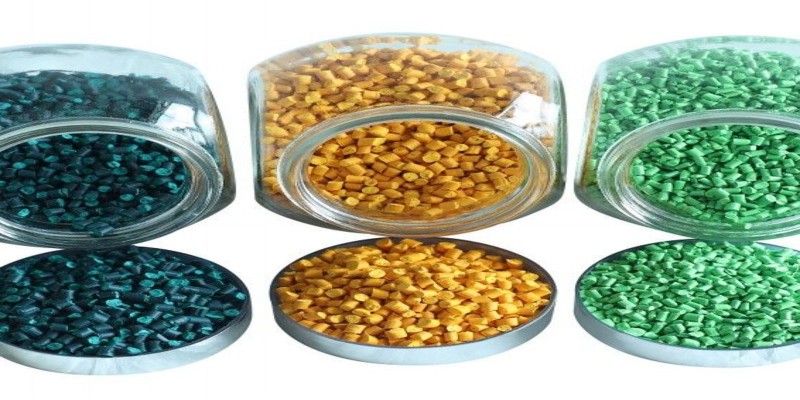
Each cable masterbatch combines several material functions into one system. The table below shows how the main components contribute during cable production:
Component | Main function in cable production |
Carrier resin | Ensures compatibility with the base polymer, such as PE, PVC, or PP, so the masterbatch disperses evenly during extrusion |
Pigments | Deliver stable color, opacity, and recognizable cable coding in insulation or sheathing layers |
Functional additives | Improve properties such as UV resistance, flame retardancy, oxidation resistance, lubrication, and heat stability |
Dispersing and processing aids | Help pigments and additives distribute more uniformly, reducing visible defects and improving extrusion behavior |
In application-specific products, these ingredients are selected around the processing needs of common cable polymers. For example, cable masterbatch from Foshan Hongshengde Masterbatch New Material Co., Ltd. is typically designed for PE-, PVC-, and PP-based cable materials while also supporting dispersion stability, heat resistance, and processing adaptability in extrusion.
In cable systems, color is not just a visual feature; it is part of how the product is used, installed, and maintained. Cable masterbatch helps manufacturers produce insulation and sheath layers with stable, recognizable colors that support fast identification in power, communication, and control applications. When technicians are working with large cable bundles, organized color coding reduces confusion during routing, phase recognition, troubleshooting, and later maintenance. This becomes even more important in industrial environments where many cables run in parallel and mistakes can create safety risks, downtime, or costly rework.
Color consistency also matters from batch to batch. If the same cable type appears slightly different across production runs, recognition becomes less reliable in the field. That is why cable-grade masterbatch is expected to deliver uniform dispersion, stable hue, and migration resistance rather than simple coloration alone.
Cable masterbatch also improves how cables withstand demanding environments by carrying additives that protect the polymer system during service life. Outdoor cables, for example, benefit from UV stabilizers that reduce degradation caused by sunlight. In heat-sensitive applications, thermal stabilizers and antioxidants help the insulation or sheathing maintain integrity during both processing and use. For industrial settings where oils, moisture, or aggressive substances may be present, the right additive package can improve resistance to chemical attack and premature aging.
Operating challenge | How cable masterbatch contributes |
Outdoor sunlight exposure | UV stabilizers help reduce cracking, fading, and surface degradation |
Elevated processing or service temperatures | Heat stabilizers and antioxidants support thermal stability and appearance retention |
Chemical or industrial exposure | Additives can improve resistance to corrosion, swelling, or material breakdown |
Long service cycles | Aging-resistant formulations help preserve mechanical and visual stability over time |
Because these functions are built into the masterbatch system, manufacturers can adjust performance at the compounding stage rather than treating cable protection as a separate step. This makes cable masterbatch valuable in applications that need both visual identification and long-term material stability.
Safety performance is another major reason cable masterbatch matters. Many cable products need to meet fire-related requirements, especially in buildings, transport systems, electronics, and public infrastructure. Flame-retardant and low-smoke formulations help reduce flammability and limit smoke generation if fire occurs, supporting safer cable systems in enclosed or high-occupancy environments. At the same time, manufacturers often need to control substances such as heavy metals, halogens, or other restricted chemical components to meet environmental and application-specific requirements.
A practical selection focus usually includes:
● flame-retardant behavior suited to the cable application
● low-smoke performance where visibility and evacuation safety matter
● restricted-substance control for regulated markets
● stable electrical performance after additive incorporation
Additive choice affects how well a cable performs after months or years of use. A masterbatch with strong heat resistance, low impurity content, and good migration control helps preserve not just color quality but also service reliability. In thin insulation layers, poor dispersion or conductive impurities can create visible defects or even increase the risk of performance failure. By contrast, a cable masterbatch formulated for stable dispersion and aging resistance supports more dependable long-term use in power distribution, telecom, and industrial cable systems.
In cable extrusion, dispersion quality has a direct effect on both appearance and performance. When pigments and additives are not distributed evenly through the polymer, the finished cable can show streaks, colored spots, or uneven coating thickness. In more sensitive applications, poor dispersion can create functional risks as well, especially where insulation layers are thin and performance tolerances are tight.
This is why cable manufacturers pay close attention to dispersion stability before focusing on color alone. In fast cable extrusion lines, there is little room for inconsistency once the line is running continuously. A masterbatch that blends uniformly into the base polymer helps maintain smoother coating, cleaner appearance, and more reliable finished-cable quality.

Cable masterbatch also affects how smoothly the material runs through the extrusion process. Processing aids and lubricating components can improve melt flow, reduce friction, and support more uniform coating around the conductor. That matters because unstable flow can lead to surface imperfections, irregular thickness, and interruptions that reduce production efficiency.
Manufacturing factor | Effect on cable production |
Strong dispersion stability | Reduces streaks, spots, and uneven color distribution |
Better melt flow | Helps maintain smoother extrusion and fewer surface defects |
Stable pellet form | Supports more predictable feeding and long-run processing consistency |
Uniform additive distribution | Improves coating consistency and lowers the risk of rejected output |
Stable pellet quality also contributes to line stability over longer runs. This is one reason some manufacturers consider solutions such as Hongshengde cable masterbatch when consistent long-run processing is a priority.
Manufacturing efficiency is not only about line speed; it is also about how much usable output a plant can produce with minimal waste. Pre-dosed cable masterbatch helps reduce handling errors because pigments and additives are already concentrated into an easier-to-feed form. Compared with less controlled addition methods, this can lower the risk of overuse, underuse, contamination, and uneven blending.
When consistency improves, rejected output usually drops as well. Fewer defects mean less rework, less raw material loss, and more stable production economics, especially in high-volume cable manufacturing where even small process improvements can scale into meaningful cost savings.
The first selection step is making sure the carrier resin in the masterbatch is compatible with the cable compound you actually use in production. In cable manufacturing, common base materials include PVC, PE, and PP, and each one behaves differently during melting, dispersion, and extrusion. A compatible carrier helps pigments and additives blend evenly into the polymer matrix, which is essential for stable color, uniform coating, and predictable processing behavior.
Poor compatibility usually shows up quickly on the line. Instead of dispersing cleanly, the masterbatch may create uneven color, weak mechanical performance, or unstable extrusion behavior. In wire and cable applications, that problem is more serious than in general plastics because insulation layers are thin and quality tolerances are tight. A mismatch between the masterbatch carrier and the cable polymer can therefore lead to visible defects as well as reduced product reliability.
Once compatibility is confirmed, the next step is to assess the quality indicators that matter most in actual cable use and processing. These indicators go beyond simple color appearance and reflect whether the masterbatch can support safe, stable, and repeatable cable production.
Quality indicator | Why it matters in cable manufacturing |
Color consistency | Supports standardized identification and reduces batch-to-batch variation |
Heat resistance | Helps the material withstand extrusion temperatures and service heat without discoloration |
Dispersibility | Reduces spots, streaks, and defect risks in thin, high-speed extruded insulation layers |
Impurity control | Limits conductive particles or salts that could damage cable integrity |
Migration resistance | Prevents color transfer or staining between finished cables |
Safety-related chemical limits | Helps control heavy metals, halogens, and other restricted components where required |
These are not minor refinements. They are practical indicators of whether a formulation is suitable for cable-grade production rather than general coloring use.
Different cable categories place different demands on the masterbatch, so application fit should be treated as a technical requirement rather than a purchasing detail. Power cables may prioritize electrical integrity, heat resistance, and weatherability. Telecom cables often need high opacity, clean identification, and signal-safe formulations. Automotive wiring typically places more pressure on thermal stability, long-term flexibility, and performance under movement or confined routing conditions. Specialty cables may add needs such as corrosion resistance, low-smoke performance, or stricter environmental compliance.
That is why a tailored cable masterbatch grade can be more suitable than a general formulation in many manufacturing scenarios. Manufacturers often need different balances of color, durability, processing behavior, and safety performance depending on the end use.
Cable masterbatch affects far more than color. It supports identification, safety, durability, process stability, and production efficiency. Choosing the right formulation is both a quality and manufacturing decision. Foshan Hongshengde Masterbatch New Material Co., Ltd. provides cable masterbatch solutions with strong dispersion, stable performance, and practical support for more consistent and reliable cable production.
A: Cable masterbatch is a concentrated blend of pigments, additives, and carrier resin used to color and modify cable compounds.
A: Cable masterbatch improves dispersion, supports smoother extrusion, and helps reduce streaks, spots, and uneven coating.
A: Select cable masterbatch based on polymer compatibility, heat resistance, dispersibility, impurity control, and application requirements.
