
close
Choose Your Site
Global
Social Media
Views: 0 Author: Site Editor Publish Time: 2026-03-27 Origin: Site


Medical plastics need more than color alone. Medical grade color masterbatches must also support safety, compliance, and reliable performance. In this article, you will learn how they differ from standard color concentrates and what to check for sterilization stability, polymer compatibility, and material selection in regulated medical applications.
In medical products, color is part of functional design rather than simple decoration. A well-controlled medical grade color masterbatch helps manufacturers create parts that are easier to identify, sort, and use correctly in fast-paced healthcare settings. Color coding can support quick recognition of product size, function, or connection type, which is especially useful in components such as syringe hubs, IV connectors, and tubing systems. In these contexts, visual consistency is tied to usability because healthcare staff often rely on immediate visual cues during routine handling and urgent procedures.
Consistent color also improves operational accuracy across production batches. If one lot appears slightly different from another, it can create confusion in assembly, inspection, or end use. Medical applications therefore need color concentrates that deliver stable shades under controlled processing conditions and remain reliable after sterilization, transport, and storage. This is one reason medical grade color masterbatches are developed with stricter attention to purity, dispersion, and regulatory suitability than ordinary color concentrates.

Medical grade color masterbatches are used across device components, diagnostic consumables, and healthcare packaging where both safety and color precision matter. Common applications referenced in the source material include syringes, IV-related parts, catheters, diagnostic equipment, pharmaceutical packaging, and laboratory consumables such as pipette tips and trays.
Application area | Why color matters |
Syringes, connectors, tubing parts | Supports fast identification and clearer handling |
Diagnostic consumables and labware | Improves consistency, sorting, and visual control |
Pharmaceutical and medical packaging | Helps differentiate products while maintaining material integrity |
Device housings and molded parts | Ensures uniform appearance and recognizable product coding |
Using a standard or non-medical color masterbatch in a healthcare application can create risks that go beyond appearance. The first concern is migration or contamination. If pigments, additives, or other formulation components are not properly selected, chemicals may leach under heat, sterilization, or prolonged contact. In medical and pharmaceutical settings, that can affect patient safety, drug purity, or product compliance. Source materials also highlight the need for low-migration ingredients, biocompatible selection, and careful control of additives in sensitive applications.
Other risks appear later in the product lifecycle. A non-medical formulation may discolor, lose performance, or degrade after exposure to steam sterilization, gamma radiation, or EtO processing. It may also introduce extra validation burdens because the material was never designed for regulated medical use. In practice, that means more uncertainty in testing, documentation, and approval processes. For manufacturers, the real value of medical grade color masterbatches lies in reducing those avoidable risks while supporting consistent, application-appropriate performance.
The main difference between medical grade color masterbatches and standard alternatives begins with formulation discipline. In medical applications, pigments, additives, and carrier resins are not chosen only for shade, cost, or processing speed. They are screened for safety, purity, and suitability in products that may contact the human body, pharmaceutical contents, or sensitive diagnostic materials. The source material emphasizes that medical formulations are developed around biocompatibility, low migration, and resistance to adverse reactions rather than simple visual appearance.
That changes how each ingredient is evaluated. Pigments need to deliver stable color without unwanted leaching. Additives must support performance without introducing contamination risk. Carrier resins need to work with the final polymer while maintaining a cleaner, more controlled formulation profile. In practice, medical grade color masterbatches are designed with high-purity and non-migrating components so the final plastic part can keep both its color stability and its safety profile under demanding use conditions.
A standard color masterbatch may perform well in general plastic applications and still be unsuitable for medical use. The phrase “medical grade” usually signals alignment with testing expectations and intended-use requirements, not just better color quality. The material in article.txt repeatedly links medical grade formulations to standards such as ISO 10993 and USP Class VI, both of which relate to safety and biological response in medical contexts. It also notes the importance of indirect-contact regulatory considerations where packaging or device materials may interact with drugs, fluids, or patients.
A practical way to understand the distinction is to compare what each type is designed to optimize:
Factor | Medical grade color masterbatch | Standard color masterbatch |
Primary design focus | Safety, compliance, stable performance in medical use | General coloring or additive performance |
Ingredient screening | High-purity, low-migration, biocompatibility-oriented | Based mainly on cost, color, or broad industrial use |
Regulatory relevance | Often aligned with ISO 10993, USP Class VI, and health-contact needs | Usually not built for medical validation pathways |
Sterilization demands | Expected to tolerate gamma, EtO, or steam exposure | May discolor or degrade under medical sterilization |
Another technical difference is resin compatibility. Medical grade color masterbatches are typically built around carrier resins that match the base polymer used in the finished part, following the principle that performance is best when the carrier and the main resin are closely aligned. The source material specifically connects medical applications with polymers such as PP and PE, while the company background file also expands that compatibility range to ABS, PC, PS, and PA for medical processing scenarios.
Poor compatibility can create visible and functional problems at the same time. Dispersion may become uneven, which affects color consistency. Processing may become less stable, leading to surface defects or flow issues. Mechanical properties can also shift if the additive system does not integrate well with the substrate resin. For medical products, where appearance, repeatability, and part performance are all closely inspected, that mismatch is far more serious than in ordinary consumer plastics.
Medical production also demands more disciplined manufacturing controls. The source material notes stricter production environments, tighter raw-material screening, and more precise batch color management to reduce impurities, extractables, and variation. That is why documentation, lot consistency, and change control matter so much in medical color concentrates: they support validation, quality review, and long-term supply confidence rather than color delivery alone.
Key control points typically include:
● tighter screening of approved raw materials
● cleaner production conditions to reduce contamination risk
● batch-to-batch color monitoring for repeatability
● traceable documentation to support audits and product qualification
In medical settings, repeatable color is a functional control point, not just a design choice. Medical grade color masterbatches help manufacturers produce components with stable, recognizable shades that support faster identification of sizes, functions, or product categories. This matters in items such as syringe parts, IV tubing, connectors, diagnostic components, and labware, where healthcare staff often rely on visual cues during handling. The source material specifically links medical color coding with easier recognition and reduced use errors, including examples such as needle hubs, IV connectors, and catheter-related parts.
When color varies from batch to batch, the risk is not limited to appearance. Slight shade drift can create confusion during assembly, inspection, or clinical use, especially when different colors are intended to indicate different specifications. That is why medical grade color masterbatches are designed for more precise color control and repeatability than standard alternatives, helping maintain clarity in environments where speed and accuracy matter at the same time.
Medical plastics are commonly exposed to demanding sterilization methods, including gamma radiation, ethylene oxide, and steam sterilization. A medical grade color masterbatch must therefore do more than create the right shade at the molding stage; it also needs to preserve color consistency and material integrity after sterilization and under medical processing conditions. The uploaded material repeatedly highlights sterilization resistance as a core requirement for medical masterbatches, especially where finished parts must remain usable and visually stable after exposure to heat, pressure, gas, or radiation.
Condition or requirement | Why it matters for safety and performance |
Gamma, EtO, or steam sterilization | The plastic must resist fading, discoloration, or structural decline after treatment |
Repeated medical processing | Color and dispersion should remain consistent across manufacturing lots |
Long-term storage or use | The formulation should avoid degradation that could affect appearance or function |
High-reliability applications | Stable material behavior supports validation and predictable product performance |
If the formulation is not designed for these conditions, the visible problem may be fading or yellowing, but the deeper concern is material instability. A part that changes color after sterilization may also raise questions about polymer performance, durability, or qualification consistency. In regulated medical applications, that kind of uncertainty is a quality and risk-management issue rather than a cosmetic one.
Chemical stability is especially important in applications involving drug contact, fluid pathways, body contact, or sterile packaging. The source content notes that medical grade formulations are built around low-migration, high-purity ingredients so they do not release harmful substances into medicines, bodily fluids, or sensitive environments. This is closely tied to biocompatibility expectations and to the broader need to prevent contamination in medical and pharmaceutical use.
That is why visual appearance alone is never enough. A masterbatch can look uniform in a molded part and still be unsuitable if pigments, additives, or stabilizers are prone to leaching under heat, contact, or time. For medical products, safety depends on both visible consistency and controlled chemical behavior inside the application environment.
Choosing the right medical grade color masterbatch starts with the final application, not the desired shade. Before comparing colors or suppliers, manufacturers need to define four basic conditions: the level of contact, the sterilization method, the service environment, and the regulatory pathway. A color concentrate used in a body-contact component or a drug-related package must meet a very different risk profile from one used in a non-contact housing part. The source material also makes it clear that medical applications often require compliance alignment with standards such as ISO 10993, USP Class VI, and indirect-contact regulations, which means selection should begin with safety and suitability rather than appearance alone.
Sterilization is another early filter. If the finished part will be exposed to gamma radiation, EtO, or steam sterilization, the masterbatch needs to maintain both color stability and material performance after processing. The same applies to the application environment: a lab consumable, sterile package, device housing, or medical tube may each place different demands on migration resistance, durability, and clarity of identification. When these use conditions are defined first, it becomes much easier to rule out attractive-looking options that are technically unsuitable.
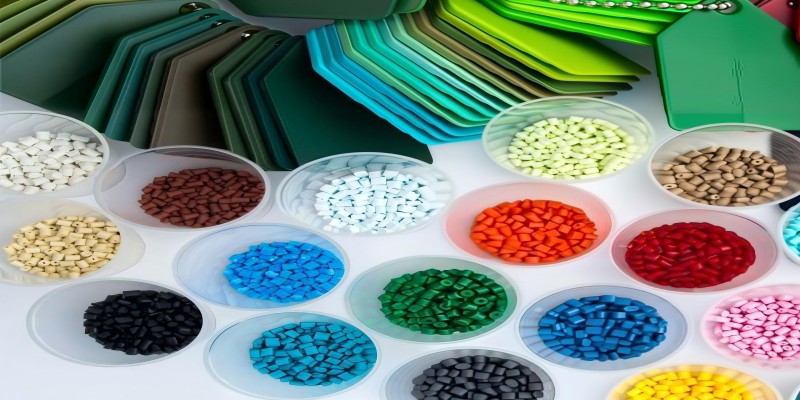
A practical evaluation process should focus on a few questions that directly affect product qualification and production reliability:
● Is the masterbatch compatible with the target polymer and the selected process, such as injection molding, extrusion, or blow molding?
● Is there supporting evidence for compliance, biocompatibility, or health-contact requirements relevant to the application?
● Can the formulation maintain color consistency and physical performance after sterilization?
● Are technical documents available to support validation, traceability, and long-term supply control?
These questions reflect the main selection points found in the source material: resin compatibility, medical safety expectations, sterilization stability, and documentation support. They also help shift the buying decision away from color matching alone and toward a more complete qualification view.
Once the application fit is clear, the comparison becomes more technical. The following factors usually determine whether a candidate masterbatch will perform well in production and in use:
Selection factor | Why it matters |
Shade accuracy and repeatability | Prevents visible batch variation and supports reliable color coding |
Dispersion quality | Reduces streaks, specks, and uneven color in molded or extruded parts |
Let-down ratio | Affects dosing control, color strength, and processing economy |
Batch consistency | Supports stable quality across validation runs and production lots |
Customization capability | Helps match special color, performance, or processing needs |
Customization can matter when standard shades do not fully match the application or when extra performance features are required. In that context, a supplier such as Foshan Hongshengde Masterbatch New Material Co., Ltd. may be relevant if it can provide application-based formulation adjustment, compatible polymer options such as PP, PE, ABS, PC, PS, or PA, and supporting technical documents without turning the selection process into a branding exercise. The more useful question is not whether a supplier offers many products, but whether it can support the exact medical use case with the right data, processing guidance, and formulation control.
Medical grade color masterbatches are specialized for healthcare use, where safety, compliance, and performance must work together. Compared with standard options, they offer better formulation control, polymer compatibility, and sterilization stability. Foshan Hongshengde Masterbatch New Material Co., Ltd. provides medical coloring solutions that help improve product reliability, consistency, and application fit in medical plastics.
A: Medical grade color masterbatches are color concentrates formulated for medical plastics with stricter safety, purity, and compliance requirements.
A: Medical grade color masterbatches are designed for biocompatibility, low migration, sterilization stability, and controlled documentation.
A: Yes, medical grade color masterbatches are often formulated for polymers like PP and PE, depending on application needs.
A: Sterilization can affect color and material stability, so medical grade color masterbatches must withstand gamma, EtO, or steam exposure.
