
close
Choose Your Site
Global
Social Media
Views: 0 Author: Site Editor Publish Time: 2026-08-29 Origin: Site


Inaccurate dosing in plastics manufacturing carries incredibly high stakes. Too little additive immediately compromises product performance and regulatory compliance. Conversely, dumping excessive amounts erodes your profit margins and degrades essential polymer mechanics. We cannot view process validation as a simple quality control checkbox. Instead, you must treat it as a critical lever to control baseline consistency and protect revenue. If you want reliable runs, you need empirical testing. This guide provides a verifiable, step-by-step framework. You will learn to evaluate, test, and lock in the correct dosage rates for your specific production line. You will discover how to shift away from theoretical guidelines toward actual empirical evidence. By mastering these parameters, you ensure your extrusion or molding operations remain highly precise. We will explore equipment evaluation, risk mitigation, and the analytical testing required to guarantee perfect dispersion every time.
Operators frequently inflate dosing percentages artificially on the production floor. They usually do this to compensate for poor dispersion across the extrusion line. This habit creates hidden resin waste. Over time, it severely erodes profits during high-volume runs. A slightly elevated let-down ratio seems harmless initially. However, it scales into massive financial leaks when you produce millions of units annually. You pay a premium for functional additives. Wasting them damages your bottom line directly.
Under-dosing presents equally disastrous consequences for your business. Failing to meet minimum active ingredient thresholds leads to catastrophic product failures. For example, UV stabilizers might fail prematurely in outdoor furniture applications. Flame retardants could miss vital safety certifications during independent audits. This puts your entire brand reputation at risk. Compliance is not negotiable. You must prove your products meet stringent industry safety standards every single time.
What does a successful validation look like? You must define clear success criteria before you begin testing. First, you must achieve your target mechanical properties at the lowest possible let-down ratio. Second, you should aim for a standard deviation of less than one percent across multiple samples. Hitting these metrics proves your system operates at peak efficiency. Achieving this balance requires strict discipline and proper hardware alignment.
Common Mistakes to Avoid
Many plant managers make the mistake of bumping up the feeder speed when a visual defect appears. This reactionary adjustment throws off the entire calibration. Best practices dictate you must pause the line, evaluate the root cause, and re-calibrate the feeder unit properly.
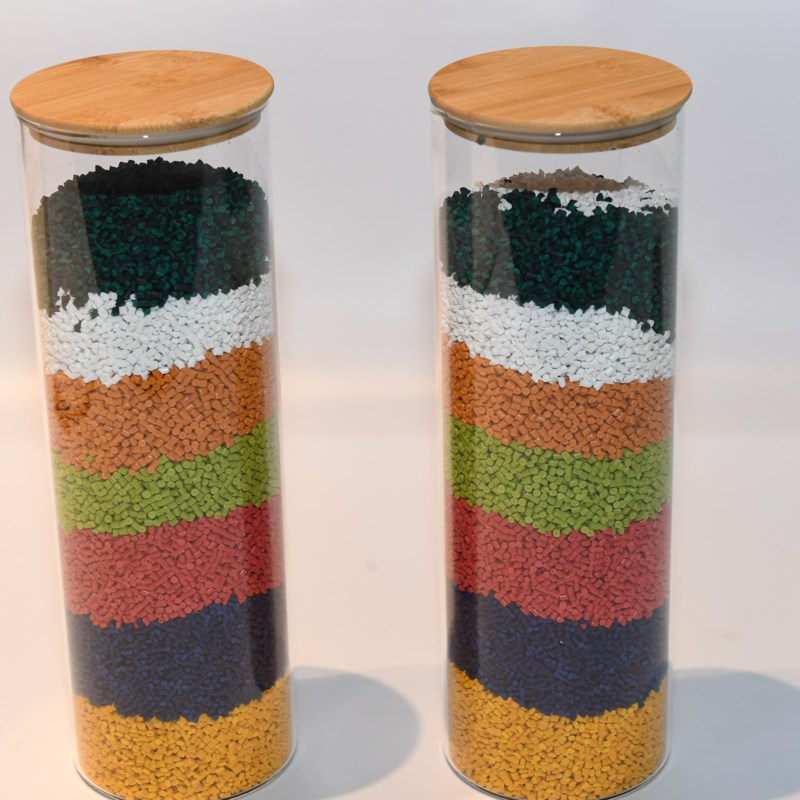
The plastics industry harbors a massive misconception about volumetric feeding systems. Setting a volumetric feeder to a strict "percentage" carries heavy risks. A volumetric feeder dispenses material based solely on physical volume, not weight. Variations in bulk density and pellet geometry change everything. Volume does not equal mass.
When you use industrial additive masterbatch, its physical properties fluctuate naturally. Pellets settle during transport. Ambient humidity affects surface friction. Pellet sizes vary slightly from batch to batch. Because of these variables, a fixed volume rarely delivers a consistent mass. Relying on theoretical volume percentages practically guarantees inaccurate dosing.
Gravimetric dosing stands as the preferred standard across modern manufacturing facilities. Loss-in-weight systems eliminate percentage guesswork entirely. Instead, they measure the exact mass delivered into the feed throat. The system self-adjusts constantly within a closed-loop feedback circuit. If the bulk density shifts, the gravimetric feeder speeds up or slows down automatically to maintain the precise mass target.
You must audit your current hardware before initiating a new validation run. Ask your operators if they frequently tweak the feeder dial manually during shifts. If they do, your volumetric system is failing you. Evaluate the age and sensitivity of your dosing equipment. Upgrading to gravimetric control often pays for itself rapidly by eliminating excessive material waste.
Dosing Technology Comparison Chart
| Feature | Volumetric Dosing | Gravimetric Dosing (Loss-in-Weight) |
|---|---|---|
| Measurement Basis | Volume (RPM of a dosing screw) | Exact Mass (Load cell weighing) |
| Accuracy Level | Moderate (Highly dependent on density) | Extremely High (Consistently <1% deviation) |
| Self-Adjusting | No. Requires manual calibration. | Yes. Closed-loop feedback mechanism. |
| Best Application | Low-cost, highly consistent base resins. | High-value functional additives. |
First, you must inspect the incoming material thoroughly. Check the bulk density, pellet size, and melt flow index (MFI) of the new plastic additive concentrate. Compare these metrics directly against your primary base resin. This comparison helps predict potential segregation risks in the hopper.
Follow these specific audit steps:
The manual catch-test serves as your absolute baseline. Weigh the physical output caught over a sixty-second interval. Verify these physical metrics against the readings displayed on your Human-Machine Interface (HMI) screens. If they do not match perfectly, you must recalibrate the load cells immediately.
After finishing baseline calibration, introduce the additive into your live system. Allow the production line to stabilize fully. You must purge all transition material first. Wait until the output visually clears any remnants of previous runs. Once the line stabilizes, shift your focus to the extruder telemetry.
Monitor the extruder torque closely. Keep a sharp eye on melt pressure readings. Note any sudden fluctuations immediately. These spikes often indicate surging or poor melt blending inside the barrel. If the torque swings wildly, the additive might be melting too early or too late compared to the base resin. Adjust your temperature profile zones to compensate.
Do not rely solely on simple visual checks. Visual inspections deceive operators easily. You need hard, empirical data to validate the process. Gather physical samples from the beginning, middle, and end of your short run. Send these samples to your laboratory for strict functional tests.
Choose the correct testing methodology based on your specific additive chemistry. Use ash testing to measure inorganic content accurately. Rely on electron microscopy to check microscopic dispersion quality. Perform tensile testing to ensure the additive has not compromised the mechanical integrity of the polymer. Use spectrophotometry to verify colorants or UV blocking agents. These tests verify the active ingredient remains evenly distributed at the target concentration.
If you plan to upgrade your dosing hardware, you must evaluate potential units carefully. Do not just buy the cheapest feeder available. You need a robust system built for demanding plant environments. Focus on integration, durability, and operational speed.
Transitioning to a new formulation brings inherent operational risks. Hopper segregation remains a primary enemy of consistent feeding. Physics dictates how materials mix. Pellet size differences cause immediate stratification. When the base polymer differs significantly from the additive masterbatch, lighter pellets float upward while heavier pellets sink. This separation leads to wildly inconsistent dosing rates at the feed throat.
Screw slippage presents another major challenge. Highly loaded formulations carry distinct risks. Low-melting-point carriers can melt prematurely due to excessive friction. This causes bridging right at the feed throat. A bridge blocks incoming resin completely. It ultimately reduces the overall extruder throughput and causes the screw to slip.
You need a transparent, evidence-based approach to mitigate these risks. First, redesign the neckpiece if necessary to prevent material hang-ups. Second, ensure optimal cooling water flow around the feed throat jacket. Keeping this area cool prevents premature melting. Finally, work closely with your supplier. Select compatible carrier resins designed specifically to blend seamlessly with your primary polymer.
Exact masterbatch dosage is never a guessing game. It is achievable only through strict empirical testing and proper equipment selection. You must stop relying on theoretical data sheets alone. Transitioning from volumetric estimates to gravimetric certainty provides the only reliable path to manufacturing consistency.
Take action today. Start by performing a simple loss-in-weight catch test on your current extrusion line. Analyze your standard deviations closely. Schedule a technical consultation with your supplier to review their batch consistency data. By taking these steps, you protect your profit margins and ensure total product compliance.
A: Do not rely on your machine's preset setpoint. Instead, calculate the actual consumed weight of the masterbatch. Divide this number by the total output weight of your extruded or molded product. Measure this over a specific, strictly timed interval. This empirical formula reveals your true LDR accurately.
A: Visual checks work decently for simple colorants. You might spot an obvious opacity shift. However, functional additives demand rigorous scientific verification. You cannot see anti-slip agents, UV stabilizers, or antioxidants. You must use mechanical testing or chemical analytical testing like ash testing to confirm the validation accurately.
A: Volumetric feeders deliver a specific volume, not a specific weight. Natural changes in masterbatch bulk density cause direct mass fluctuations. Static build-up inside the feed throat also disrupts flow. Inconsistent hopper fill levels create variable head pressure on the screw. You need gravimetric upgrades for absolute precision.
