
close
Choose Your Site
Global
Social Media
Views: 0 Author: Site Editor Publish Time: 2026-08-12 Origin: Site


Color inconsistencies and mechanical failures in molded parts often stem from a hidden culprit. It is rarely the pigment itself. Instead, these frustrating defects frequently trace back to a mismatched masterbatch carrier resin. Think of the carrier resin as a dedicated delivery vehicle. It transports essential pigments and chemical additives straight into your base polymer matrix. If this delivery system clashes chemically or thermally with the surrounding material, you face severe production hurdles.
Verifying optimal polymer compatibility serves as a critical engineering checkpoint. Getting it right prevents excessive scrap rates. It minimizes costly machine downtime. Most importantly, it shields your brand from product liability claims. We will explore how to align melt viscosity, evaluate thermal stability, and select proper carrier formulations. You will learn actionable steps to match materials perfectly, ensuring flawless manufacturing outcomes and robust final products.
Like requires like: For optimal mechanical integrity, the masterbatch carrier resin must be chemically identical or highly compatible with the base polymer.
Viscosity matters: The Melt Flow Index (MFI) of the carrier resin should generally be higher than the base polymer to ensure proper dispersion during processing.
Universal carriers carry risks: While cost-effective, universal carriers (like EVA) can compromise the mechanical properties of engineering plastics and cause delamination in high-stress applications.
Testing is non-negotiable: Always require Technical Data Sheets (TDS) and conduct pilot runs to validate thermal stability and dispersion before full-scale production.
Many production teams view the carrier resin simply as packaging for color. This assumption creates significant manufacturing risks. You must treat the carrier resin as a true structural component. It physically integrates into the final polymer matrix. When compatibility fails between these two materials, the structural integrity of your finished product fails too. You essentially introduce a foreign contaminant into your carefully engineered plastic part.
Operators frequently notice physical defects on the factory floor. These observable manufacturing issues link directly to poor polymer compatibility. You must watch out for the following symptoms:
Delamination (peeling or flaking): This occurs because the materials lack proper interfacial adhesion. The carrier and the base matrix refuse to bond, causing the molded part to peel apart in visible layers under stress.
Streaking and speckling: You will see swirling colors or unmixed dots. Mismatched melt viscosities cause poor dispersion. The carrier fails to melt and distribute the pigment evenly.
Loss of mechanical properties: Your parts may suddenly fail drop tests. Adding a low-density carrier into a high-rigidity structural part inevitably drops its overall impact and tensile strength.
Common Mistake: Ignoring a 10% drop in impact strength because the part looks visually perfect. Visuals do not guarantee structural soundness.
A successful material match achieves very specific success criteria. It delivers homogenous dispersion at the lowest possible dosing rate. It also leaves the base polymer's original physical characteristics completely unaltered. You gain vibrant color without sacrificing performance.
Engineers face a fundamental choice when specifying materials. You can choose a highly specialized carrier, or you can opt for a broad-use alternative. Objectively comparing these two primary approaches helps you make safer procurement decisions.
Polymer-specific carriers use a resin identical to your base material. For example, you use an ABS carrier to color an ABS automotive part. This approach guarantees maximum thermodynamic compatibility. It preserves your critical mechanical and thermal properties. The polymer chains entangle perfectly during the melting phase. However, this strategy carries higher upfront costs. You also must manage multiple masterbatch stock-keeping units (SKUs) across different production lines.
Universal carriers utilize resins with broad, generic compatibility. Common options include EVA, LLDPE, or EMA. Manufacturers use them to color multiple different base polymers. This method offers excellent inventory consolidation. It lowers your initial purchasing costs. Unfortunately, universal carriers introduce a high risk of incompatibility at dosing rates above 2-3%. They often cause mold deposit buildup over time. Furthermore, they are entirely unsuitable for sensitive engineering plastics like Polycarbonate (PC), PET, or Nylon.
Carrier Type | Definition | Core Advantage | Primary Risk |
|---|---|---|---|
Polymer-Specific | Matches the exact base resin chemistry. | Preserves 100% of mechanical integrity. | Increases inventory complexity. |
Universal | Uses generic resins (e.g., EVA) for broad use. | Reduces upfront costs and SKU counts. | Causes delamination in engineering plastics. |
We highly recommend polymer-specific carriers for structural, tight-tolerance, or high-performance injection molding masterbatch applications. You should reserve universal carriers strictly for commodity, low-stress consumer goods where mechanical failure carries zero safety risk.
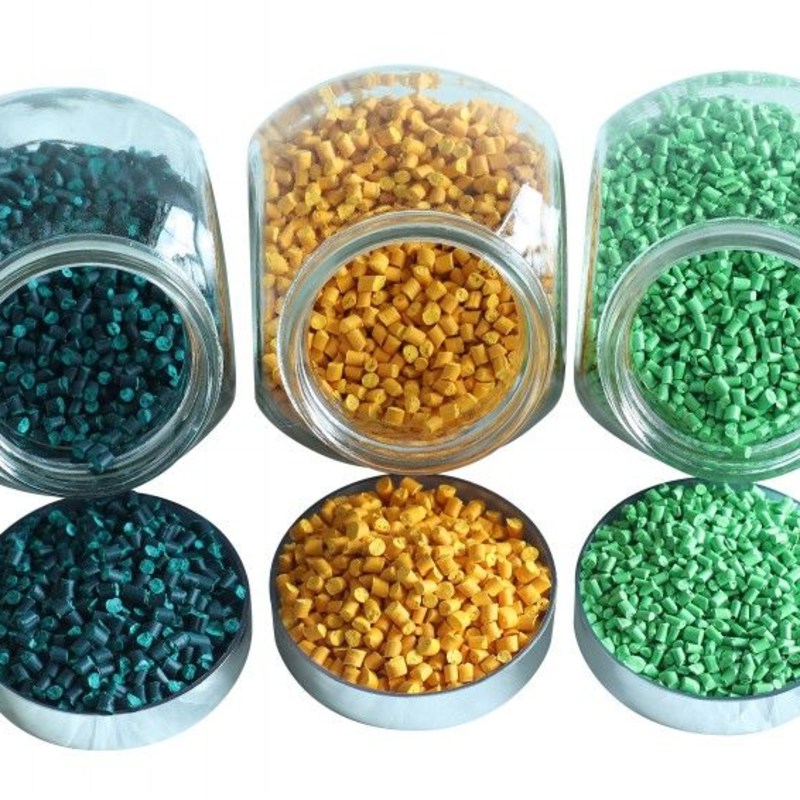
Evaluating compatibility requires technical precision. You cannot rely on guesswork. Industry standards dictate three non-negotiable dimensions for validating your material choices.
Melt Flow Index (MFI) Alignment: A strict rule of thumb governs viscosity. The carrier resin's MFI should always be higher than the base polymer. It must melt easier and flow faster. If the carrier remains too viscous, it will not melt in time. It fails to distribute the pigment effectively inside the barrel. This viscosity mismatch leads directly to concentrated color spots and dangerous mechanical weak points.
Processing Temperature Overlap: The carrier must withstand the high processing temperatures of the base polymer without degrading. Thermal stability is paramount. Consider a high-heat application like molding Polycarbonate at 280°C or higher. Using a standard polyolefin carrier in this scenario poses immense risk. The lower-temperature carrier will literally burn inside the machine. It releases hazardous off-gasses and creates carbonized black specks in your final product.
Chemical and Thermodynamic Affinity: You must carefully evaluate polymer polarity. Non-polar carriers simply do not mix well with polar base polymers. For instance, combining a non-polar polyolefin with a highly polar Nylon or ABS matrix creates instant phase separation. They repel each other on a molecular level. You cannot achieve true blending without adding specialized chemical compatibilizers.
Best Practice: Always align your processing temperatures first. If the carrier cannot survive the heat of your barrel, MFI and polarity metrics become completely irrelevant.
Commodity plastics require careful attention to detail. Even seemingly simple materials hide complex compatibility challenges. Many operators treat all polyolefins as interchangeable. They are not. You must respect their unique molecular structures.
When specifying a PE masterbatch, you must differentiate clearly between LDPE, LLDPE, and HDPE. Manufacturers widely consider LDPE and LLDPE as standard carriers. They provide excellent flow rates and melt easily. However, you must exercise caution when coloring rigid high-density polyethylene (HDPE) parts. Using an LDPE carrier in a rigid HDPE pipe application can cause subtle structural degradation. If you dose it heavily, the softer LDPE marginally reduces the pipe's environmental stress-cracking resistance (ESCR). This leads to premature failure in buried infrastructure.
Similar rules apply when you evaluate a PP masterbatch formulation. You must always address the fundamental distinction between homopolymer and copolymer polypropylene. Formulators sometimes use cheap polyethylene carriers to color polypropylene. This practice saves money, but it causes microscopic phase separation. The materials cool at different rates. For optimal durability, we strongly recommend using dedicated PP-based carriers. This becomes absolutely critical for PP parts subjected to living-hinge fatigue or stringent high-impact testing. A PE carrier will cause a living hinge to snap after only a few flexes.
Securing a reliable material supplier requires rigorous vetting. You must evaluate a masterbatch manufacturer’s actual technical competence. Do not accept vague marketing claims about universal performance.
Always require formal documentation. Request a Certificate of Analysis (COA) and a detailed Technical Data Sheet (TDS). These documents must detail the exact grade of the masterbatch carrier resin. They must clearly list the MFI and state the absolute thermal degradation limits. Be highly skeptical of suppliers pushing "universal" solutions without first asking for your specific processing parameters. If they do not ask about your end-use requirements, they do not understand polymer science.
Implementing a strict pilot testing protocol mitigates mass-production risks. Never skip this phase.
Step-Plaque Testing: Start your evaluation with a step-plaque injection molding test. This specialized mold features varying wall thicknesses. It allows you to visually evaluate color dispersion across thin and thick sections simultaneously.
Mechanical Baseline Testing: Conduct rigorous physical tests before approving the batch. Compare the impact strength of the uncolored base polymer directly against your newly masterbatched polymer. This quantitative comparison reveals any hidden property degradation caused by the carrier.
The masterbatch carrier resin dictates the physical limits of your final molded part. Selecting an incompatible carrier jeopardizes structural integrity, visual quality, and overall production efficiency. You cannot treat color merely as a cosmetic afterthought. It physically alters your base polymer matrix. By aligning melt flow, matching processing temperatures, and respecting chemical polarity, you guarantee a robust manufacturing process.
We advise procurement and engineering teams to audit their current masterbatch formulations immediately. Instruct your purchasing department to request exact carrier resin disclosures from all suppliers. Eliminating guesswork in compatibility matching protects your product quality and secures your bottom line.
A: It is possible for low-end applications at very low dosing rates, but it is not recommended for structural parts. PE and PP are technically incompatible and will form separate phases, potentially reducing impact strength and causing delamination.
A: The base polymer will melt first and encapsulate the un-melted masterbatch pellets. This results in poor color dispersion, visible specks, and localized mechanical weak points in the finished part.
A: Universal carriers like EVA have lower thermal stability and different flow characteristics compared to engineering base polymers. Under high shear and temperature, low-molecular-weight components from the incompatible carrier migrate to the surface and stick to the mold tooling.
