
close
Choose Your Site
Global
Social Media
Views: 0 Author: Site Editor Publish Time: 2026-01-28 Origin: Site


Are you looking to improve the quality of your plastic products? White Masterbatch plays a crucial role in enhancing the appearance and durability of plastics. In this article, we'll explore how to select the best White Masterbatch for your specific needs. You’ll learn about key factors such as dispersion, opacity, and additives. By the end, you’ll be equipped to make an informed decision for your production process.
White masterbatch is a highly concentrated mixture designed to enhance the whiteness and opacity of plastic products. The main components of white masterbatch include:
● Titanium Dioxide (TiO₂): As the key whitening agent, TiO₂ plays a crucial role in achieving both opacity and brightness. Its high refractive index helps scatter light, providing a vivid white color.
● Carrier Resin: This base polymer is responsible for ensuring that the TiO₂ is evenly dispersed throughout the plastic material. The carrier resin also ensures the consistency of the final product and helps in the smooth processing of plastics.
● Additives: These may include UV stabilizers, antioxidants, and anti-yellowing agents, designed to improve the durability of the plastic, especially in outdoor environments where UV degradation is a concern.
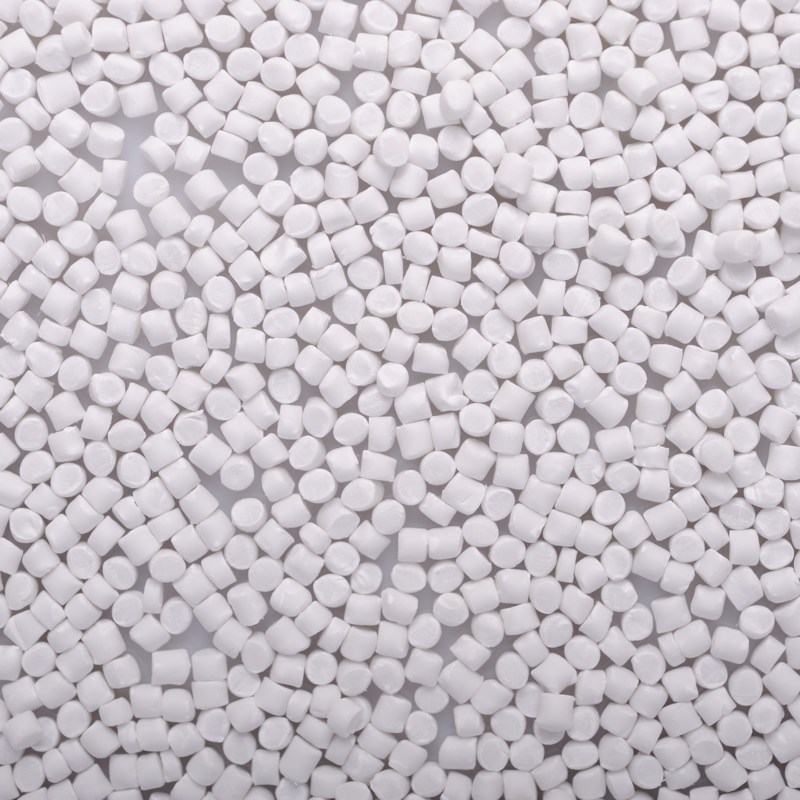
There are several types of White Masterbatch, each designed for different applications, based on the desired opacity and cost-effectiveness. These types vary in TiO₂ content, which influences the final result.
Type | Titanium Dioxide (TiO₂) Content | Primary Use | Cost Consideration |
High-Concentration | 70-75% | Best for products needing strong opacity and high whiteness. | Higher cost but more effective. |
Medium-Concentration | 50-60% | Suitable for general applications like injection molding and extrusion. | Balanced cost-performance. |
Low-Concentration | 30-40% | Used in products where opacity is less critical. | Most cost-effective option. |
Selecting the correct white masterbatch can make a significant difference in the final product's appearance and performance. A high-quality white masterbatch ensures that plastic products have consistent color, gloss, and opacity across large production runs.
For instance, in industries like food packaging and consumer goods, the aesthetic value of whiteness and gloss is critical for attracting customers. A product with uneven color or streaks may be perceived as lower quality.
Choosing the wrong white masterbatch, particularly one with poor dispersion, can lead to several issues in production:
● Uneven Dispersion: Inconsistent mixing can cause streaks, spots, or uneven whiteness across the product, leading to visual defects.
● Fading Over Time: If the white masterbatch lacks sufficient UV resistance, it may fade over time, especially in outdoor or exposed products.
● Higher Scrap Rates: Poor-quality masterbatches often result in defective products, leading to higher scrap rates and wasted resources, impacting production efficiency and costs.
Inadequate dispersion also affects the processability of the material, making it more difficult to achieve the desired outcome in molding or extrusion processes.
The right choice of white masterbatch not only impacts the appearance but also has long-term financial implications. High-quality masterbatches, though more expensive initially, tend to offer better performance and durability, reducing the likelihood of defects and scrap. In contrast, a lower-quality option may appear cost-effective at first but could lead to increased production costs over time due to:
● Higher wastage from product defects.
● Increased energy consumption if poor dispersion leads to slower processing times.
● More frequent material rework due to color inconsistency or fading.
A well-chosen masterbatch ensures optimal performance, which can result in lower overall production costs despite a slightly higher initial material expense.
The quality of White Masterbatch heavily relies on the even distribution of its key component, Titanium Dioxide (TiO₂). Proper dispersion ensures that the pigment is spread uniformly throughout the plastic material, which prevents issues like color streaks or variations in whiteness. When TiO₂ is well-dispersed, the final product appears smooth and consistently white, without any dark or light spots.
Inconsistent dispersion, on the other hand, can lead to poor-quality products that require rework or result in customer dissatisfaction. Therefore, checking for dispersion quality is essential when selecting a white masterbatch.
Key points to consider:
● Ensures a smooth, uniform appearance.
● Prevents the occurrence of visual defects during production.
● Affects the processability and the final finish of plastic products.
Opacity is the ability of white masterbatch to cover the underlying color of the base polymer or impurities in the material. High opacity is crucial for applications where a pure white finish is required. It effectively masks any underlying colors or imperfections, allowing the final product to maintain a bright, clean look.
Opacity is measured by how well the white masterbatch hides the color of the polymer or contaminants in the resin. The higher the opacity, the more effective the masterbatch is in masking impurities and ensuring that the final product remains consistent.
Key considerations:
● High opacity for products requiring full coverage (e.g., packaging, automotive parts).
● White masterbatch with low opacity may not be suitable for applications needing a perfectly clean white appearance.
For many industrial applications, heat resistance and light fastness are essential qualities of white masterbatch. These properties determine how well the material maintains its color and integrity when exposed to high processing temperatures or prolonged UV exposure.
● Heat resistance ensures that the white masterbatch does not degrade or discolor during high-temperature processes like extrusion or injection molding.
● Light fastness ensures that the color of the final product remains stable even under long-term exposure to sunlight or other light sources.
Choosing a white masterbatch with strong heat resistance and light fastness is crucial for products used in outdoor environments or exposed to high temperatures, such as packaging materials or automotive components.
Migration resistance refers to the ability of white masterbatch to retain its color and prevent the pigments from migrating to the surface of the plastic during the product's life cycle. This is particularly important for products that will be in contact with various surfaces or exposed to external factors like temperature fluctuations, which can cause pigment migration.
High migration resistance ensures that the product retains its consistent white color, even after long periods of use or exposure to varying environmental conditions.
When selecting a White Masterbatch, it is crucial to ensure that the masterbatch is compatible with the base polymer being used in the production process. The compatibility affects the final product's appearance, performance, and the efficiency of the manufacturing process. For example:
Polymer Type | Recommended White Masterbatch Type |
Polyethylene (PE) | Medium to high concentration TiO₂ for opacity. |
Polypropylene (PP) | A balanced TiO₂ concentration for good whiteness without excess cost. |
Polystyrene (PS) | High TiO₂ content for superior whiteness and opacity. |
Acrylonitrile Butadiene Styrene (ABS) | Medium TiO₂ with stabilizers for enhanced durability. |
The Titanium Dioxide (TiO₂) content in white masterbatch is a key factor that determines the whiteness and opacity of the final product. Typically, TiO₂ content can range from 30% to 75% depending on the desired performance. A higher TiO₂ content generally results in better opacity but comes at a higher cost.
TiO₂ Content Overview:
TiO₂ Content (%) | Opacity and Use Case | Cost Implication |
30-40% | Suitable for non-critical applications (e.g., budget packaging) | Low cost |
50-60% | General use cases (e.g., injection molding, extrusion) | Medium cost |
70-75% | Premium applications (e.g., automotive parts, high-quality packaging) | High cost |
Additives play a significant role in enhancing the overall performance of white masterbatch. Common additives include:
● UV Stabilizers: Protect against UV degradation, making the masterbatch suitable for outdoor applications.
● Antioxidants: Prevent material degradation caused by heat during the manufacturing process.
● Anti-Yellowing Agents: Ensure the white color remains bright over time, even in high-temperature environments.
These additives contribute to the durability and long-term stability of the plastic, making them essential in specific applications such as packaging for food products, automotive parts, or outdoor products.
The specific application requirements should guide the selection of the white masterbatch. Different manufacturing processes such as injection molding, blow molding, and extrusion can influence the choice of TiO₂ content and the required performance of the masterbatch.
For example, injection molding typically requires a high-quality, consistent white masterbatch with strong opacity for aesthetic appeal, while extrusion applications may prioritize cost-effective solutions with moderate TiO₂ content.
Here’s a quick look at different application requirements:
Application Type | Masterbatch Requirements |
Injection Molding | High opacity and consistency for high-end consumer goods. |
Blow Molding | Moderate opacity for cost-effective production. |
Extrusion | Balance between opacity, cost, and processing efficiency. |
Film Production | High opacity and UV resistance for outdoor applications. |
White Masterbatch is widely used in the packaging industry, enhancing both the aesthetic appeal and the durability of plastic products. It is often added to films, bags, and food packaging materials to provide a clean, white finish that attracts consumers and improves the visual appeal of packaged goods.
● Films and Bags: Used in polyethylene (PE) and polypropylene (PP) films for shopping bags, garbage bags, and agricultural films.
● Food Packaging: Ensures that food packaging materials like trays, wraps, and pouches have a crisp, clean white appearance while maintaining their strength and barrier properties.
● Durability: Helps improve the resistance to external conditions like UV light, moisture, and temperature, which are essential for packaging materials that may be exposed to harsh conditions.
White Masterbatch plays a key role in injection molding and blow molding applications, where it is used to produce products such as toys, containers, and bottles. The goal in these applications is to achieve products that not only have high opacity but also a smooth, glossy finish.
● Injection Molding: Ideal for creating household goods, toys, and decorative parts, where the white masterbatch ensures consistency and uniform color throughout.
● Blow Molding: Used for producing bottles and containers, where a high-quality white finish is required for both aesthetic and functional purposes (e.g., food storage or beverage packaging).
Key Benefits:
● Provides a bright white appearance that enhances the product's visual appeal.
● Ensures that molded products retain strength and integrity during the molding process.
In the extrusion process, White Masterbatch is crucial for producing sheets, pipes, and profiles used in construction, automotive, and industrial products. The application of white masterbatch in these processes ensures high whiteness and smooth surface finishes.
● Construction: Used in the extrusion of pipes and panels, where white masterbatch enhances aesthetic appeal and opacity.
● Automotive: Applied in the production of interior trims and dashboard components.
● Industrial Products: Used in profiles, window frames, and other parts where durability and visual appeal are important.
Performance Considerations:
● Offers weather resistance, especially for products used outdoors or exposed to UV light.
● Ensures smooth extrusion and consistent color throughout the entire production process.
Beyond packaging, molding, and extrusion, White Masterbatch is also used in electronics, automotive, and home appliance industries, where high whiteness and durability are essential.
Industry | Application | Key Benefits |
Electronics | Used in plastic housings for devices like televisions and computers | High opacity, smooth finish, and durability |
Automotive | For interior and exterior parts, including trim pieces and dashboards | UV resistance, color consistency |
Home Appliances | In plastic components for white goods like washing machines and refrigerators | High gloss, resistance to wear and tear |
Application Benefits:
● High color stability in electronics and automotive parts, ensuring aesthetic appeal over time.
● Improved durability for appliances exposed to constant use and cleaning.
One of the most important factors when using White Masterbatch is ensuring that the TiO₂ (Titanium Dioxide) is evenly dispersed throughout the plastic. Proper dispersion leads to uniform color and prevents defects such as streaks or color spots.
● Best Practice: Use high-shear mixing to ensure the pigment is well-blended with the carrier resin before the masterbatch is added to the base polymer.
● Equipment: Use an extruder with a mixing screw for even dispersion, ensuring that the masterbatch mixes properly into the polymer matrix.
Challenges:
● Insufficient mixing can result in a non-uniform color finish, especially in products requiring high gloss or opacity.
The dosage of White Masterbatch will vary depending on the desired level of whiteness and opacity. Generally, the recommended dosage is between 1-5%, but this can vary based on the base polymer and the application requirements.
Application Type | Recommended Dosage | Effect on Final Product |
Packaging | 3-5% | High opacity and consistent white appearance |
Injection Molding | 2-4% | Smooth finish and high gloss for aesthetic appeal |
Extrusion | 1-3% | Consistent color for pipes and sheets |
● Higher Dosage: Increases opacity, ideal for high-quality applications where full coverage is needed.
● Lower Dosage: Used in products requiring less opacity or where cost optimization is important.
To achieve high-quality output, it is important to optimize machine settings when using White Masterbatch. The following factors should be considered:
● Temperature Control: Ensure that the temperature is set correctly to avoid degradation of TiO₂ or the carrier resin. Too high a temperature can cause discoloration or reduce the masterbatch’s effectiveness.
● Screw Speed: A balanced screw speed is essential to ensure proper mixing of the white masterbatch and to avoid excessive shear that may lead to product defects.
● Processing Time: Minimize the time that the material spends in the extruder to prevent overheating and preserve the masterbatch’s integrity.
These settings should be carefully monitored to maintain consistent quality and reduce production errors during the manufacturing process.
When working with White Masterbatch, it’s essential to adhere to the recommended usage ratio to prevent overuse. Overusing masterbatch leads to unnecessary excess costs and waste. While it might seem tempting to increase the dosage for a brighter, more opaque finish, it's crucial to find the optimal amount to achieve the desired result without exceeding it.
● Cost Implications: Excessive use of Titanium Dioxide (TiO₂) increases material costs, which may not yield significant performance benefits beyond a certain point.
● Waste Management: Using more than necessary increases the volume of plastic waste produced during testing and production runs.
Key Takeaways:
● Stick to the manufacturer’s dosage recommendations.
● Regular testing during production can help adjust the quantity for better performance without excess.
To ensure that your White Masterbatch is delivering the best results, quality control and monitoring are essential throughout the production process. Continuous monitoring ensures that the final product meets the necessary standards of whiteness, gloss, and opacity.
Steps for Effective Quality Control:
1. Visual Inspections: Ensure that the color and finish of the final product are consistent and free from imperfections like streaks or color variation.
2. Opacity Testing: Regularly check that the opacity of the material meets the specifications, especially for packaging and aesthetic products.
3. Gloss Measurement: Use gloss meters to assess the surface finish of the product, ensuring it has the desired glossiness.
4. Batch Sampling: Test a sample batch of each production run to ensure consistency across large-scale manufacturing.
Here’s an example of the quality monitoring process:
Quality Attribute | Method of Monitoring | Importance |
Whiteness | Visual inspection, spectrometer testing | Ensures uniform color across production batches |
Gloss | Gloss meter | Achieves the desired surface finish |
Opacity | Light scattering test | Ensures hiding power and consistency |
Proper storage and handling of White Masterbatch are essential to preserve its quality over time. Exposure to moisture, heat, or direct sunlight can degrade the material and reduce its effectiveness, leading to poor results in the final product.
Best Practices for Storage:
● Cool, Dry Environment: Store white masterbatch in a cool and dry location to prevent moisture absorption, which can cause clumping and uneven dispersion during production.
● Sealed Packaging: Ensure that the masterbatch is stored in airtight containers to protect it from humidity and contamination.
● Avoid Direct Sunlight: Prolonged exposure to sunlight can degrade the TiO₂ content, affecting its whitening performance and causing color changes.
● Shelf Life Monitoring: Check the expiration date or shelf life recommendations from the manufacturer to avoid using expired material, which could lead to inconsistent results.
Here’s a simple storage guide for White Masterbatch:
Storage Condition | Recommendation |
Temperature | Store between 5°C and 25°C (41°F to 77°F). |
Humidity | Keep humidity below 50% to prevent clumping. |
Packaging | Use sealed, moisture-proof bags or containers. |
In this article, we explored how to choose the right White Masterbatch based on key qualities like TiO₂ content, dispersion, and compatibility with polymers. HSD Masterbatch offers high-quality White Masterbatch, providing consistent whiteness, durability, and cost-efficiency. Their products are tailored to meet diverse production needs while maintaining the highest standards of performance.
A: White Masterbatch is a concentrated mixture of Titanium Dioxide (TiO₂) and a carrier resin used to enhance the whiteness and opacity of plastic products.
A: It improves whiteness, opacity, and surface appearance by adding TiO₂, which helps to mask the base polymer's color and ensure a clean, bright finish.
A: Consider factors like TiO₂ content, compatibility with the base polymer, and application requirements such as opacity, heat resistance, and UV stability.
A: The recommended dosage typically ranges from 1% to 5%, depending on the desired opacity and application. Higher TiO₂ content will provide more opacity but increase costs.
A: White Masterbatch ensures consistent color, high opacity, durability, and cost-efficiency, making it essential for products like packaging, automotive parts, and household goods.
