
close
Choose Your Site
Global
Social Media
Views: 0 Author: Site Editor Publish Time: 2026-06-25 Origin: Site


Selecting the wrong black masterbatch leads to costly production bottlenecks across your entire factory floor. You might observe blocked filters and die build-up during extrusion runs. In molding operations, incompatible materials often cause poor surface finish and severe dimensional instability. These processing failures drastically reduce operational efficiency and increase scrap rates.
Standard commodity blacks may suffice for basic, low-end applications where aesthetics matter little. However, high-performance processes demand precise alignment between carbon black specifications, carrier resins, and your specific manufacturing technology. Choosing a random colorant without evaluating thermal and rheological properties creates immediate mechanical weaknesses in the final polymer matrix. Engineers must understand how these materials behave under intense heat and shear.
This guide provides a comprehensive technical framework for evaluating and shortlisting suppliers. We focus heavily on verifiable metrics rather than vague marketing claims. You will learn how to interpret technical data effectively. We cover carrier matching, particle dispersion, and pilot testing to ensure optimal cost-to-performance ratios for your specific production lines.
Standardizing one single masterbatch across diverse production lines often compromises overall output quality. Factory managers sometimes attempt this to simplify inventory management. However, evaluating processing requirements upfront prevents catastrophic mechanical failures. A formulation perfectly engineered for thick-walled molding will likely fail in thin-film extrusion. We must adapt our material selection to the physical realities of each unique manufacturing technology.
Supreme dispersion serves as the most critical metric for film extrusion. The blown film process stretches polymers to incredibly thin gauges. Even microscopic agglomerates cause immediate structural issues. They create pinholes, gels, or hard specks within the film web. These structural defects severely compromise the tear strength and elongation properties of the final plastic sheet.
High-quality dispersion ensures uniform opacity at much lower material thicknesses. This feature directly impacts your operational outcomes. Excellent dispersion reduces your overall masterbatch consumption. You use less material to achieve the desired darkness. Applying a dedicated blown film masterbatch guarantees smooth bubble stability during extrusion. It eliminates those costly visual and mechanical flaws.
We must also consider environmental exposure for specific applications. Agricultural mulch films or heavy-duty outdoor packaging demand high UV stability. The carbon black particles must absorb and dissipate ultraviolet radiation effectively. This prevents the polymer chains from degrading under continuous sunlight exposure.
Rheological compatibility and heat resistance stand out as the critical metrics here. Injection molding forces molten plastic into complex steel cavities under immense pressure. The viscosity of the carrier resin matters deeply during this rapid molding cycle. The material must withstand high barrel temperatures without degrading or releasing volatile gases.
The chosen masterbatch requires excellent melt flow properties. Complex molds must fill completely and rapidly. You cannot afford flow marks, sink marks, or unpredictable warping on the final part. Proper rheology ensures structural integrity remains intact after the part cools. The polymer chains must intertwine seamlessly without disruption from the pigment carrier.
Aesthetic needs also dictate material selection for molding. Consumer-facing parts like automotive interiors or consumer electronics demand high gloss. They require deep, uniform jetness. The pigment must deliver rich color intensity without dulling the natural surface finish of the base polymer.
| Processing Dimension | Blown Film Extrusion | Injection Molding |
|---|---|---|
| Primary Physical Risk | Pinholes, gels, and web tearing | Flow marks, sink marks, and warping |
| Crucial Metric | Supreme microscopic dispersion | Melt flow and thermal stability |
| Aesthetic Focus | Uniform opacity and UV resistance | High gloss and deep jetness |
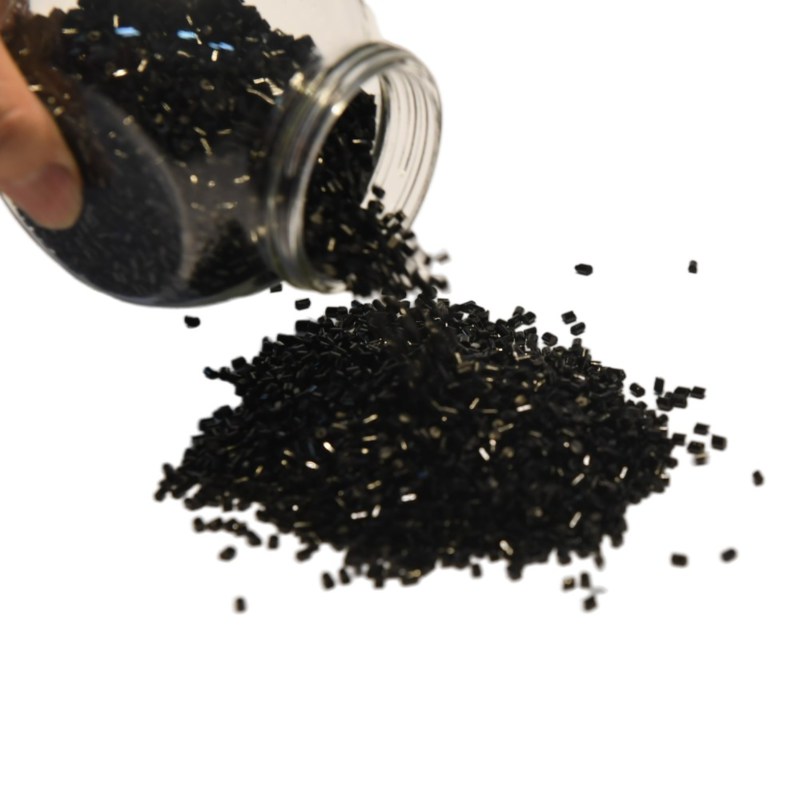
Evaluating technical specifications requires looking past simple marketing brochures. You must break down the exact data when analyzing a supplier's Technical Data Sheet (TDS). Let us explore the primary dimensions that dictate processing success. Understanding these parameters ensures you select the correct material grade for your factory.
Manufacturers face a constant trade-off regarding carbon loading. Carbon loading typically ranges from 20% to 50% by weight. A higher loading means lower overall addition rates on the factory floor. This seems advantageous initially. However, increasing the pigment ratio drastically increases the difficulty of uniform dispersion. Dense carbon particles tend to clump together into hard agglomerates during compounding.
You must verify dispersion quality independently. Always request the Filter Pressure Value (FPV) from your supplier. Laboratories measure FPV according to DIN EN 13900-5 standards. A low FPV indicates excellent dispersion regardless of the loading percentage. A premium carbon black masterbatch with a verified low FPV keeps your extruder screens clear. It prevents unexpected pressure spikes during continuous production.
The physical size of the carbon pigment dictates its final visual properties. Small particle sizes measure around 15 to 20 nanometers. They provide incredibly high jetness and strong UV protection. Unfortunately, these tiny particles remain notoriously difficult to disperse evenly. Larger particles range from 40 to 60 nanometers. These larger sizes are much easier to process. They suit standard tinting applications perfectly.
Visual output depends heavily on these particle characteristics. You must specify your undertone requirements based on end-product aesthetics. Small particles often yield a blueish undertone, which looks premium in consumer goods. Larger particles generally create brownish undertones. Always match the sizing matrix to your specific visual and structural goals.
The compatibility rule remains absolute in polymer processing. The masterbatch carrier resin must match the base polymer's melt temperature exactly. It must also align with the base polymer's viscosity profile. Ignoring this rule causes immediate structural failures.
A standard PE black masterbatch utilizes polyethylene as its base. It serves LLDPE, LDPE, and HDPE films exceptionally well. It offers excellent flexibility and low-temperature impact resistance. You gain substantial processing ease during extrusion. The PE carrier melts smoothly alongside your bulk resin.
Conversely, a dedicated PP black masterbatch proves essential for polypropylene injection molding. Polypropylene has a different crystalline structure and higher melting point than polyethylene. The correct PP carrier prevents delamination completely. It maintains essential tensile strength in structural components. Avoid "universal carriers" for high-stress engineering parts. They act as foreign contaminants and degrade mechanical performance.
Flawed evaluations look fine on paper but fail disastrously on the factory floor. Understanding practical implementation considerations saves significant time and resources. What happens when the material evaluation falls short? Production halts, scrap rates climb, and machinery suffers premature wear.
Poor dispersion leads directly to extrusion bottlenecks. Undispersed agglomerates travel through the barrel and hit the screen pack. They cause rapid screen pack blockages. You face frequent machine shutdowns for manual filter changes. Extruder back-pressure spikes dangerously, which strains the drive motor and reduces overall equipment lifespan.
Mechanical degradation occurs when operators ignore carrier compatibility. Incompatible carrier resins alter the crystalline structure of the base polymer during cooling. This leads to highly brittle injection-molded parts. They shatter upon impact. In extrusion, incompatibility creates weak thermal seals in blown film. You sacrifice product integrity entirely.
Batch-to-batch inconsistency destroys quality control efforts. Moisture variations cause massive processing headaches. Moisture content should ideally stay below 0.2%. High moisture creates severe surface defects. Water vaporizing inside the hot barrel causes lacing, voiding, or silver streaks. These defects ruin the visual appeal of high-temperature processed parts.
Establishing a strict framework for vetting suppliers protects your daily production. Follow these specific next-step actions before signing any long-term procurement contract. A systematic approach filters out unreliable vendors immediately.
Begin with rigorous documentation review. Reject suppliers who cannot provide a detailed TDS quickly. You also need a comprehensive Material Safety Data Sheet (MSDS). Require RoHS and REACH compliance certificates for all product lines. Traceability and chemical safety matter heavily in modern manufacturing environments.
Evaluate Melt Flow Index (MFI) matching carefully. Review the masterbatch MFI alongside your base polymer data. Ensure the masterbatch MFI runs slightly higher than your base resin. A higher flow rate facilitates rapid, even mixing within the extruder barrel. It prevents color streaking in the final molded product.
Maintain a skeptical check on market pricing. Be very wary of pricing that falls significantly below the market average. Low prices often indicate hidden compromises. Unscrupulous suppliers might use recycled, degraded carriers. Sometimes they dilute the pigment mix with high calcium carbonate filler. Heavy filler content ruins extrusion equipment over time. A premium Black Masterbatch protects your machinery and prevents long-term abrasive wear.
Selecting the right material remains a complex technical balancing act. You must align carbon concentration, carrier compatibility, and process-specific dispersion needs carefully. Ignoring any of these factors results in mechanical failure or excessive production downtime. High-performance manufacturing requires highly specific material formulations.
Move past simple visual evaluations of "blackness." Base your procurement decisions purely on verified FPV data and documented thermal properties. Ensure exact carrier matching for every project. Specify PP formulas exclusively for PP structural parts. Mandate rigorous pilot testing before approving any bulk material purchases.
Consult with your supplier's technical team to run a material flow analysis on your equipment. Validate the formulation against your specific extrusion profiles or molding cycle times. Implement these strict quality protocols today to protect your product integrity and maximize your manufacturing efficiency.
A: Typically 2% to 5%, depending on the carbon black concentration of the masterbatch, the thickness of the final product, and the required opacity.
A: It is highly discouraged for structural parts. While it may color the plastic, the incompatible PE carrier acts as a contaminant in the PP matrix, reducing impact strength and causing potential surface peeling.
A: This is usually caused by poor carbon black dispersion (agglomerates) or high moisture content in the blown film masterbatch. Ensure the masterbatch is properly dried and has a low FPV rating.
A: No. Food-contact applications require specific FDA or EFSA-approved carbon black grades with strict limits on polycyclic aromatic hydrocarbons (PAHs). Always request compliance documentation.
