
close
Choose Your Site
Global
Social Media
Views: 0 Author: Site Editor Publish Time: 2026-02-02 Origin: Site


Have you ever wondered how plastic products maintain their perfect white appearance? In this article, we’ll explain the role of White Masterbatch in enhancing the color and durability of plastics. You’ll learn how this essential additive works, its components, and the benefits it brings to manufacturing processes.
White Masterbatch is a concentrated additive used in plastic manufacturing to impart a bright, consistent white color and enhanced opacity to the plastic products. It primarily consists of Titanium Dioxide (TiO₂), a high-performance white pigment, which is dispersed into a polymer resin carrier such as Polyethylene (PE) or Polypropylene (PP). This mixture is then processed and formed into small granules, making it easy to incorporate into various plastic products.
The key components of White Masterbatch are:
● Titanium Dioxide (TiO₂): The main pigment responsible for the high whiteness and opacity.
● Carrier Resins: These ensure the even dispersion of TiO₂ throughout the plastic material.
● Additives: Various agents like UV stabilizers, anti-yellowing agents, and processing aids that help improve the performance and longevity of the masterbatch.
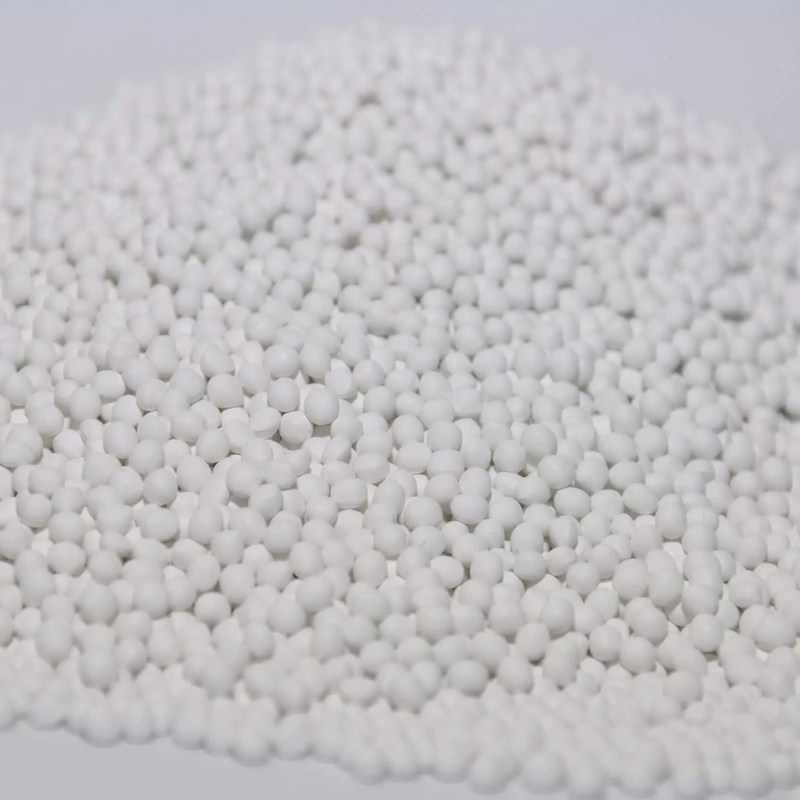
The production of White Masterbatch involves a high-temperature compounding process, where TiO₂ pigment and polymer resins are blended using twin-screw extruders. This method ensures the perfect dispersion of the pigment in the resin, resulting in a uniform and stable product. The process also controls the temperature and pressure to maintain the quality of the final product.
Step | Process Description |
Compounding | The TiO₂ pigment is mixed with carrier resin under high temperatures using twin-screw extruders. |
Extrusion | The mixture is then extruded into granules that can be easily added to plastic during production. |
Cooling & Cutting | The extruded material is cooled and cut into small, easy-to-handle pellets. |
White Masterbatch is highly concentrated, meaning that only a small amount is needed to achieve the desired level of whiteness and opacity in plastic products. This high concentration leads to significant cost savings in production. By using a small percentage of masterbatch, manufacturers reduce material costs while still obtaining a high-quality, consistent product. This efficiency also makes the entire manufacturing process smoother and faster.
White Masterbatch plays a critical role in improving the visual and functional properties of plastic products. It enhances the opacity and whiteness of plastics, providing a bright, reflective, and uniform color across large batches of plastic products. This is especially important in industries where aesthetics, light reflection, and opacity are essential, such as packaging and consumer goods.
When mixed into the polymer, White Masterbatch helps in uniformly distributing light across the plastic surface, creating the bright white appearance. It also ensures that the final product doesn’t show any inconsistencies or discolorations, thus maintaining high quality and performance.
Titanium Dioxide (TiO₂) is the star ingredient in White Masterbatch. Known for its high refractive index, TiO₂ scatters light effectively, ensuring that plastics reflect more light and appear opaque. This scattering of light is what gives plastics their vibrant white color.
The TiO₂ particles are finely ground to ensure even dispersion in the polymer matrix, allowing for consistent color and opacity. It also adds valuable UV resistance, helping plastics maintain their whiteness and strength when exposed to sunlight or harsh weather conditions.
TiO₂ Grade | Application | Benefits |
Rutile TiO₂ | High-performance, outdoor applications. | Superior UV resistance and durability. |
Anatase TiO₂ | Lower-grade, indoor applications. | Cost-effective, good for indoor use. |
The carrier resin used in White Masterbatch ensures the even distribution of TiO₂ throughout the polymer, which is essential for maintaining consistent color and properties. The choice of carrier resin—such as PP (Polypropylene), PE (Polyethylene), or PS (Polystyrene)—depends on the specific requirements of the end product.
Each resin type has its own set of advantages. For example:
● Polyethylene (PE) is commonly used in food packaging due to its compatibility with food-grade materials.
● Polypropylene (PP) is used for products requiring higher mechanical strength and durability.
The resin also helps maintain the mechanical properties of the plastic, such as tensile strength and flexibility, while supporting the dispersive qualities of TiO₂.
Additives in White Masterbatch play a significant role in enhancing performance and protecting the polymer. Some common additives include:
● UV Stabilizers: These additives protect the plastic from UV degradation, extending its lifespan when exposed to sunlight.
● Anti-Yellowing Agents: These prevent the plastic from turning yellow over time, maintaining its white appearance.
● Processing Aids: These are used to improve the flow and handling of the masterbatch during the manufacturing process, helping to reduce processing time and energy consumption.
One of the most significant benefits of using White Masterbatch is its cost-effectiveness. By incorporating it into the plastic production process, manufacturers can achieve the desired whiteness and opacity without the need for large quantities of raw pigment. White Masterbatch is highly concentrated, meaning that only a small amount is required to create the same effect that would otherwise need a larger quantity of pigment. This leads to:
● Reduced material costs: Less pigment is needed.
● Improved production efficiency: White Masterbatch simplifies the mixing process, reducing production time and energy usage.
● Lower waste: Consistent and controlled dosing prevents overuse of expensive pigments and additives.
White Masterbatch helps manufacturers achieve consistent results, which ultimately leads to savings in labor and material costs.
The presence of Titanium Dioxide (TiO₂) in White Masterbatch enhances not only the color but also the durability of plastic products. TiO₂ is well-known for its ability to improve UV resistance, heat resistance, and weatherability. These properties are essential in various industries, especially those requiring outdoor or long-lasting products. For instance:
● UV resistance: TiO₂ helps plastics maintain their bright white color even when exposed to sunlight.
● Heat resistance: Plastics retain their properties and finish even at high temperatures, making them ideal for products like bottles, containers, and packaging.
● Weatherability: White Masterbatch enhances the outdoor durability of products, making it suitable for applications like exterior automotive parts and construction materials.
Compared to raw pigment powders, White Masterbatch ensures more consistent color and reliable performance. The high dispersion of TiO₂ within the polymer ensures a uniform color, eliminating the issues that come with inconsistent pigment mixing. Some key advantages include:
● Reduced color variation: Masterbatch guarantees uniformity across batches, essential for mass production.
● Easier quality control: Manufacturers can easily monitor and adjust the color consistency throughout production, ensuring the final product matches the desired specification.
● Better product appearance: Consistent whiteness and smooth surfaces enhance the visual appeal of plastic products, ensuring they meet industry standards for aesthetics.
White Masterbatch is incredibly versatile and used across numerous industries. Its applications range from packaging to automotive parts and consumer goods. Let’s explore its role in some key industries.
In the packaging industry, White Masterbatch is crucial for creating aesthetically pleasing and functional packaging materials. Here’s how it contributes:
White Masterbatch is widely used in food packaging, shopping bags, and lamination films. It provides the opacity needed to shield packaged goods from light exposure, preserving the contents and improving the visual appeal of the packaging. White Masterbatch also enhances printability, allowing for better branding, logos, and product details on the surface of the packaging.
In addition to its functional role, White Masterbatch plays a major role in aesthetic enhancement. It creates a clean and shiny finish on packaging materials, making them look more attractive to consumers. For products like food and cosmetic packaging, where presentation is key, White Masterbatch ensures that the packaging remains visually appealing while offering practical benefits like light protection and improved durability.
Injection molding is a widely used process in the production of plastic products that require high-quality surfaces and uniform appearance. White Masterbatch is used extensively in this process due to its ability to improve gloss and color consistency.
White Masterbatch plays a vital role in the production of household goods, such as plastic containers, and cosmetic packaging. For these products, achieving a high-quality glossy finish is essential for aesthetic appeal. White Masterbatch ensures that products like cosmetic jars, bottles, and toys maintain a shiny, bright white color that lasts over time.
White Masterbatch is used in various consumer goods, including:
● Toys: Ensures a clean, bright, and durable appearance.
● Automotive Parts: Provides a glossy finish and long-lasting whiteness for components such as dashboards and trim.
● Electronic Components: Improves the finish and opacity of plastic parts used in electronics, enhancing both their appearance and protection.
By maintaining color consistency and product quality, White Masterbatch helps manufacturers produce top-tier products that meet customer expectations and industry standards.
Packaging Materials In blow molding applications, White Masterbatch plays a crucial role in creating uniform color and consistent opacity across a wide range of products, including bottles, containers, and cosmetic packaging. When used in blow molding, it ensures that the final product has a visually appealing bright white appearance, which is essential for consumer products.
● Ensures uniform color across large batches of products.
● Provides high-quality finish and gloss for improved product aesthetics.
● Ideal for high-volume production with consistent results.
Resistance to Fading One of the critical features of White Masterbatch is its resistance to fading under high heat or rapid production cycles. In blow molding, products are often subjected to high temperatures during processing, which can cause pigments to degrade and lose their brightness.
● White Masterbatch ensures that the white color remains stable and durable, even under demanding conditions.
● Provides consistent whiteness even when exposed to sunlight, heat, or moisture over time.
Benefit | Application | Effectiveness |
Heat Resistance | Blow molding products like bottles and containers | Ensures that products retain their bright white color under high heat. |
Uniform Color | Cosmetic and food packaging | Guarantees consistent, high-quality finish throughout the product. |
Fade Resistance | Outdoor use products (bottles, containers) | Prevents fading when exposed to sunlight or harsh conditions. |
Pipes and Sheets In extrusion applications, White Masterbatch is often used for pipes, sheets, and profile extrusions—materials that are widely exposed to outdoor elements. White Masterbatch enhances UV resistance, ensuring that the products maintain their structural integrity and brightness over time.
● Helps protect plastic products from UV degradation and discoloration.
● Improves outdoor durability of plastic items exposed to weathering.
● Ensures a high-quality finish for pipes and sheets used in construction and landscaping.
Fibers and Non-Woven Fabrics In the textile industry, White Masterbatch is used to enhance the brightness and color stability of fibers and non-woven fabrics. These products require consistent whiteness for a clean, uniform look, especially in applications such as synthetic fabrics, PP woven bags, and geotextiles.
● Improves brightness of textile fibers for consistent color.
● Enhances color stability in fabrics exposed to washing and light.
● Ideal for products that need to maintain high whiteness and aesthetic appeal.
Application | Benefits of White Masterbatch | Key Property |
Pipes & Sheets | UV resistance, improved weatherability | Increased outdoor durability |
Fibers & Non-Woven Fabrics | High brightness, enhanced color stability | Consistent color quality over time |
Automotive Parts White Masterbatch plays a vital role in the automotive industry, particularly for interior and exterior components that require both high durability and visual appeal. For automotive parts, such as dashboard components, door panels, and trim parts, White Masterbatch ensures that these products maintain their bright white color and high gloss even under harsh conditions like heat and UV exposure.
● Improved gloss for cosmetic parts and components.
● UV stability ensures longevity and prevents yellowing of white parts.
● Helps to maintain a consistent color across all parts, enhancing the overall aesthetic of the vehicle.
Aerospace Components In the aerospace industry, White Masterbatch is used in both functional and cosmetic components. It enhances visibility and aesthetic appeal in parts such as interior panels, fuselage coatings, and other exposed components. White Masterbatch ensures that aerospace products maintain their high-quality appearance while also providing UV stability and corrosion resistance.
● White Masterbatch is essential in creating cosmetic finishes for aerospace interiors.
● Enhances UV stability for outdoor aerospace parts.
● Improves corrosion resistance for plastic parts exposed to extreme conditions.
Industry | Application | Key Benefits |
Automotive | Interior & exterior parts | Improved gloss, UV resistance, and durability. |
Aerospace | Aerospace components | Enhanced UV stability and corrosion resistance. |
When selecting the right White Masterbatch for a specific application, it's crucial to evaluate several factors to ensure optimal performance. These include:
● Polymer Compatibility: Understanding the base polymer (e.g., PP, PE, PS) that the White Masterbatch will be combined with is key. Each polymer has different processing and performance characteristics that will affect the final outcome of the plastic product.
● Performance Needs: The specific properties required for the end-product should guide the selection. For instance:
UV Resistance: If the product will be exposed to sunlight, such as outdoor furniture or building materials, UV-stabilized White Masterbatch is essential.
Opacity: For products that need to completely block light, such as packaging, a high-opacity White Masterbatch is necessary.
Heat Stability: Products used in high-temperature environments require White Masterbatch that can withstand heat without degradation.
Manufacturers can tailor White Masterbatch to meet specific industry standards and performance requirements. Customization options include adjusting the:
● Pigment load: Higher pigment concentration for better opacity or a more cost-effective solution for less demanding applications.
● Additives: Customizing additives like UV stabilizers, antioxidants, and anti-yellowing agents to match the product's intended use.
● Carrier Resin: Choosing the right carrier resin ensures better compatibility with the polymer and enhances processing efficiency.
This flexibility allows manufacturers to optimize White Masterbatch for different applications such as packaging, automotive parts, or medical devices, ensuring both cost-effectiveness and performance reliability.
In today’s global marketplace, White Masterbatch must meet local and international standards for:
● Safety: White Masterbatch should comply with safety standards such as FDA or REACH (Registration, Evaluation, Authorization, and Restriction of Chemicals).
● Durability: Ensuring that the product will retain its properties over time and under varying environmental conditions.
● Environmental Impact: Regulations regarding the use of harmful chemicals, recyclability, and eco-friendly alternatives are becoming increasingly important.
The plastic industry is often criticized for its environmental impact—from the extraction of raw materials to the disposal of plastic waste. White Masterbatch plays a role in making plastic products more sustainable by:
● Reducing the need for excessive pigment and chemicals that could contribute to environmental pollution.
● Optimizing production processes to reduce waste and energy consumption.
● Enhancing durability and longevity of products, which can reduce the frequency of replacements and overall plastic waste.
As the demand for more sustainable solutions grows, manufacturers are increasingly adopting practices that reduce the carbon footprint of plastic production, including using more eco-friendly materials and improving recycling practices.
The need for more sustainable plastic manufacturing has led to innovations in bio-based and biodegradable White Masterbatch options. Some notable advancements include:
● Biodegradable Masterbatch: This type of White Masterbatch is designed to break down more easily in natural environments, reducing the long-term impact of plastic waste.
● Bio-based Materials: White Masterbatch made from renewable resources (such as plant-based polymers) reduces reliance on fossil fuels, contributing to a more sustainable production model.
These alternatives offer the potential to reduce plastic waste, improve recycling rates, and promote sustainable plastic solutions. Companies are focusing on developing eco-friendly products that align with global sustainability goals.
Eco-friendly Option | Description | Benefits |
Biodegradable Masterbatch | White Masterbatch that decomposes naturally over time. | Reduces plastic waste and environmental impact. |
Bio-based Masterbatch | Made from renewable resources like plant-based polymers. | Uses less fossil fuel, promoting sustainability. |
White Masterbatch is a vital ingredient in plastic production, improving whiteness and opacity across a range of industries. HSD Masterbatch offers high-quality White Masterbatch, ensuring superior durability, UV resistance, and consistent color. Their products help manufacturers achieve high standards while enhancing production efficiency.
A: White Masterbatch is a concentrated additive used in plastics manufacturing, primarily made from Titanium Dioxide (TiO₂) to provide whiteness, opacity, and improved durability.
A: White Masterbatch works by dispersing TiO₂ pigment into a polymer, enhancing light reflection and opacity, and providing a consistent white color to plastic products.
A: Titanium Dioxide is used due to its high refractive index, which scatters light, providing bright white color and strong opacity in plastic products.
A: White Masterbatch improves color consistency, reduces waste, enhances durability, and ensures UV resistance, making it ideal for high-quality plastic products.
A: Yes, White Masterbatch can be customized by adjusting pigment load, additives, and carrier resin to meet specific industry requirements, such as UV resistance or opacity.
