
close
Choose Your Site
Global
Social Media
Views: 0 Author: Site Editor Publish Time: 2026-09-18 Origin: Site


Achieving optimal carbon black dispersion demands a delicate balance of thermodynamics and mechanical shear. Process engineers face a constant challenge during compounding operations. You will often encounter a fundamental "temperature paradox" in manufacturing. Raising processing heat improves resin wetting significantly. The polymer flows easier over dry pigment surfaces. However, this same heat simultaneously reduces melt viscosity. Lower viscosity severely drops the shear stress. You absolutely need high shear stress to break apart stubborn carbon black agglomerates. If you prioritize wetting over shear, color development fails completely. If you maximize shear without heat, the mixture remains dry. This article equips process engineers and procurement teams thoroughly. You will gain a clear decision-making framework. We explore optimizing processing temperatures safely. You will learn to align material specifications precisely. Finally, we evaluate supplier capabilities for consistent, high-yield production.
Heat plays a primary role during the initial wetting phase. Increased temperature systematically lowers surface tension. It also drops the viscosity of your polymer or carrier matrix. This fluid transformation proves highly beneficial initially. The liquid matrix can penetrate the microscopic voids of carbon black aggregates much faster. Faster penetration displaces trapped air effectively. Capillary action pulls the hot resin into deep crevices. Complete wetting prevents dry agglomerates from surviving the process.
However, you must manage the inevitable drop in shear stress. Mechanical energy breaks apart the pigment clusters. We calculate shear stress by multiplying shear rate by viscosity. When heat makes the matrix too fluid, viscosity plummets. Therefore, the compounding equipment generates significantly less shear force. Twin-screw extruders rely on internal friction. Banbury mixers also need this stiff resistance. They push the material against the metal walls. If the mixture behaves like water, the mixing blades simply slip. They cannot shatter the tough carbon agglomerates.
Process engineers must define a precise processing window. Successful manufacturing relies on finding a specific thermal sweet spot. Viscosity must remain low enough for rapid wetting. Simultaneously, it must stay high enough for effective milling. You must balance these thermodynamic forces carefully. We recommend plotting viscosity curves at various temperatures. This data helps you pinpoint the exact melting zones. You can then adjust your extruder profiles accordingly.
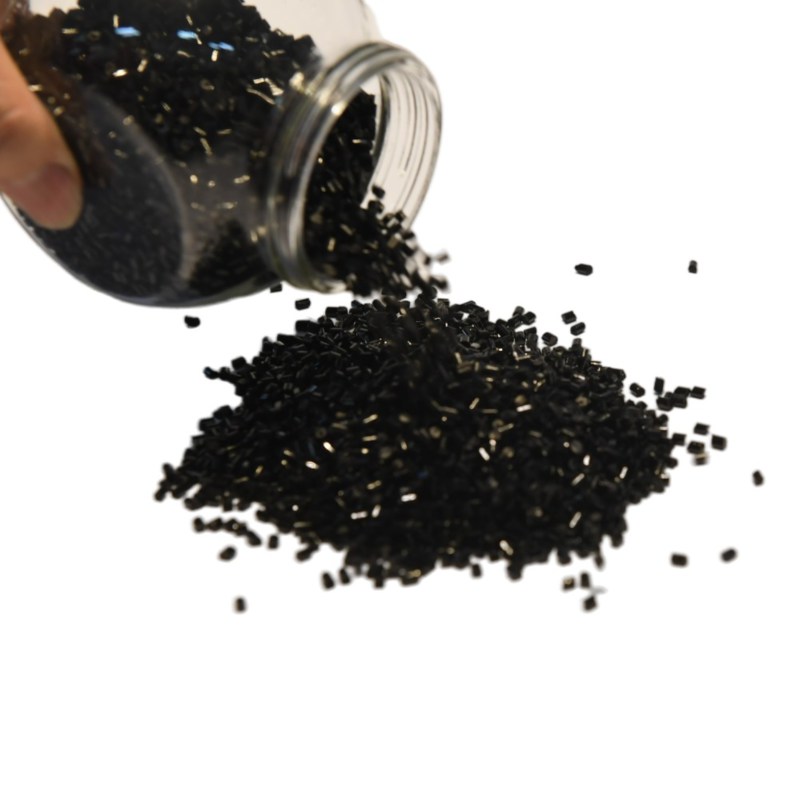
Different chemical environments react uniquely to thermal changes. You must customize your heating strategies. We examine three distinct matrix systems below.
Temperature profiling across extruder zones directly dictates pigment distribution. You usually want lower temperatures near the feed throat. This builds necessary friction early in the process. Gradually increase the heat toward the die head. This strategy smooths the final melt flow. Manufacturers aim to create a great quality black masterbatch with high jetness. Achieving this requires pushing loading capacities to their absolute limits. You must apply intense mechanical shear without thermally degrading the carrier resin. Overheating polyethylene or polypropylene destroys mechanical strength. You must monitor the melt temperature probe constantly.
Rubber presents a uniquely dangerous thermal environment. Mixing generates massive amounts of internal friction. You risk "scorch" if temperatures climb too high. Scorch means premature vulcanization. The rubber cross-links inside the mixer. This ruins the entire batch instantly. You cannot simply force dispersion by extending mixing times. Extending time adds more heat. You must utilize specialized cooling systems. Cold water circulates through the mixing rotors. This pulls heat out while maintaining the high shear necessary for breakdown.
Liquid systems face different thermal challenges. Temperature fluctuations drastically alter liquid coating viscosity. Heating lowers viscosity for initial milling. However, cooling causes problems later. Dispersant molecules stabilize the pigment particles in suspension. Rapid temperature drops shock these chemical dispersants. The particles lose their protective barriers. They collide and stick together again. We call this phenomenon flocculation. You will see a sudden loss of gloss. The ink may become thick and unusable. You must control storage temperatures strictly.
Best practices for managing matrix temperatures:
Even experienced operators face unexpected thermal problems. You can identify the root causes by reading the physical symptoms. We categorize these failures into two main types.
Too much heat damages both the matrix and the pigment structure. You will notice several warning signs.
Cold processing prevents adequate wetting. This causes entirely different physical defects.
Visual inspection is never enough. You must quantify thermal impacts using standard evaluation lenses. Filter pressure value (FPV) tests are mandatory. You push the molten masterbatch through a fine metal screen. Undispersed agglomerates plug the screen. The pressure rises. High pressure proves poor dispersion. Microscopic evaluation offers another tool. You cut thin slices of the product. You examine them under polarized light. You can actually count the undispersed chunks. Finally, gloss meter readings help. Rough surfaces scatter light. A low gloss reading often points to thermal dispersion failures.
Table: Thermal Dispersion Troubleshooting Guide
| Observed Symptom | Probable Root Cause | Recommended Corrective Action |
|---|---|---|
| Polymer brittleness / browning | Excessive external heating | Lower barrel zone temperatures; increase screw speed slightly to reduce residence time. |
| Surface nibs and seeds | Insufficient initial wetting | Raise feed zone temperature; pre-blend resin and pigment thoroughly. |
| High FPV and high torque | Inadequate shear / cold melt | Optimize temperature profile to maintain viscosity; check screen pack condition. |
| Loss of gloss upon cooling (Coatings) | Thermal shock causing flocculation | Implement controlled cooling protocols; adjust dispersant chemistry. |
Your raw materials dictate your thermal boundaries. You must match your processing temperatures to specific pigment properties. Every grade behaves differently under heat.
Structure refers to the physical shape of the pigment aggregates. We measure this using Dibutyl Phthalate (DBA) absorption. High-structure carbon blacks have complex, bulky, branching shapes. They absorb more polymer during wetting. They build viscosity much faster during compounding. Because they resist flow, they generate intense internal friction. This frictional heat spikes the internal temperature quickly. You must apply tighter external temperature controls. You might need to lower your barrel heater setpoints. Otherwise, the frictional heat causes severe polymer degradation.
Primary particle size determines total surface area. Finer particles boast massive surface areas. A small amount of pigment requires enormous amounts of resin to wet completely. These finer grades need significantly more wetting time. They also demand highly specific temperature profiles. If you process them too cold, they cluster tightly. You must elevate the feed zone temperature slightly. This melts the resin faster. It allows the liquid to coat the massive surface area before extreme shear forces apply.
Buyers must read technical documents thoroughly. Do not rely on generic assumptions. You must review carbon black dispersion specifications before purchasing. You can anticipate the material's thermal behavior easily. Look at the tinting strength number. High tinting strength usually indicates smaller particle size. Smaller particles mean higher thermal demands. Check the volatile content percentage. High volatiles mean more gas expansion at elevated temperatures. This knowledge prevents costly production trials. You can adjust your machinery settings before the material even arrives.
Sourcing the right raw materials is a critical engineering task. You cannot solve every problem on the production floor. You need a reliable vendor.
Inconsistent raw materials ruin optimized thermal profiles. You must demand hard data from your carbon black dispersion supplier. Ask for their statistical process control (SPC) charts. Focus particularly on moisture content variation. Carbon black absorbs moisture from the air naturally. If moisture levels fluctuate batch-to-batch, your process suffers. High moisture vaporizes instantly at extruder temperatures. This sudden steam expansion creates voids. It disrupts the shear forces needed for milling. A good supplier controls moisture rigorously before packaging.
Evaluate the supplier's technical depth. Can they provide specific processing guidelines? A strong partner understands different compounding equipment. They know how a Banbury mixer differs from a twin-screw extruder. They should recommend exact temperature limitations for their specific grades. They offer formulation expertise to help you avoid scorch or polymer degradation. Do they respond quickly to troubleshooting requests? Technical support is just as vital as the physical product itself.
You must apply strict criteria when selecting vendors. Emphasize suppliers who conduct rigorous internal testing. They should test their black masterbatch under varying thermal conditions. Ask to see this data. They should openly share the resulting rheological profiles. Look for capillary rheometer data at different shear rates and temperatures. Reliable suppliers prove their claims of thermal stability. They provide verifiable scientific evidence. They never rely on simple marketing promises.
Temperature control acts as a dynamic tool in your manufacturing process. It is never a static variable. You must constantly balance thermal energy against mechanical shear. You must also align this balance with precise material specifications. We recommend taking a proactive next step immediately. Conduct a stepped-temperature compounding trial in your facility. Run the same formulation at three different temperature profiles. Monitor your extruder torque and filter pressure values closely. This exercise establishes critical baseline data for your specific setup. Finally, encourage your procurement and technical teams to collaborate. Request detailed rheological profiles and processing recommendations from current or prospective suppliers. This proactive communication ensures you achieve optimal dispersion consistency.
A: No. While increased heat helps with initial wetting, it causes problems later. Too much heat lowers polymer viscosity significantly. This fluid state reduces the mechanical shear force. You need high shear to break apart stubborn agglomerates. Excessive temperatures lead to poor color yield, undispersed chunks, and physical product defects.
A: High-shear mixing naturally generates intense internal frictional heat. The compounding equipment forces bulky pigment aggregates against each other. If external barrel temperature controls are not adjusted down to compensate, localized temperatures skyrocket. This unchecked heat easily exceeds safe limits. It causes severe polymer degradation and potential safety hazards.
A: Always review the pigment's structure and surface chemistry. Check the Dibutyl Phthalate (DBA) absorption number. High-structure grades possess bulky shapes. They increase melt viscosity rapidly and generate massive shear heat. You may need to lower your equipment's external set temperatures or reduce your material feed rate.
