
close
Choose Your Site
Global
Social Media
Views: 0 Author: Site Editor Publish Time: 2026-08-30 Origin: Site


Formulating polymers demands serious precision and structural integrity. Applying color to your product goes far beyond just achieving a simple visual change. It is fundamentally a structural and economic decision. Selecting an incorrect grade often triggers frustrating screen pack clogging on the production line. These poor choices compromise mechanical properties rapidly. They also skyrocket defect rates across manufacturing batches. Buyers cannot afford to treat these additives as generic commodities.
This guide bypasses basic color theory entirely. We provide a robust technical framework to help you evaluate materials accurately. You will learn to decode technical data sheets with ease. We show you how to align specific technical parameters directly to your processing methods. Finally, you will gain the knowledge to confidently vet your manufacturing partners. You can secure consistent production runs and maintain superior product quality.
Buyers often default to the lowest price per kilogram. They ignore the true operational cost of poor dispersion. High let-down ratios (LDR) erase initial raw material savings quickly. Poorly dispersed pigments require higher dosing to achieve target opacity. Investing in a great quality black masterbatch with high tinting strength actually reduces overall material consumption. It optimizes your processing costs steadily over time. We evaluate formulation success through strict performance baselines. You must assess three core operational areas before approving any material change.
Visual baselines demand absolute perfection. You need deep jetness across the entire surface. The final part should show no streaking. It must remain free of surface agglomeration. Even microscopic specks indicate a failed dispersion process. Mechanical baselines dictate structural safety. The additive must not degrade tensile strength. It should preserve the impact resistance of the final product entirely. Any drop in mechanical performance signals chemical incompatibility.
Processing baselines focus on machine efficiency and uptime. Look for a highly stable melt flow index (MFI). A stable MFI ensures extruder parameters remain uninterrupted. Fluctuating melt flows cause surging inside the barrel. Surging leads directly to dimensional variations in the extruded profile. You need absolute stability to maintain tight manufacturing tolerances.
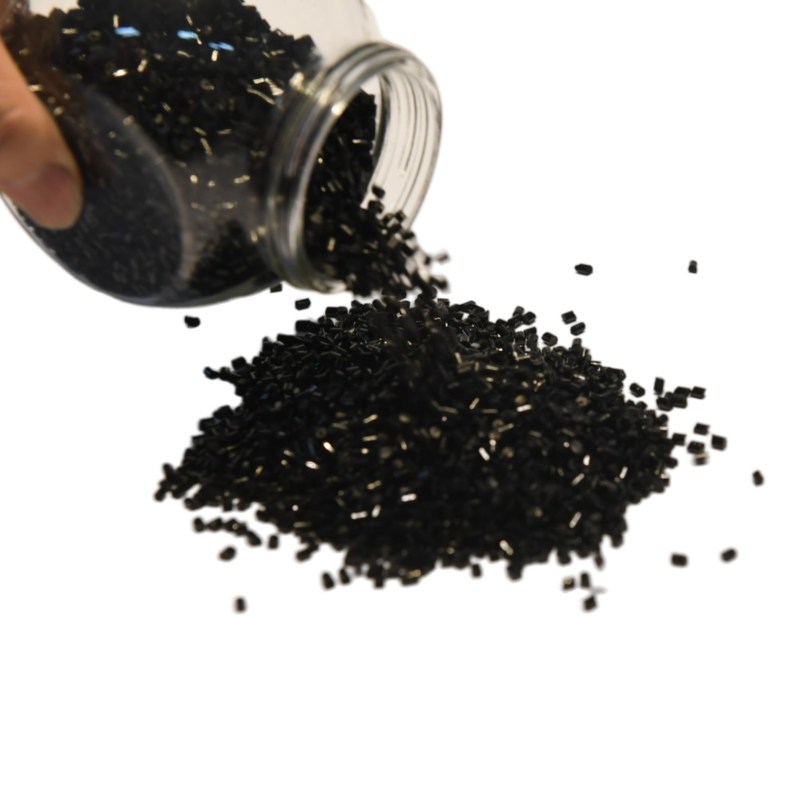
Understanding technical data sheets is a critical engineering skill. You must analyze specific metrics to predict manufacturing outcomes accurately. Relying on marketing brochures leads to expensive production failures.
Engineers must balance particle size against coloring power meticulously. Carbon particles typically range from 15 to 60 nanometers. Smaller particles provide superior jetness. They also offer unmatched UV protection because they absorb light efficiently. However, smaller particles possess massive surface areas. They are notoriously difficult to wet out and disperse evenly. Manufacturers must employ advanced twin-screw extruders. They use high shear mixing techniques to break apart persistent clumps.
Many buyers mistakenly believe higher carbon loading guarantees a darker product. They assume a 50% carbon concentration beats a 40% concentration automatically. This assumption ignores the physics of dispersion. A high percentage of carbon is entirely useless if the dispersion quality is inferior. Poorly dispersed 50% grades leave large agglomerates intact. These unbroken clumps do not contribute to coloring. They perform worse than highly dispersed 40% grades. Furthermore, these agglomerates create visible surface defects. They also reduce the actual coloring yield significantly.
Impact of Carbon Black Particle Size
| Particle Size (nm) | Color Tone | UV Protection | Dispersion Difficulty |
|---|---|---|---|
| 15 - 20 nm | Deep blue-black (High Jetness) | Excellent | Very High |
| 25 - 30 nm | Standard black | Good | Moderate |
| 40 - 60 nm | Brown-black (Low Jetness) | Basic | Low |
Carrier compatibility is a non-negotiable processing requirement. The masterbatch carrier resin must align perfectly alongside your base polymer. Common carriers include PE, PP, PS, and EVA. A strict thermodynamic rule of thumb applies here. The carrier resin must have a slightly higher melt flow index than the base polymer. This rheological difference ensures proper mixing inside the barrel. It allows the concentrate to melt first and distribute the pigment evenly.
Some manufacturers promote universal carriers to cut inventory costs. Universal carriers present serious engineering risks. They often fail to bond correctly inside engineering plastics like ABS or PET. This chemical mismatch leads to severe phase separation. It causes delamination. It triggers catastrophic mechanical failures under mechanical stress. Polymer-specific carriers provide predictable homogenization. They secure the physical integrity of your molded parts.
Dispersion dictates the overall success of the entire coloring process. Visual inspections cannot quantify dispersion accurately. We measure dispersion objectively using the Filter Pressure Value (FPV). You must always check the FPV metric in the black masterbatch specifications before approving any purchase.
The FPV test pushes molten polymer through a standardized micron screen. It measures the pressure buildup over a specific timeframe. A lower FPV indicates excellent manufacturing quality. It proves the compound contains very few un-dispersed agglomerates. Fewer agglomerates translate directly to longer intervals between screen pack changes on your production line. High FPV values warn of impending production trouble. They predict rapid filter blocking. They signal dangerous increases in extruder back pressure. You should instantly reject material batches showing inconsistent or high FPV readings.
Your final product defines the exact formulation you require. You cannot use a single grade across different manufacturing methods safely. Each sector demands unique physical and chemical properties.
Thin films demand the highest dispersion standards in the plastics industry. Packaging and agricultural films tolerate absolutely zero defects. You need exceptional dispersion to prevent pinholes. The compound must not create tears or gels during the blowing process. Any solid agglomerate will rupture a delicate thin film bubble instantly. This rupture halts the entire extrusion line.
Food-contact packaging adds strict regulatory hurdles. You must source materials holding verifiable FDA or REACH compliance. These specialized grades use highly purified carbon black. They undergo severe testing protocols. They guarantee zero migration of heavy metals or harmful aromatic compounds into food products.
Automotive and consumer goods prioritize aesthetic perfection heavily. Injection molding requires compounds delivering flawless, high surface gloss. Consumers perceive deep black undertones as a sign of premium quality. Manufacturers typically use blue-tone carbon black to achieve this luxurious look. Red-tone blacks often look cheap or faded under showroom lighting.
Dimensional stability is equally crucial during cooling. The additive must not alter the natural shrinkage rate of the base polymer. Uneven shrinkage warps precision parts unpredictably. It destroys the assembly tolerances of complex automotive dashboards. The carrier resin must match the mold shrinkage parameters perfectly.
Outdoor applications face relentless environmental degradation constantly. Pipes and cables require extreme weatherability. The sun aggressively attacks unprotected polymer chains. Thermal cycling causes rapid physical deterioration.
This sector requires specific carbon black grades. P-type carbon black acts as a powerful UV stabilizer naturally. It absorbs ultraviolet radiation effectively. It prevents polymer chain degradation over decades of exposure. Standard coloring grades will fail rapidly in these harsh environments. They lead to cracked irrigation pipes and exposed electrical cables. You must verify the UV absorption coefficients before extruding outdoor profiles.
Choosing the wrong grade introduces severe operational hazards into your facility. We can classify these risks into three main failure categories. Ignoring these risks guarantees financial losses.
First, filter clogging causes immediate production downtime. Poorly dispersed carbon black forms stubborn lumps in the melt flow. These lumps block extruder screens rapidly. Machines require emergency shutdowns for manual cleaning. This downtime destroys daily production quotas. It increases maintenance labor costs significantly.
Second, incompatible materials cause color migration and surface bleeding. Cheap dispersants often rely on low-molecular-weight waxes. These volatile waxes migrate to the surface of the molded part during cooling. They leave a greasy, unpleasant residue. They also prevent secondary operations entirely. You cannot print, glue, or ultrasonically weld parts covered in wax.
Third, mismatched formulas trigger a complete loss of mechanical integrity. High concentrations of incompatible carrier resins act as physical contaminants. They disrupt the continuous polymer matrix. This disruption causes dangerous brittleness. It leads directly to structural delamination in the final molded or extruded part.
We strongly advise implementing a strict mitigation strategy. Follow this exact sequence:
Risk Assessment and Operational Consequences
| Risk Factor | Root Cause | Consequence | Prevention Method |
|---|---|---|---|
| Filter Clogging | High FPV / Poor Dispersion | Production downtime, machine wear | Specify low FPV limits in TDS |
| Color Bleeding | Low-molecular-weight waxes | Greasy surface, printing failure | Avoid cheap wax dispersants |
| Delamination | Carrier resin mismatch | Part breakage, loss of impact strength | Match carrier exactly to base polymer |
Vetting your manufacturing partner is just as important as reading the data sheet. A reliable black masterbatch supplier acts as a true technical partner. They guarantee lot-to-lot consistency. They protect your brand reputation.
A premium supplier should test every single batch rigorously. You must ask detailed questions about their internal QC infrastructure. Do they use spectrophotometers to verify precise color matching? Do they operate internal blown film lines to test dispersion practically? Do they utilize moisture analyzers to ensure the compound is perfectly dry? Consistent lot-to-lot performance relies entirely on these internal QC tools. A facility lacking this equipment cannot guarantee consistency.
You must evaluate their absolute production capacity thoroughly. Can they scale alongside your future production goals easily? They must do this without extending lead times. You also need to verify their supply chain security deeply. Ask them about their raw material sources. The origin of the carbon black dictates the baseline quality of the final black masterbatch product. A fragile supply chain will leave you stranded during global raw material shortages.
Documentation proves manufacturing competence and legal responsibility. Ensure the partner can readily provide all necessary compliance paperwork. They should supply a detailed Certificate of Analysis (CoA) with every shipment automatically. You should also request RoHS, REACH, and food-grade compliance documents immediately upon request. Delays in providing regulatory documentation often signal a severe lack of internal controls. It may indicate they purchase cheap, unverified raw materials.
Selecting the correct formulation is a precise balancing act. You must carefully weigh carbon loading against dispersion quality. You must strictly align carrier compatibility with your base polymer. Operational economy always trumps the initial raw material price. You can avoid costly downtime by respecting these fundamental engineering principles.
We recommend taking the following actions to optimize your procurement strategy:
A: Typically ranges from 1% to 5%, depending on the application thickness, carbon concentration of the masterbatch, and required opacity. Thin films usually require higher dosing for total light blockage. Thick injection molded parts can often achieve deep black coloration at the lower end of this scale.
A: Smaller particles provide better UV protection and deeper color (jetness) but require advanced manufacturing techniques to disperse properly without clumping. Larger particles are much easier to mix into the polymer melt but yield a brownish undertone and offer significantly less protection against ultraviolet degradation.
A: While sometimes possible for low-end applications, it is not recommended. Dissimilar carrier resins can lead to poor homogenization, surface defects, and mechanical weakness. Always match the carrier to the base polymer when possible to ensure structural integrity and flawless surface aesthetics.
