
close
Choose Your Site
Global
Social Media
Views: 0 Author: Site Editor Publish Time: 2026-04-06 Origin: Site


Modern cables must do more than carry power or data. They must also stay durable, stable, and easy to identify. Cable masterbatch solutions help meet these demands across many applications. In this article, you will learn how to assess the right solution by cable type, polymer compatibility, and end-use conditions.
In cable manufacturing, the margin for error is small. A slight shift in color, additive loading, or resin compatibility can affect not only appearance but also processing stability and end-use performance. Masterbatch selection directly influences color accuracy, extrusion behavior, weather resistance, flame-retardant performance, and long-term reliability in insulation and sheathing layers.
Manufacturers often face several recurring issues during cable production:
● Inconsistent color coding from batch to batch, which can complicate identification and quality control
● Poor dispersion that leads to streaks, specks, or uneven surface appearance
● Processing instability during extrusion, especially at higher line speeds
● Difficulty combining visual consistency with durability, thermal stability, and regulatory requirements
These problems usually become more noticeable when one formulation is expected to work across different cable compounds such as PVC, PE, or PP.
Custom formulations help narrow the gap between design targets and production reality by matching pigments, additives, and carrier resins to the actual cable system.
Practical need | Value of a custom masterbatch solution |
Precise cable identification | More consistent color matching and stronger tinting control |
Stable processing | Better dispersion and smoother extrusion performance |
Resin compatibility | Improved fit with PVC, PE, PP, and other cable compounds |
Cost control | Lower scrap rates and less wasted pigment or additive |
This is why custom cable masterbatch solutions are often chosen not just for appearance, but for more predictable manufacturing performance.
Selecting the right cable masterbatch starts with the application rather than the pigment alone. In cable production, the same base polymer can be used in very different environments, from indoor signal wiring to outdoor power transmission. That is why manufacturers usually define the end-use requirement first, then choose a formulation that combines color performance, processing stability, and the necessary functional properties. Color masterbatch and additive masterbatch should work together in insulation and sheathing layers, not as isolated inputs.
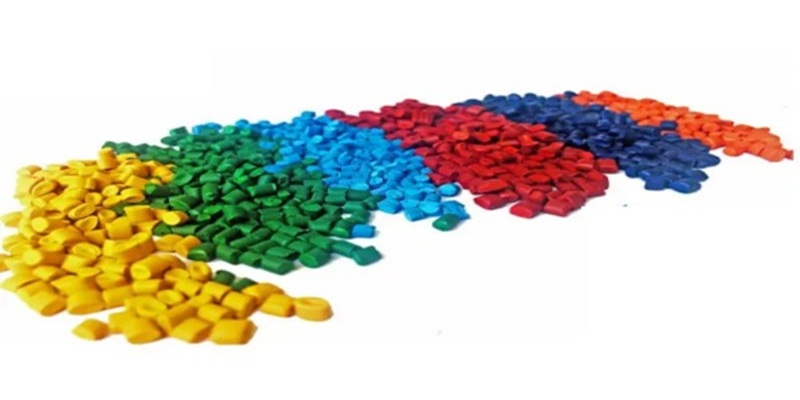
Accurate color coding matters because cables are often identified visually during installation, assembly, maintenance, and inspection. In power, telecom, and control cable systems, even a small deviation in shade can reduce identification efficiency or create confusion in dense wiring layouts. For that reason, cable color masterbatch is expected to deliver stable shade control, high tinting strength, and low variation from batch to batch.
Different colors also serve different practical roles. White masterbatch is often chosen where high coverage and brightness are needed, especially in visible layers. Black masterbatch is widely used when UV resistance and weatherability are important, while blue and other distinct shades support cable classification and marking. Uniform dispersion is especially critical in thin insulation and sheathing layers because poor dispersion can create streaks, specks, or unstable surface appearance during high-speed extrusion.
When the cable will operate under thermal, outdoor, or more demanding service conditions, additive masterbatch becomes just as important as color. Flame-retardant formulations are often selected for building cables, electronics, and other applications where fire performance and smoke control matter. Low-odor formulations may also be required in enclosed environments or consumer-facing applications, where processing emissions and finished-product odor are practical concerns rather than secondary details.
Outdoor cable systems place different demands on the formulation. UV stabilizers, carbon black-based protection, and antioxidant packages help slow aging, cracking, discoloration, and long-term polymer degradation. In some applications, anti-static additives are also used to reduce charge buildup, while other formulations may include specialized performance packages to improve weatherability, thermal stability, or long-term service life. The key point is that additive masterbatch for cables should be chosen according to exposure conditions, not added as a generic upgrade.
Application requirement | Preferred masterbatch focus |
Cable identification and visual coding | High-dispersion color masterbatch with precise shade control |
Outdoor exposure | UV-resistant black or weatherable color masterbatch |
Fire performance | Flame-retardant additive masterbatch |
Long-term heat and aging resistance | Antioxidant and thermal-stability additive package |
Static-sensitive environments | Anti-static functional masterbatch |
Many cable applications no longer rely on a single-purpose formulation because appearance and performance often have to work together in the same layer. A black masterbatch may also need UV resistance and anti-aging stability. A white or custom-colored formulation may need flame-retardant performance, low odor, or better heat resistance. For this reason, custom cable masterbatch solutions are often designed as combined systems that reduce formulation complexity while keeping the cable aligned with its actual service conditions.
In cable manufacturing, formulation success depends not only on pigment or additive selection, but also on how well the masterbatch fits the base polymer and the actual extrusion process. Cable masterbatch is a combination of pigments, additives, and carrier resins designed for insulation and sheathing systems, which means compatibility at the resin level is a technical requirement rather than a secondary preference. When the carrier resin is aligned with the cable compound, manufacturers are more likely to achieve uniform dispersion, stable processing, and predictable final properties.
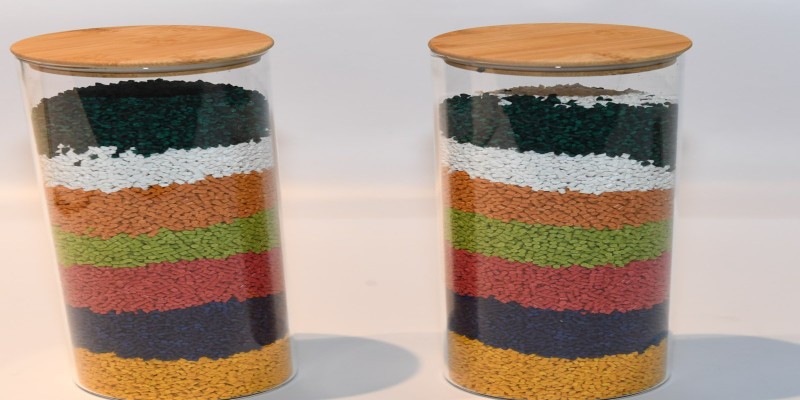
Poor compatibility between the masterbatch carrier and the base polymer can create multiple problems at once. Dispersion may become uneven, which can lead to streaking, specks, or unstable color distribution in the insulation or sheath. Adhesion between phases may also suffer, increasing the risk of weak spots or inconsistent mechanical behavior. Incompatible systems can also reduce processing quality, causing poor blending and insufficient physical performance in the finished cable. For that reason, the masterbatch should be matched to the cable resin system itself, not selected only for its target color or additive package.
Different polymer systems require different formulation strategies because processing windows and performance targets are not the same across cable types.
Base polymer system | Formulation focus |
PVC | Strong dispersion, color consistency, and efficient dilution for insulation and sheathing |
PE and PP | Thermal stability, extrusion compatibility, and stable processing under continuous output |
XLPE-related compounds | High heat resistance and controlled formulation that does not interfere with crosslinking behavior |
Engineering cable compounds | Customized color masterbatch and additive masterbatch for TPU, EVA, PA, PBT, and other demanding materials |
PVC-based systems are often associated with standard pellets and micropellet formats because these can improve mixing efficiency and support homogeneous color development during extrusion. PE and PP systems place more emphasis on thermal stability and processing control, while more specialized cable compounds may require tailored carriers and additive packages to maintain flexibility, optical stability, or long-term durability. One universal formulation is rarely ideal across all cable materials.
Beyond polymer match, manufacturers also need to assess how the formulation behaves on the line. The most relevant checks usually include:
● Extrusion speed and dosing consistency, especially in high-output or thin-wall cable production
● Heat resistance during processing, so pigments and additives remain stable under elevated temperatures
● Pellet uniformity and dilution behavior, which influence feeding accuracy and dispersion quality
Micropellet, micro-bead, or spherical pellet designs can improve dilution efficiency, homogenization, and dosing precision in automated extrusion systems. These factors matter because a formulation that looks correct on paper may still perform poorly if pellet form, melt behavior, or thermal response does not match the real production setup.
Cable performance requirements vary widely across industries, so a formulation that works for one cable category may underperform in another. In practice, cable masterbatch is selected according to a combination of thermal load, installation environment, insulation demands, processing speed, and identification needs. Color and additive masterbatch are used not only to create visual distinction, but also to support insulation protection, weather resistance, flame retardancy, and long-term process stability in both indoor and outdoor systems.
Cable application | Main formulation priorities |
Automotive cables | Thin-wall extrusion, thermal stability, high-speed processing, reliable color consistency |
Energy and power cables | Dielectric integrity, weather resistance, flame retardancy, voltage-specific color coding |
Telecom and fiber-related cables | High opacity, precise identification, optical stability, controlled dispersion |
Industrial and specialized cables | Chemical resistance, abrasion resistance, flexibility, durable long-term processing performance |
Automotive cable systems operate in compact layouts where heat, vibration, and space limitations all influence material selection. In this context, masterbatch must deliver reliable coloration without compromising thin-wall extrusion or thermal endurance. Automotive wiring is a demanding application for polymer-specific formulations, especially where cables must tolerate elevated temperatures and maintain stable processing at high line speeds. Performance targets may include resistance to temperatures around 150°C and compatibility with ultrathin-wall extrusion, which makes dispersion quality and thermal stability especially important.
Color consistency also matters in automotive wiring because dense harness systems rely on fast identification during assembly and service. If dispersion is poor, manufacturers may see uneven surfaces or shade variation that complicates quality control. That is why automotive cable formulations are often designed around both process efficiency and durable end-use performance rather than color alone.
Energy and power cables require a different balance of properties. Here, the masterbatch must support insulation performance while withstanding outdoor exposure, thermal stress, and, in many cases, stricter fire-safety requirements. Power cable formulations are often developed for PVC, PE, XLPE, and related systems, with attention to dielectric stability, UV resistance, flame retardancy, and long-term color reliability. In medium- and high-voltage uses, formulations may also be adjusted to match specific layer functions and installation environments rather than using a generic coloring approach.
Custom formulations become more relevant when cables are used in solar systems, industrial power distribution, substations, or other exposed conditions. In these cases, weatherability, anti-aging behavior, and stable processing can matter as much as the target shade.
Telecom and fiber-related cable systems depend heavily on clear identification in dense cable bundles and multilayer structures. These applications often use high-opacity white masterbatch for optical fiber jackets, black masterbatch for UV-resistant outdoor sheaths, blue masterbatch for data cable identification, and transparent formulations for optical coatings and protective tubes. These uses show that color in communication cables is closely tied to function, not just appearance.
Controlled dispersion is equally important because signal and fiber-related products often rely on stable coating or extrusion quality. A formulation that provides high coverage but disperses poorly can reduce visual consistency and weaken process stability. For this reason, telecom cable masterbatch is often selected for opacity, optical stability, and dilution efficiency at the same time.
Industrial and specialized cables are often exposed to oil, chemicals, repeated bending, abrasion, or more complex service environments. These conditions require durable and process-stable formulations that go beyond standard color matching. Functional additives such as flame retardants, antioxidants, anti-static agents, and weather-resistant packages are commonly used to help cables maintain performance over time. Customized cable masterbatch is a practical way to adapt formulations to different cable compounds and operating environments.
In that context, Foshan Hongshengde Masterbatch New Material Co., Ltd. can be mentioned as one example of a supplier offering customized color and additive masterbatch for cable insulation and sheathing, with carrier options such as PP, PE, and PVC and functional adjustments for flame retardancy, antistatic performance, and lower odor.
Choosing a custom cable masterbatch partner is not only about who can match a color sample. In cable production, the more important question is whether the supplier can build formulations around the actual polymer system, processing method, and performance target. High-quality cable masterbatch depends on uniform dispersion, carrier compatibility with PVC, PE, and PP, and the ability to combine color with functions such as flame retardancy, antistatic behavior, odor reduction, or improved flexibility.
A capable partner should be able to tailor both color masterbatch and additive masterbatch to different cable applications rather than offering one general-purpose formula. That includes adjusting carrier selection, pigment loading, additive packages, and pellet form to fit insulation, sheathing, optical coating, or specialty cable compounds. It also helps when the supplier can support precise color matching and application-specific formulations instead of only standard shades.
Evaluation point | What it shows |
Formulation flexibility | Ability to adapt to cable type, resin system, and service environment |
Performance validation | Whether the masterbatch remains stable in real extrusion conditions |
Consistency control | Likelihood of repeatable batch-to-batch results |
Cost efficiency | Potential to reduce scrap, pigment waste, and line instability |
Manufacturers also need evidence that the formulation performs consistently over time. Batch-to-batch repeatability matters because uneven dispersion or unstable additive levels can create visible defects and variable cable properties. In regulated sectors such as electrical and telecommunications, regulatory fit is another screening point, especially where flame resistance, environmental compliance, and product safety standards apply.
A lower unit price does not always mean lower production cost. Well-designed masterbatch can reduce pigment waste, lower extrusion defects, support smoother processing, and improve raw-material use. In large-volume cable production, those factors usually have more impact on total cost than price per kilogram alone.
Effective cable masterbatch solutions are built for specific cable needs, not one standard formula. Better results come from matching formulation, polymer type, processing conditions, and end-use demands. As cable applications grow more specialized, custom masterbatch design becomes more important. Foshan Hongshengde Masterbatch New Material Co., Ltd. provides tailored color and additive solutions that support stable processing, reliable performance, and broader application value.
A: Cable masterbatch solutions are customized color and additive concentrates for cable insulation, sheathing, and identification.
A: Cable masterbatch solutions improve dispersion, color consistency, and extrusion stability across different resin systems.
A: Choose cable masterbatch solutions by matching polymer type, processing temperature, and end-use requirements.
A: Custom cable masterbatch solutions are most useful when cables need specific color, flame resistance, or weatherability.
