
close
Choose Your Site
Global
Social Media
Views: 0 Author: Site Editor Publish Time: 2026-07-02 Origin: Site


Selecting the precise colorant for industrial plastics carries incredibly high stakes. Minor variations during the formulation process can quickly trigger compromised structural integrity, hazardous electrical failures, or widespread batch rejections. Manufacturers face a strict baseline when specifying materials for critical production lines. A reliable Color Masterbatch must deliver exact aesthetic matching without ever altering the polymer’s core mechanical, thermal, or chemical properties. Subpar dispersion often remains hidden until final testing, leading to severe operational bottlenecks.
This article provides an evidence-based framework for evaluating these complex formulations. You will learn how to carefully assess technical data and shortlist competent suppliers. By understanding carrier compatibility and dispersion metrics, you can confidently secure materials for demanding extrusion, film, and molding applications.
Evaluating raw materials requires looking beyond the initial aesthetic appeal. Using an inferior colorant introduces severe systemic risks to your entire manufacturing process. These risks span physical defects, safety hazards, and compounding inefficiencies.
Poor pigment dispersion acts as a localized structural defect. When pigments agglomerate instead of distributing evenly, they create microscopic stress concentration points within the polymer matrix. These weak spots severely degrade the physical properties of the final product. You will frequently observe premature cracking in pressure pipes. In extruded sheets, these agglomerates initiate tearing under minimal tension. Formulations lacking proper wetting agents fail to bond securely to the base polymer, resulting in a brittle end-product.
Wire and cable applications demand absolute chemical purity. Low-grade formulations often contain hidden ionic impurities. They might also absorb excessive moisture due to cheap, hygroscopic carrier resins. These contaminants directly compromise the insulation resistance of wire jackets. Dielectric strength drops significantly. During continuous spark testing on an extrusion line, these impurities cause immediate electrical failures. Maintaining a safe, non-conductive barrier requires highly refined pigment selections.
Inconsistent dispersion introduces massive hidden costs on the factory floor. Agglomerated particles frequently lodge in extruder screen packs. This clogging raises backpressure rapidly. Operators must halt production lines to replace screens. Frequent extruder purging wastes valuable virgin resin. Scrap rates elevate as color shifts occur randomly throughout a continuous run. Ultimately, these operational delays destroy production schedules and consume significant labor resources.
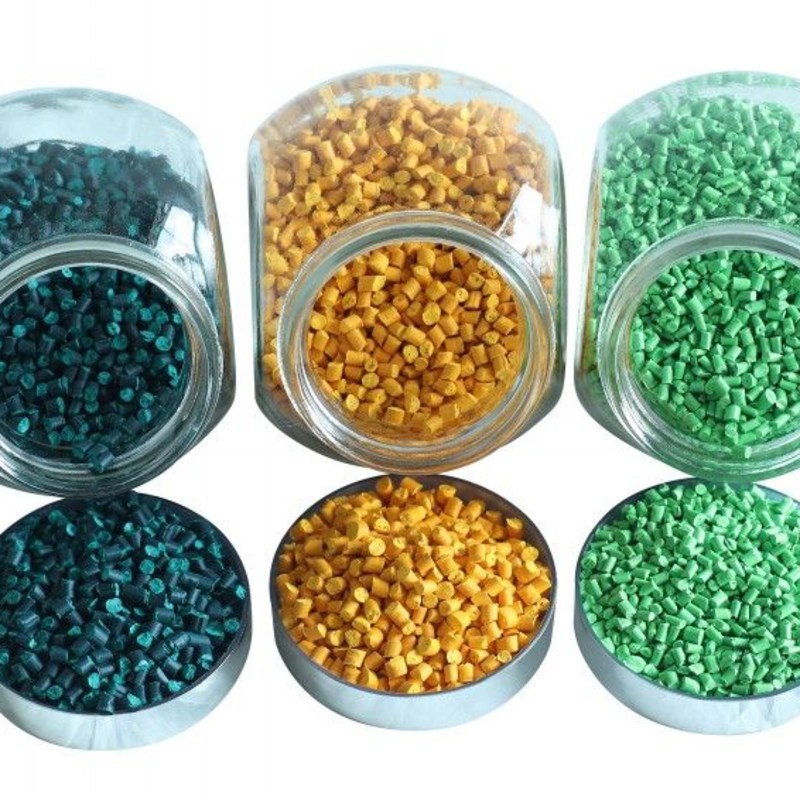
Different manufacturing processes exert unique stresses on polymer materials. You must select a formulation specifically engineered for your target application. A generic approach guarantees mechanical failure.
Insulating compounds operate under strict regulatory and safety frameworks. Integrating a dedicated cable color masterbatch demands precise chemical compatibility. The colorant must never interfere with flame retardant additives. For example, Low Smoke Zero Halogen (LSZH) and PVC compounds react poorly to heavy metal pigments. The formulation requires extreme dispersion to maintain perfectly smooth jacket surfaces. Surface roughness can trap moisture and degrade the cable's high dielectric strength.
Infrastructure materials endure harsh environments for decades. Extruding HDPE water pipes or PVC conduits requires a heavy focus on long-term weatherability. The pigments need exceptional light fastness to resist UV degradation. Thermal stability is equally critical. The masterbatch must withstand prolonged outdoor exposure without chalking or fading. Using specialized UV absorbers alongside the pigment ensures the pipe retains its burst strength over time.
Packaging and agricultural films demand intense opacity at very thin gauges. A high-performance blown film color masterbatch addresses these specific challenges. It requires a remarkably high pigment concentration to achieve maximum opacity at low let-down ratios (LDR). Dispersing the pigment flawlessly is vital. Even microscopic gels or agglomerates will tear the film bubble during extrusion. The colorant must maintain uniform thickness and prevent any gel formation under high-stretch conditions.
Molding processes subject polymers to violent physical changes. An optimized injection molding color masterbatch manages these extremes effortlessly. The material must withstand massive shear rates as it forces through narrow mold gates. It also faces rapid cooling cycles. If the carrier resin alters the base polymer's crystallinity, the molded part will suffer dimensional warping. The pigments must resist burning or color streaking under high injection speeds.
Sourcing a reliable plastic color masterbatch requires methodical technical evaluation. You should assess these five core criteria before finalizing any material specification.
The carrier resin delivers the pigment into your base polymer. You must follow a strict rule of thumb: always match the carrier to the base polymer. Use a polyethylene (PE) carrier for PE pipes. Use a polypropylene (PP) carrier for PP molded parts. Some suppliers promote "universal" carriers, often based on Ethylene Vinyl Acetate (EVA). While convenient for basic consumer goods, universal carriers introduce severe risks in critical applications. They often cause delamination, reduce impact strength, and alter melt flow behavior.
Many buyers mistakenly assume higher pigment loading equals better value. However, high loading is useless if dispersion is compromised. You must evaluate technical dispersion reports. Ask for Filter Pressure Value (FPV) test results according to EN 13900-5 standards. A low FPV indicates excellent dispersion. Poorly dispersed high-loaded batches will simply clog your filters and ruin product surfaces.
Industrial extrusion and molding operate at extreme temperatures. You must assess the heat resistance of the specific pigments used. Pigments can degrade, off-gas, or shift color entirely if they cannot handle your process temperatures. Engineering plastics like nylon or polycarbonate require pigments stable above 280°C. Always verify the thermal stability profile matches your highest barrel temperature.
Products destined for outdoor use face relentless solar radiation. You need objective data to verify color retention. Utilize the Blue Wool Scale, which rates light fastness from 1 to 8. Aim for a rating of 7 or 8 for exposed infrastructure. Request standard UV weathering test results. This ensures the end-products survive harsh environments without aesthetic degradation.
Global manufacturing strictly regulates chemical usage. Transparent documentation is an absolute necessity. You must collect valid certifications for REACH and RoHS compliance. If your product touches consumables, FDA food-grade certification is mandatory. Heavy-metal-free declarations ensure your products safely enter international markets without customs rejections.
| Evaluation Criterion | Primary Metric to Verify | High-Risk Consequence of Failure |
|---|---|---|
| Carrier Compatibility | Matched Polymer Chemistry | Delamination and mechanical weakness |
| Dispersion Quality | Filter Pressure Value (FPV) | Screen clogging and surface defects |
| Thermal Stability | Heat Resistance (°C limit) | Color shifting and chemical off-gassing |
| Weatherability | Blue Wool Scale Rating | Chalking, fading, and UV embrittlement |
| Regulatory Compliance | REACH, RoHS, FDA Certifications | Market access denial and recalls |
Procuring excellent materials is only the first step. You must manage the physical integration of the colorant on your production line carefully. Small miscalculations here destroy product quality.
The Let-Down Ratio defines how much colorant you add to the base resin. Calculating precise dosing requirements balances visual opacity against raw material budgets. A typical LDR ranges between 1% and 4%. You might feel tempted to over-dose to achieve a deeper color faster. Over-dosing introduces too much carrier resin and additive chemistry into the matrix. This severely reduces the tensile and impact strength of the final polymer. Always strictly adhere to the manufacturer's recommended LDR.
Your feeding equipment dictates color consistency during continuous extrusion runs. Volumetric feeders measure material by physical volume (screw turns). They struggle when the bulk density of the masterbatch changes slightly. Gravimetric feeders measure material by actual weight (loss-in-weight technology). Gravimetric systems automatically adjust for density variations. Upgrading to gravimetric feeding prevents random color banding and saves material over long production cycles.
| Feeder Type | Measurement Method | Accuracy Level | Best Application |
|---|---|---|---|
| Volumetric | Physical volume (RPM) | Moderate | Short runs, uniform pellets |
| Gravimetric | Actual weight (Load cells) | Extremely High | Continuous extrusion, strict LDR |
Moisture is a silent destroyer of plastic extrusion. Highly pigmented masterbatches often use hygroscopic carriers or pigments. Carbon black and titanium dioxide naturally absorb ambient humidity. If you feed wet colorant into an extruder, the water turns into steam. This creates severe surface defects like lacing, voids, and blistering. You must implement strict pre-drying protocols. Dry these materials using a desiccant hopper prior to processing to guarantee a flawless finish.
Choosing a manufacturing partner requires verifying their quality control infrastructure. You need a supplier capable of acting as a technical extension of your own engineering team.
Aesthetic drift between different deliveries ruins assembly lines. You must request proof of automated spectrophotometer testing from the supplier. Demand strict Delta E (ΔE) tolerance guarantees. We strongly recommend setting a baseline requirement of ΔE < 1.0 for critical visual components. This mathematical tolerance ensures the human eye cannot detect any variation between the first batch and the fiftieth batch.
Off-the-shelf colors rarely match exact brand guidelines. Evaluate the vendor's turnaround time for custom color matching. A competent laboratory should produce accurate physical sampling within a few days. Fast delivery of sample plaques for trial runs accelerates your product development cycle. Slow formulation iteration delays your entire time to market.
Formulation issues often require on-site observation. Look for suppliers offering robust technical support. They should help optimize your specific processing parameters. If dispersion issues arise, they must troubleshoot the interaction between their product and your extruder setup. A strong partner will happily adjust the formulation chemistry to perfectly suit your unique machine profile.
Selecting the right color formulation remains a deeply structural and functional decision. It extends far beyond simple aesthetic choices. When you rigorously evaluate carrier compatibility and dispersion metrics, you protect the mechanical integrity of your finished goods.
By shifting focus from raw unit costs to the broader cost of quality, you will reduce scrap rates and maximize machine uptime. We encourage you to request a technical consultation or a custom formulation review for your specific polymer grade today. Securing a sample plaque for a trial run is the best way to validate performance firsthand.
A: Color streaking is typically caused by a mismatch in Melt Flow Index (MFI) between the carrier and the base resin. Inadequate mixing temperatures in the extruder barrel also prevent proper melting. Furthermore, poor initial pigment dispersion within the formulation itself creates concentrated streaks under high shear.
A: While they are sometimes chemically compatible, film grades are optimized for different shear rates and precise opacity requirements. It is highly recommended to use process-specific formulations. Dedicated molding grades prevent dimensional warping and mechanical defects caused by incompatible crystallization rates.
A: Incompatible carrier resins or certain heavy-metal pigments can act as fuel. They interact poorly with flame-retardant additives, negating their effectiveness. Cable applications require specialized formulations. These materials are rigorously tested against specific fire-safety standards to ensure they maintain the compound's protective properties.
