
Views: 0 Author: Site Editor Publish Time: 2025-11-10 Origin: Site


Plastic films are everywhere, from food packaging to industrial wraps. But have you ever wondered what gives these films their color, strength, or flexibility? The answer lies in masterbatch for blown film. Choosing the right masterbatch is crucial for achieving desired film properties and production efficiency. In this post, you'll learn about masterbatch types, their roles, and how to select the best one for your needs.
Blown film is a widely used method to produce thin plastic films. It starts by feeding plastic pellets into an extruder, where heat melts them into a molten state. This molten plastic is then pushed through a circular die, forming a continuous tube known as a “bubble.” Air inflates this bubble, stretching and thinning the plastic to the desired thickness.
As the bubble rises, it cools down through air rings that stabilize the film structure. Then, it passes through nip rollers that flatten the bubble into a lay-flat tube. The edges of this tube are trimmed, creating two flat sheets of film. Finally, these sheets are rolled onto reels, ready for further processing or conversion.
This process allows manufacturers to produce films quickly and efficiently, making it ideal for high-volume applications.
Blown film technology serves many industries due to its versatility. Here are some common applications:
● Packaging Films: Used for plastic bags, shrink wraps, and food packaging, ensuring product protection and shelf appeal.
● Agricultural Films: Covers for greenhouses, mulch films, and silage wraps that help improve crop yields and protect plants.
● Industrial Films: Liners, covers, and barrier films used in construction, waste management, and manufacturing.
● Stretch Films: Used to wrap pallets and secure goods during transport.
● Barrier Films: Multilayer films that protect food and other products from oxygen, moisture, and contamination.
● PVC Cling Films: For household and commercial food wrapping.
● Laminating Films: Used in printing and packaging to enhance durability and appearance.
● Can Liners: Heavy-duty films for waste collection.
Each application demands specific film properties such as clarity, strength, flexibility, or barrier performance. These requirements influence the choice of resin, additives, and masterbatch used in the blown film process.
Note: Properly selecting the resin and additives for blown film production is crucial to meet application-specific performance and cost targets.
When producing blown film, choosing the right masterbatch type is critical. Masterbatch is a concentrated blend of pigments, additives, or fillers carried in a polymer resin. It enhances the base resin’s properties, color, or performance. Here are the main types used in blown film manufacturing:
Color masterbatch adds consistent and vibrant colors to blown films. It contains pigments or dyes evenly dispersed in a carrier resin compatible with the base polymer. This ensures uniform coloration and excellent color fastness throughout the film.
● Standard Colors: Common hues like red, blue, black, white.
● Custom Colors: Tailored shades matching specific samples or standards like Pantone or RAL.
● Special Effects: Metallic, pearlescent, fluorescent finishes enhance visual appeal.
Color masterbatch is vital for branding, product differentiation, and consumer appeal. It also ensures color consistency across production batches, which is crucial for quality control.
Additive masterbatch imparts functional properties without affecting color. It contains additives that improve the performance and processing of blown films. Common additives include:
● UV Stabilizers: Protect films from sun damage and degradation.
● Antioxidants: Prevent thermal degradation during processing.
● Antistatic Agents: Reduce static buildup for better handling.
● Slip and Antiblock Agents: Improve surface smoothness and prevent film layers from sticking.
● Flame Retardants: Enhance fire resistance for safety-critical applications.
These additives help blown films meet application-specific requirements such as durability, safety, and processing efficiency.
Filler masterbatch blends mineral fillers like calcium carbonate (CaCO₃) or talc with the carrier resin. It replaces part of the costly base polymer, reducing material costs while enhancing certain physical properties.
● Cost Efficiency: Lowers raw material expenses significantly.
● Improved Stiffness: Increases film rigidity, beneficial for packaging and industrial films.
● Enhanced Surface Quality: Provides smoother finishes and better printability.
● Processing Benefits: Improves melt flow and extrusion stability, leading to higher output rates.
Filler masterbatch is especially popular in polyethylene (PE) blown films, balancing performance and cost-effectiveness. It can also be customized to optimize mechanical properties or environmental impact.
Masterbatch Type |
Key Components |
Primary Benefits |
Common Applications |
Color Masterbatch |
Pigments or dyes dispersed in polymer resin |
- Vibrant, consistent colors- Excellent color fastness- Customizable shades- Special effects (e.g., metallic, fluorescent) |
Branding, product differentiation, packaging films |
Additive Masterbatch |
Functional additives (e.g., UV stabilizers, antioxidants, slip agents) |
- Enhances performance without altering color- Improves durability, processing, and safety- Specialized properties for various needs |
Films requiring UV resistance, antistatic properties, slip agents, flame retardance |
Filler Masterbatch |
Mineral fillers (e.g., calcium carbonate, talc) |
- Cost reduction- Improved stiffness and rigidity- Better surface quality and printability- Enhanced processing stability |
Cost-effective packaging films, industrial applications, PE films |
Selecting the right masterbatch for blown film production hinges on several critical factors that influence the film's quality, appearance, durability, and processing efficiency. Here’s a detailed look at these key criteria:
Quality is the foundation of any masterbatch choice. The masterbatch must be made from high-grade raw materials and manufactured under strict quality controls. Good quality masterbatch ensures consistent dispersion of pigments or additives throughout the film. This consistency prevents defects such as streaks, spots, or uneven coloration. Moreover, it guarantees stable performance during processing, reducing downtime and waste.
Color consistency is vital, especially for branding and product identity. Masterbatch must deliver the exact color shade batch after batch. This requires precise pigment formulation and stable carrier resins compatible with the base polymer. Consistency also means resistance to color fading or shifts caused by processing conditions or aging. Suppliers often maintain detailed color databases and production records to replicate colors accurately.
Blown films often face high temperatures during extrusion and exposure to sunlight or harsh environments during use. Masterbatch must withstand these conditions without degrading. Heat resistance ensures pigments or additives do not burn or discolor during extrusion. Weather resistance, particularly UV stability, protects the film from fading, brittleness, or cracking over time. This is crucial for outdoor applications like agricultural films or packaging stored under sunlight.
Migration occurs when pigments or additives move from one layer or surface to another, causing discoloration or loss of desired properties. Preventing migration is essential to maintain film integrity and appearance. Masterbatch should be specifically designed for the polymer type and processing conditions to minimize migration risks. Using incompatible masterbatch can lead to contamination or reduced product lifespan.
The choice of additives in masterbatch depends on the film’s end-use requirements. Common additives include:
● UV Stabilizers: Protect against sun damage.
● Antioxidants: Prevent thermal degradation.
● Slip Agents: Improve surface smoothness for easier handling.
● Antiblock Agents: Prevent film layers from sticking.
● Flame Retardants: Enhance safety for specific applications.
● Antistatic Agents: Reduce static buildup for better processing.
Selecting the right combination of additives enhances the film’s mechanical, optical, and thermal properties, tailoring it to precise application needs.
Filler masterbatch plays a key role in blown film production, offering several advantages that help manufacturers improve product quality while reducing costs. Here’s a detailed look at the main benefits:
One of the biggest advantages of filler masterbatch is its ability to reduce raw material costs. It replaces a portion of expensive virgin polymer with mineral fillers like calcium carbonate (CaCO₃). This substitution lowers the overall material expense without sacrificing film quality. For high-volume blown film production, cost savings can be substantial, improving profit margins.
Filler masterbatch can improve the mechanical characteristics of blown films. Adding fillers increases stiffness and rigidity, which is beneficial for packaging films that need to hold their shape or resist deformation. It also enhances impact resistance and dimensional stability, reducing warpage and shrinkage during processing or use. These improvements lead to stronger, more durable films suitable for demanding applications.
Using filler masterbatch can optimize the blown film extrusion process. Fillers often improve melt flow and extrusion stability, enabling smoother processing at higher speeds. This can increase output rates and reduce energy consumption, making production more efficient. Additionally, better melt flow helps maintain consistent film thickness and surface quality.
Manufacturers can tailor filler masterbatch formulations to meet specific needs. Adjusting filler type, particle size, and concentration allows control over film properties like stiffness, surface finish, and opacity. For example, finer particles create smoother surfaces ideal for printing, while coarser fillers boost strength. Custom blends also help meet environmental or regulatory requirements, such as using biodegradable fillers.
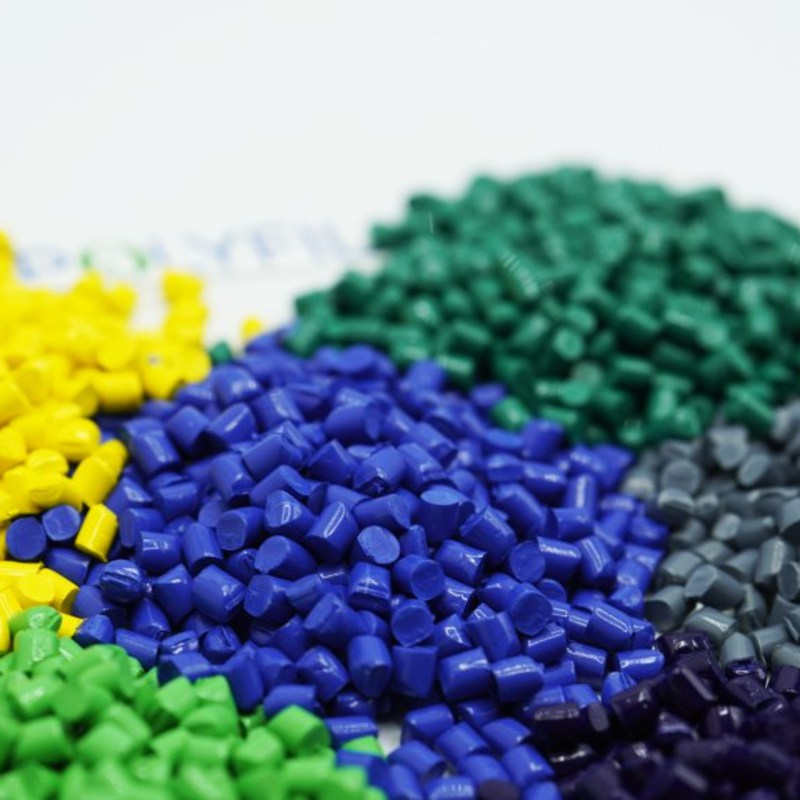
When choosing masterbatch for blown film, understanding the base resins is essential. The resin type affects film properties, processing conditions, and compatibility with masterbatch additives. Here are the most common resins used in blown film production:
Polyethylene is the most widely used resin in blown film due to its versatility and cost-effectiveness. It comes in several grades:
● Low-Density Polyethylene (LDPE): Offers excellent clarity, flexibility, and toughness. It’s ideal for packaging films requiring good sealability and impact resistance.
● Linear Low-Density Polyethylene (LLDPE): Provides higher tensile strength and puncture resistance than LDPE. It’s commonly blended with LDPE to improve mechanical properties.
● High-Density Polyethylene (HDPE): Produces stiffer films with superior moisture barrier properties. Often used in industrial and heavy-duty packaging films.
PE resins melt at temperatures around 210–230°C, and their branched molecular structure influences film strength and flexibility. They are compatible with a wide range of masterbatches, especially filler and color types.
PP is valued for its excellent clarity, higher heat resistance, and moisture barrier compared to PE. It melts at approximately 220–230°C and is used in applications requiring:
● Greater stiffness and toughness
● Enhanced optical properties
● Higher sealing temperatures
PP blown films are often used for food packaging, medical wraps, and industrial films. Masterbatches for PP must be tailored for its higher processing temperatures and crystalline structure.
Nylons bring superior mechanical strength, puncture resistance, and oxygen barrier properties to blown films. Common types include:
● PA6: Offers excellent oxygen barrier and toughness but lower moisture resistance.
● PA6/66: Combines clarity, strength, and improved processing.
● Amorphous PA: Used in blends to enhance clarity and moisture resistance.
Nylon films melt around 240–250°C and are typically used in multilayer barrier films, such as food packaging, where durability and protection against oxygen and oils are critical.
EVOH is a specialty copolymer known for its outstanding oxygen barrier properties. It is usually used as a thin core layer in multilayer blown films. Key features include:
● Exceptional protection against oxygen, oils, and aromas
● Sensitivity to moisture, requiring encapsulation by other resins like PE or PA
● Processing temperature around 220°C
EVOH enhances shelf life of perishable goods and is critical in food packaging applications. Masterbatch for EVOH films focuses on compatibility with tie layers and maintaining barrier integrity.
Selecting the right supplier for masterbatch is as important as choosing the masterbatch itself. A reliable supplier ensures consistent quality, timely delivery, and technical support that can make a significant difference in blown film production.
Supplier expertise directly impacts the quality and performance of your masterbatch. Experienced suppliers understand the nuances of blown film production and can tailor masterbatch formulations to meet specific requirements. They keep up with the latest industry standards and innovations, ensuring you get products that are compatible with your resin types and processing conditions.
An expert supplier can also help troubleshoot issues such as color inconsistency, migration, or processing difficulties. Their knowledge of additives, pigments, and fillers is invaluable for optimizing your film properties and production efficiency.
When choosing a masterbatch supplier, consider these key factors:
● Quality Assurance: Look for suppliers with stringent quality control measures, certifications like ISO 9001, and a track record of consistent product quality.
● Customization Capabilities: Your supplier should offer customized masterbatch solutions tailored to your film’s specific needs, including color matching and additive combinations.
● Technical Support: Access to technical experts who can assist with formulation, troubleshooting, and optimizing processing parameters is crucial.
● Production Capacity and Delivery: Ensure the supplier can meet your volume demands and deliver on time to avoid production delays.
● Regulatory Compliance: The supplier’s products should comply with relevant regulations such as FDA for food contact, REACH, or RoHS depending on your application.
● Sustainability Practices: Consider suppliers who prioritize eco-friendly materials and sustainable manufacturing processes.
Choosing the right masterbatch for blown film production is crucial for achieving optimal film quality, performance, and cost-efficiency. Key considerations include selecting compatible masterbatch types such as color, additive, and filler, tailored to specific film applications. Supplier expertise and support play a vital role in ensuring consistent quality and technical assistance. Foshan Hongshengde Masterbatch New Materials Co., Ltd. offers high-quality masterbatch solutions, emphasizing customer satisfaction and sustainability, making them a valuable partner in the blown film industry.
A: A masterbatch for blown film is a concentrated mixture of pigments, additives, or fillers in a polymer resin, used to enhance the properties, color, or performance of the base resin in blown film production.
A: Masterbatch improves blown film production by adding color, enhancing mechanical properties, and introducing functional additives, which improve processing efficiency and meet specific application requirements.
A: Choosing the right masterbatch for blown film ensures consistent quality, optimal performance, and cost-effectiveness, aligning with specific application needs and processing conditions.
A: The cost of masterbatch for blown film is influenced by the type of pigments or additives used, customization needs, and the quality of raw materials and manufacturing processes.
A: To select the best masterbatch for blown film, consider factors like resin compatibility, desired film properties, color consistency, and additive requirements, and consult with experienced suppliers.
