
close
Choose Your Site
Global
Social Media
Views: 0 Author: Site Editor Publish Time: 2025-11-04 Origin: Site


Have you ever wondered how manufacturers achieve that flawless, deep black finish in plastic products? The secret lies in using no filler masterbatch. This innovative additive is revolutionizing injection molding by eliminating inorganic fillers, ensuring superior surface quality. In this post, you'll learn about its composition, benefits, and applications in various industries.
No filler masterbatch is a specialized additive used in injection molding to achieve a deep, uniform black color in plastic parts. Unlike traditional masterbatches, it contains no inorganic fillers such as talc, calcium carbonate, or silica. Instead, it’s composed mainly of high-quality carbon black pigment dispersed in a polymer carrier resin, typically polyethylene or polypropylene.
Carbon black is a highly effective black pigment. It’s produced through incomplete combustion of hydrocarbons, resulting in fine particles that disperse easily within the resin. This pigment provides excellent opacity, intense color depth, and high UV resistance. Its thermal stability and electrical conductivity also make it suitable for demanding applications.
The carrier resin in no filler masterbatch is low viscosity, facilitating uniform dispersion of carbon black particles. This ensures the color is evenly distributed throughout the final product, leading to a smooth surface finish and consistent appearance.
Traditional black masterbatches often contain fillers like talc, calcium carbonate, or clay. These fillers serve to reduce costs and modify properties but come with drawbacks. Fillers can cause surface imperfections, such as streaks, specks, or uneven coloration, especially when dispersion isn’t optimal.
In contrast, no filler masterbatch offers several advantages:
● Higher Purity: No fillers mean fewer impurities, leading to cleaner, more aesthetic surface finishes.
● Better Surface Quality: Absence of fillers results in smoother, more uniform surfaces, reducing defects.
● Enhanced Color Consistency: Uniform dispersion of carbon black in no filler masterbatch ensures stable, consistent color throughout the product.
● Reduced Processing Issues: Lower viscosity improves melt flow, making processing easier and more efficient.
● Improved UV Resistance: Carbon black’s natural UV blocking properties enhance outdoor durability.
● Greater Dimensional Stability: Better thermal stability and reduced warping or distortion during cooling.
The composition and characteristics of no filler masterbatch make it ideal for applications where surface quality, color consistency, and durability matter most. Its compatibility with various thermoplastics, ease of processing, and superior performance justify its growing popularity in industries like consumer electronics, automotive, and medical devices.
In summary, understanding its composition and how it compares with traditional options helps manufacturers choose the right masterbatch for their specific needs, ensuring high-quality, cost-effective production.
Using no filler masterbatch in injection molding results in a noticeably smoother surface on the final product. Since it contains no inorganic fillers like talc or calcium carbonate, the surface is free from common imperfections such as streaks, specks, or rough patches. This smoothness is especially important for products where appearance matters—like consumer electronics, automotive interiors, or medical devices. With a more uniform surface, the parts look cleaner and more professional, which can boost their market appeal.
No filler masterbatch ensures a high level of color uniformity throughout the molded parts. The concentrated carbon black pigment disperses evenly in the polymer resin, creating a deep, consistent black color. This uniformity helps meet strict color specifications and reduces the risk of color variation between batches. For brands that require precise color matching—say, for branding or aesthetic purposes—this consistency is a significant advantage, ensuring the final product always looks the same.
One of the key benefits of no filler masterbatch is its impact on processing. Fillers tend to increase the viscosity of the melt, making it harder to flow. Without these fillers, the melt flows more easily, leading to shorter cycle times and lower energy consumption. It also facilitates better filling of complex molds, reducing defects like short shots, sink marks, or warpage. Moreover, the absence of fillers reduces wear and tear on equipment, extending its lifespan and lowering maintenance costs.
Carbon black, the main pigment in no filler masterbatch, naturally offers excellent UV blocking properties. When incorporated into injection-molded parts, it significantly enhances outdoor durability. UV rays can degrade plastics over time, causing discoloration, cracking, or loss of mechanical strength. With no filler masterbatch, parts—especially those exposed to sunlight—maintain their appearance and performance longer. This makes it ideal for outdoor applications such as automotive exteriors, garden furniture, or building materials.
Another benefit is better dimensional stability. Carbon black in the masterbatch helps reduce the thermal expansion of plastics during cooling. This means parts are less likely to warp or distort, maintaining tight tolerances. For precision parts like electronic housings or automotive components, this stability is crucial. It ensures that parts fit correctly, perform reliably, and meet quality standards even under changing temperature or humidity conditions.
Tip: For optimal results, match the no filler masterbatch's concentration with the specific resin and application requirements to maximize surface quality and durability.
No filler masterbatch is widely used in consumer electronics manufacturing. Devices like smartphones, tablets, laptops, and televisions benefit from its deep, uniform black color and smooth surface finish. These qualities give products a sleek, premium look that appeals to consumers. The enhanced color consistency helps maintain brand identity across production batches. Moreover, the improved dimensional stability ensures precise fitting of components, crucial for electronic housings and casings.
The automotive industry relies on no filler masterbatch for both interior and exterior parts. Interior trims, dashboards, and panels gain from the masterbatch’s smooth finish and consistent color, enhancing vehicle aesthetics. The increased UV resistance protects exterior components from fading and degradation caused by sunlight exposure. Dimensional stability reduces warping, ensuring parts fit tightly and perform well over time. This durability meets the strict quality standards of automotive manufacturing.
Medical devices require high standards of cleanliness and appearance. No filler masterbatch helps produce parts with a uniform black color that looks professional and sterile. The absence of fillers reduces surface defects, lowering contamination risks. UV resistance extends the lifespan of devices exposed to sterilization lights or sunlight. Color consistency aids in accurate identification and coding of medical instruments and packaging, improving safety and traceability.
Packaging materials such as containers, bottles, and films benefit from no filler masterbatch’s premium black coloration and smooth texture. The masterbatch enhances the visual appeal of packaging, making products stand out on shelves. Consistent color quality supports brand recognition and product differentiation. Additionally, the improved surface finish reduces defects that could affect packaging integrity or consumer perception. For food or pharmaceutical packaging, the purity of no filler masterbatch helps maintain product safety and compliance.
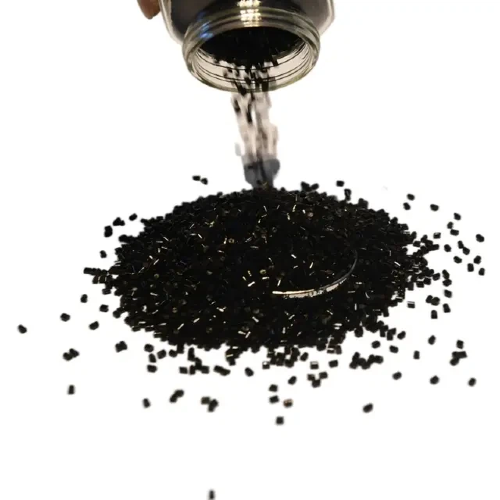
No filler masterbatch significantly improves the surface quality of injection-molded parts by eliminating common imperfections like streaks and specks. Traditional masterbatches containing inorganic fillers—such as talc, calcium carbonate, or clay—often cause surface irregularities due to uneven dispersion during processing. These fillers can settle or clump, leading to visible streaks or specks on the finished product.
In contrast, no filler masterbatch relies solely on high-quality carbon black pigment dispersed uniformly within a polymer carrier resin. This homogeneous dispersion ensures that the surface of the molded part remains smooth and free from visual defects. The absence of fillers reduces the likelihood of uneven surface textures, resulting in a cleaner, more polished appearance.
Furthermore, because the pigment is evenly distributed at a molecular level, it minimizes surface inconsistencies caused by pigment migration or settling during cooling. This uniformity is especially critical for products where aesthetics are a priority—such as consumer electronics, automotive interior panels, and medical devices.
The use of no filler masterbatch leads to a consistent texture and appearance across all molded parts. Since the carbon black pigment is thoroughly dispersed, the surface finish appears uniformly matte or glossy, depending on the desired effect. This consistency enhances the visual appeal and perceived quality of the final product.
In addition, the smooth surface finish improves the tactile feel of the parts, making them more comfortable to handle and visually more attractive. For applications demanding high aesthetic standards, such as branding components or visible housings, this uniformity can be a key differentiator.
Another advantage is that no filler masterbatch reduces the risk of surface defects caused by uneven cooling or internal stresses. Fillers can sometimes cause differential shrinkage, leading to surface irregularities or warping. Without these fillers, parts are less prone to such issues, maintaining their intended shape and surface quality even under varying processing conditions.
In summary, eliminating streaks, specks, and uneven textures makes no filler masterbatch a preferred choice for manufacturers aiming for high-quality, visually appealing injection-molded products. Its ability to produce smooth, uniform surfaces enhances both the aesthetic and functional value of the final parts.
No filler masterbatch can help reduce production costs in injection molding. Without inorganic fillers, the melt flow improves, allowing faster cycle times and less energy use. This means machines run more efficiently and manufacturers save on electricity. Also, the absence of fillers reduces wear on molds and screws, lowering maintenance and replacement expenses. Because no filler masterbatch disperses evenly, manufacturers experience fewer rejects due to surface defects or color inconsistencies, cutting waste and rework costs.
Additionally, the improved dimensional stability reduces the need for post-processing steps like trimming or finishing, saving labor and time. Although no filler masterbatch might have a higher initial price than traditional filled masterbatches, the overall savings in processing and quality control often outweigh the upfront cost. This makes it a cost-effective choice for high-quality injection molding.
Using no filler masterbatch also supports sustainability goals. Since it contains no mineral fillers, it reduces the extraction and processing of such materials, which often have environmental footprints. The better flow properties lower energy consumption during molding, decreasing carbon emissions linked to manufacturing.
Moreover, reduced scrap rates mean fewer plastic parts end up as waste. The enhanced UV resistance extends product life, reducing replacement frequency and resource use. No filler masterbatch’s compatibility with recycling processes further supports circular economy practices, as it doesn't introduce contaminants that complicate recycling.
By choosing no filler masterbatch, manufacturers contribute to greener production while maintaining high product quality.
No filler masterbatch generally works well with many thermoplastic resins like polypropylene (PP), polyethylene (PE), acrylonitrile butadiene styrene (ABS), polystyrene (PS), and polyethylene terephthalate (PET). However, compatibility is not always guaranteed. The carrier resin used in the masterbatch must match or be compatible with the base resin to ensure proper dispersion and avoid processing issues.
If the carrier resin differs significantly from the base resin, problems such as poor mixing, color inconsistency, or surface defects can arise. For example, using a polyethylene-based masterbatch in a polypropylene molding process might cause phase separation or uneven color distribution.
Manufacturers should carefully verify the compatibility between the no filler masterbatch and the specific resin grade they intend to use. This step is critical to maintain the high surface quality and color uniformity that no filler masterbatch promises. Testing small batches before full-scale production helps identify any unforeseen issues early.
Switching to no filler masterbatch may require some processing changes. Since it contains no fillers, the melt viscosity is typically lower than traditional filled masterbatches. This affects the flow behavior of the molten plastic during injection molding.
Lower viscosity usually improves flow, allowing better filling of molds and reducing cycle times. However, it can also lead to other challenges:
● Injection Speed and Pressure: Adjustments might be needed to optimize filling and avoid defects like flash or short shots.
● Temperature Settings: The absence of fillers can change heat transfer characteristics, requiring fine-tuning of barrel and mold temperatures.
● Screw Design and Speed: To ensure thorough mixing and pigment dispersion, screw speed or profile may need modification.
● Drying Requirements: Some carrier resins in the masterbatch may have different moisture absorption rates, affecting drying times before molding.
These adjustments are often minor but necessary to maximize the benefits of no filler masterbatch. Process engineers should monitor parameters closely during initial runs and optimize them based on observed part quality and cycle efficiency.
No filler masterbatch offers numerous advantages in injection molding, including improved surface finish, enhanced color consistency, reduced processing issues, increased UV resistance, and improved dimensional stability. These benefits make it ideal for applications in consumer electronics, automotive, and medical devices. As industries seek high-quality, cost-effective solutions, the future prospects for no filler masterbatch in injection molding are promising. Foshan Hongshengde Masterbatch New Materials Co., Ltd. provides innovative products that deliver these unique benefits, enhancing product quality and production efficiency.
A: No filler masterbatch is a specialized additive used in injection molding to achieve a deep, uniform black color without inorganic fillers like talc or calcium carbonate.
A: No filler masterbatch improves surface quality by eliminating streaks and specks, ensuring a smooth, uniform texture due to the homogeneous dispersion of carbon black pigment.
A: No filler masterbatch offers advantages like higher purity, better surface quality, enhanced color consistency, reduced processing issues, increased UV resistance, and improved dimensional stability.
A: Though initially pricier, no filler masterbatch reduces production costs through faster cycle times, lower energy use, decreased equipment wear, and reduced waste, making it cost-effective overall.
A: Compatibility issues may arise if the carrier resin in the no filler masterbatch doesn't match the base resin, potentially leading to poor mixing or color inconsistencies. Testing is recommended.
